
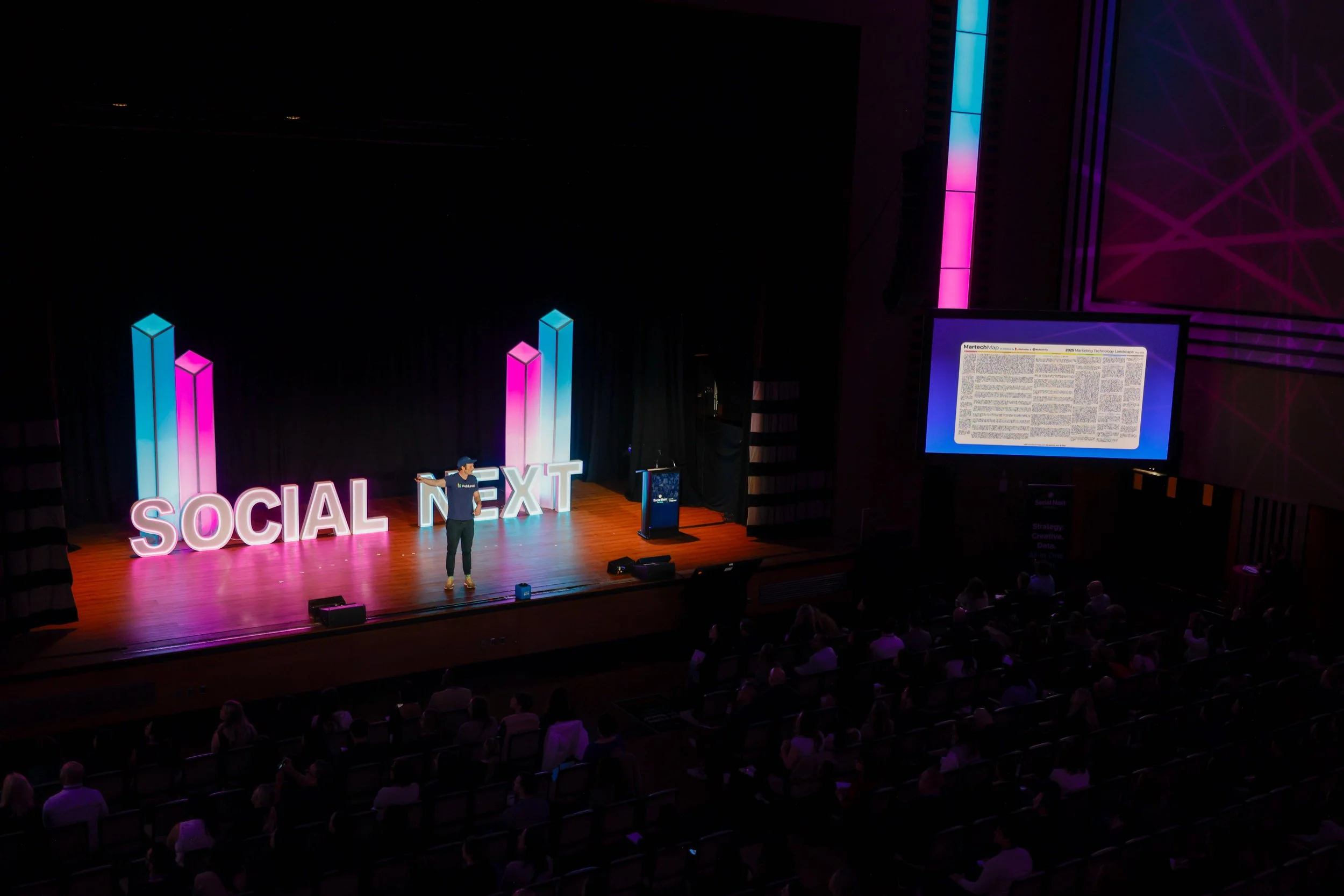
Keynote Presentation at SocialNext: Toronto, April 9, 2026 - Photo by Neil Zeller Photography
Every year, SocialNext: Toronto brings together some of Canada's sharpest marketing minds to cut through the noise and talk about what's actually working. This year's edition was no different. Across multiple sessions, three themes kept rising to the surface: the enduring power of creators, the evolving (but still supporting) role of AI, and the irreplaceable human desire for genuine connection.
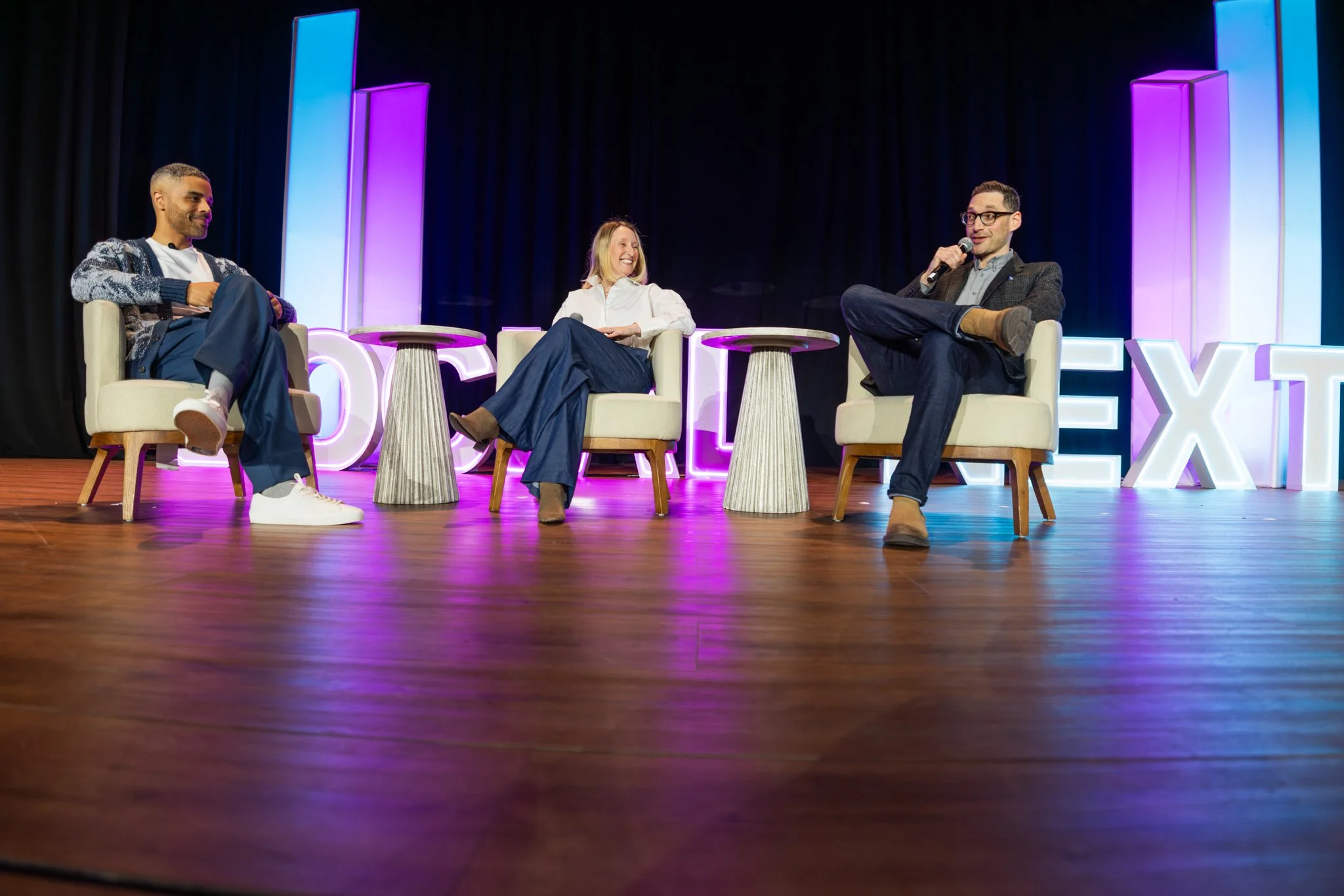
Human & AI: The Future of Brand Influence presented by MiQ at SocialNext: Toronto - Photo by Neil Zeller Photography
Creators Aren't a Channel. They're the Engine
One of the most consistent messages across the day: if your brand still thinks of influencer marketing as a distribution tactic bolted onto the end of a campaign, you're already behind.
"Don't build campaigns, build ecosystems," was a refrain that came out of the Human & AI: The Future of Brand Influence panel. The point being made is that consumers don't experience marketing the way brands plan it: linearly, from awareness to purchase. They move through fragmented, non-linear journeys, and increasingly, creators are a central node in that journey. With 76% of consumers more likely to purchase a product when it's endorsed by a creator they follow, this isn't a nice-to-have. It's a core business consideration.
Adam Constantine, Founder and CEO of ACE Creatives, drove this home in his Good Beats Perfect session. His argument was blunt: brands optimize for internal approval, creators optimize for audiences. Brands study other brands; they should be studying creators. Creators move fast, embrace volume, take risks, learn in real time, and are native to the platforms they operate on. They didn't just show up on TikTok or Instagram; they helped shape these platforms as consumers long before brands arrived.
The practical implication for marketers is that creator partnerships need to break through the silo and into the core strategy. As Marie-Josée Cadorette of Clark Influence noted, many brands still treat influencer marketing separately from broader planning. The better approach, reinforced by Simon Ross of Havas Media, is to bring social and strategy teams together early. The key: building a clear picture of audience behaviours and consumption habits so that creator partnerships can be evaluated against real campaign objectives.
AI Is Already in the Room. Use It Wisely
Nobody at SocialNext was arguing that AI isn't changing marketing. But the framing was notably measured: AI is a powerful partner, not a replacement.
On the brand side, AI is delivering the most value around personalization and scale. Agentic AI tools are helping automate decisions, surface suggestions, and reduce production costs — especially as marketing budgets shrink and teams are being asked to do more with less. AI-generated content creators are also on the rise, offering brands new ways to increase output and visibility.
Interestingly, creators themselves are largely embracing this shift. The consensus from the panel was that creators don't see AI as a threat, but as a gap-filler. Need help with translation, editing, or ideation? AI can handle that, freeing creators to focus on what they actually do well.
The Human Edge: How Great Communicators Win With AI session added important nuance for marketers developing their own AI fluency. The advice for newer practitioners: resist the temptation to shortcut with AI before you've built the underlying skills. "Force yourself to do it the old school way first," was the guidance — develop critical thinking and process before layering in AI assistance. Amit Shilton, VP of Strategy at Agnostic, put it simply: "Being a person will win in the future." The suggestion isn't to avoid AI, but to treat it the way you'd treat a smart intern, as Sarah Stockdale, Founder & CEO of Growclass, says: “give it context, set guardrails, and exercise your own judgment on the output”.
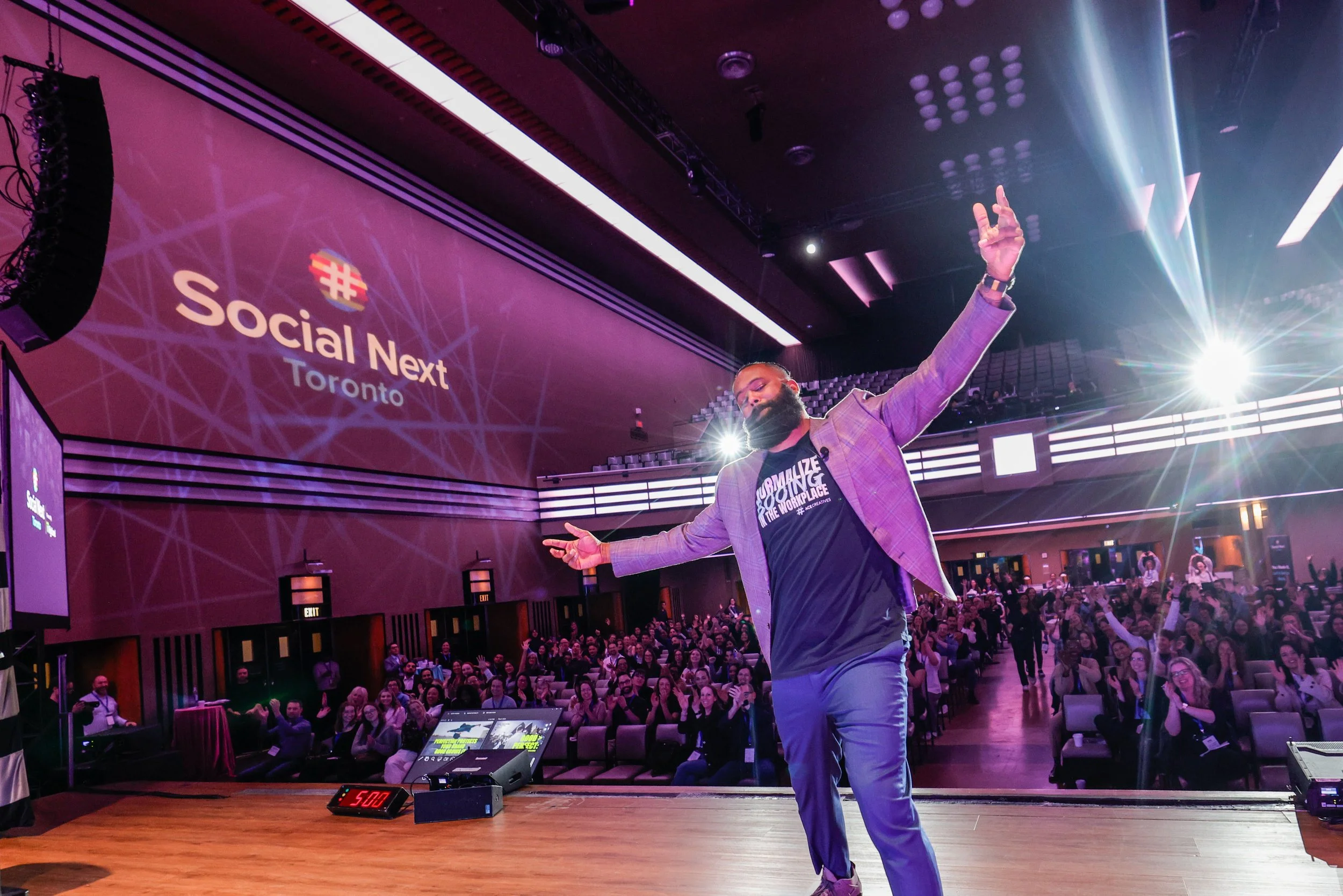
Adam Constantine on stage at SocialNext: Toronto - Photo by Neil Zeller Photography
Don't Lose the Humanity
Perhaps the most emotionally resonant theme across the day was the simplest one: at the end of the day, people want to connect with people.
Brands are not, as Adam Constantine noted, a naturally occurring presence on social media. People are. And the platforms, driven by creator culture, have always rewarded native, human behaviour over polished brand content. The brands winning on social aren't the ones with the biggest budgets or the most pristine creative; they're the ones that move fast, create authentically, and prioritize hooks over perfection.
This has implications for how marketers approach AI-generated content, too. The session on human communication struck a clear warning note: using AI without intentionality risks draining the very humanity that makes brand communication effective in the first place. Mid Day Squares was held up as an example of a brand getting it right: not because they've cracked some algorithmic code, but because they simply create consistently and without overthinking it.
The bottom line from SocialNext this year is a tension worth sitting with: the tools available to marketers have never been more powerful, but the thing audiences are actually responding to hasn't changed at all. They want to feel something. They want to trust someone. They want to connect with a real voice, whether that's a creator they follow, or a brand that's finally learned to act like one.
This piece is part of our ongoing coverage of SocialNext Toronto 2026, one of six national conferences produced by SocialNext.
About the writer:
June Findlay is a multifaceted communications professional with 15 years of marketing and advertising experience, specializing in digital and social media marketing, including roles on brand and agency sides. Throughout her career, she's worked with agencies such as Dentsu and WPP and developed campaigns for brands such as The Lincoln Motor Company, The YMCA of Greater Toronto, UNICEF Canada, and MadeGood. A sharp writer, insightful commentator, and founder of Little Kernel Communications (her freelance practice serving B2B and B2C clients), she is also a sought-after speaker empowering audiences to make meaningful changes in their lives and their work. June has spoken for notable organizations and institutions like the University of Toronto, Global News Radio, Toronto Metropolitan University, The National Forum for Voluntary Organizations (Sweden), CBC Newsworld, and more.
