
In 2026, Canada will not just be watching the World Cup. It will be hosting it.
For marketers, that changes the equation. Global sporting events create rare moments when the country is paying attention at the same time. But attention today behaves very differently than it did during previous tournaments.
Fans will be watching matches while scrolling social feeds, messaging friends, and gathering in public places to experience the games together. That fragmented behaviour means brands cannot rely on digital scale alone. The opportunity is understanding how attention moves across screens, cities, and real-world environments during cultural peaks.
As Canada prepares to host matches in Toronto and Vancouver, the planning window for brands is already open. Marketing News Canada spoke with Scott Mitchell, Managing Director of Vistar Media Canada, about how marketers should be thinking about attention, media mix, and hyperlocal strategy ahead of FIFA 2026.
Attention during cultural moments is more fragmented than ever
One of the biggest assumptions brands still make about major sporting events is that digital volume alone will capture attention. Mitchell says that mindset no longer reflects how people actually experience live events.
“In reality, attention is highly fragmented,” he explains. “Consumers are streaming games, scrolling social feeds, and engaging socially at the same time.”
While digital platforms dominate media planning conversations, physical environments still command attention in ways digital channels cannot. Streets, transit hubs, stadiums, and public gathering places become part of the shared experience around major sporting events.
Research shows that relevance and emotional connection remain key drivers of ad effectiveness during these moments.
53 percent of consumers say ads stick when they feel personally relevant
69 percent say humour, emotion, or entertainment makes advertising memorable
58 percent say authenticity matters more than celebrity
During major cultural events like the World Cup, brands have an opportunity to connect with audiences in ways that feel integrated into the fan experience rather than interrupting it.
“The opportunity is to show up in ways that feel connected to the moment fans are experiencing,” Mitchell says.
Why physical presence still matters in a digital-first world
When major events capture global attention, digital environments quickly become crowded. Social feeds fill with commentary, highlights, and brand messaging, which makes it harder for any single campaign to stand out.
This is where physical presence becomes an important complement to digital campaigns.
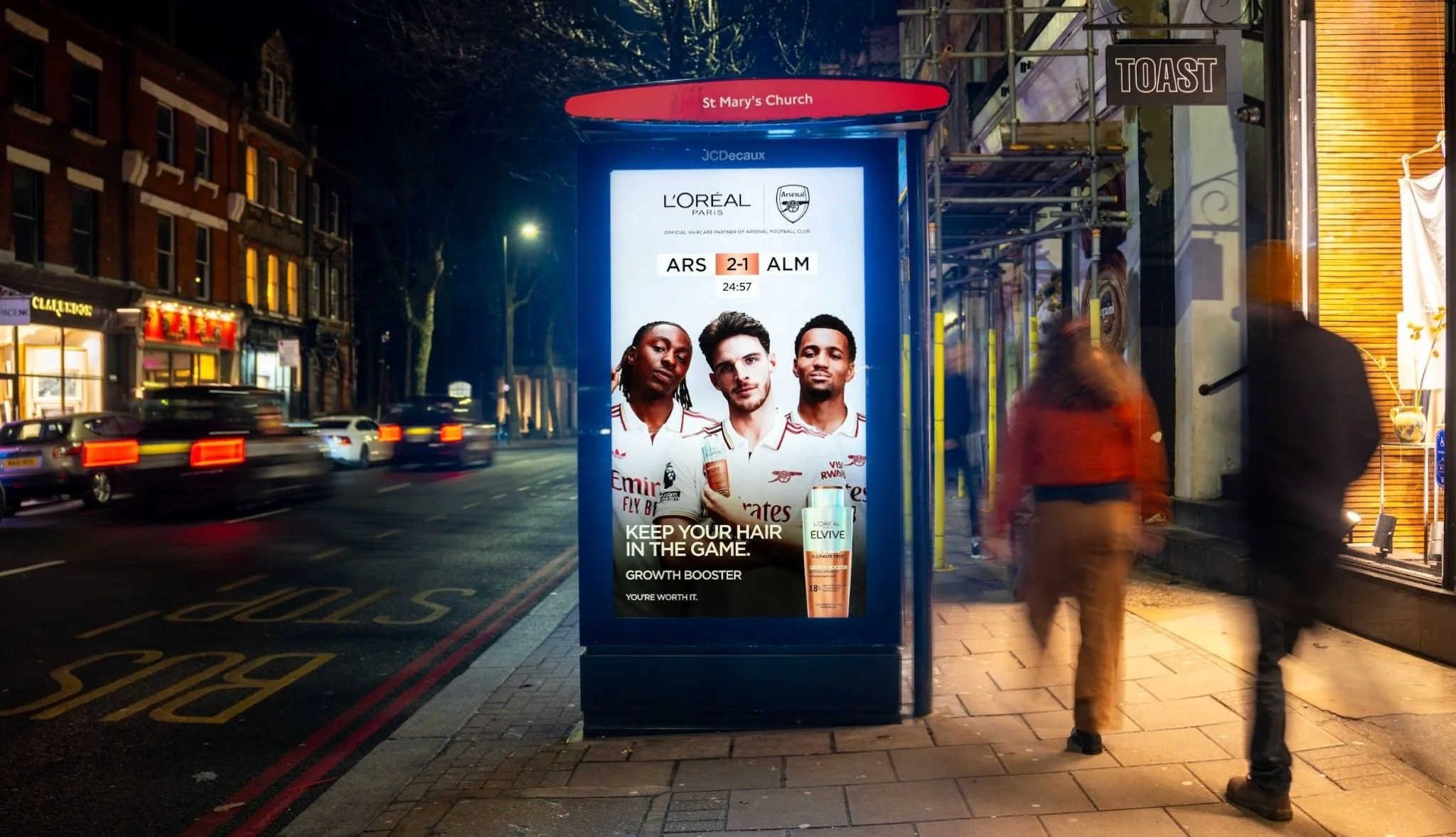
Digital out-of-home placements near stadiums, commuter routes, and gathering spots allow brands to reinforce messaging in environments where fans are already immersed in the event.
“DOOH reaches audiences who may ignore online ads and reinforces messaging at key moments,” Mitchell says.
Context and creative quality also play a significant role in recall. Research cited by Vistar Media shows that 24 percent of consumers say contextual placement improves ad recall, while 40 percent identify creative quality as the most important factor in remembering an ad.
For marketers planning campaigns around FIFA 2026, the lesson is not to treat out-of-home as a standalone channel. Instead, it works best when layered alongside digital campaigns to reinforce visibility and strengthen overall impact.
Hyperlocal strategy will matter in host cities
One of the biggest opportunities for brands will emerge at the local level, particularly in host cities like Toronto and Vancouver.
Major sporting events create waves of activity across urban environments as fans gather in bars, public squares, transit hubs, and watch parties to experience matches together. These shared spaces become part of the cultural fabric of the tournament and create moments where brands can reach audiences while they are already immersed in the excitement of the event.
“Hyperlocal DOOH is extremely effective for reaching audiences in the micro-moments that define the fan experience,” Mitchell says.
Programmatic digital out-of-home platforms allow marketers to adapt campaigns based on location, time of day, and real-world behaviour. Messaging can respond to what is happening in the city, from pre-match anticipation to post-game celebrations, helping brands stay aligned with the energy of the moment.
The scale of the opportunity is significant. More than five million fans are expected to attend matches in person during the tournament, while billions more will engage through broadcast and digital coverage worldwide.
For brands, that means the fan journey extends across entire urban environments. Transit routes, sports bars, restaurants, and neighbourhood gathering places will all become touchpoints where people come together to follow the tournament. Campaigns that reflect those local experiences and respond to what fans are actually seeing and feeling in real time are far more likely to resonate than generic national messaging.
The brands that win will be the ones that planned ahead
Major global events rarely reward last-minute marketing. The brands that tend to create the most impact are the ones that start thinking early about how they want to show up and what role they want to play in the fan experience.
Showing up during a cultural moment is not simply about buying media. It requires understanding how people are experiencing the event and finding ways for the brand to participate in that moment in a way that feels natural and relevant.
For marketers, that means thinking beyond a single campaign or channel. Successful World Cup campaigns will likely move across digital platforms, physical environments, and real-time moments happening in cities across the country. The opportunity is to design experiences that follow fans as they move from watching matches at home to gathering in public spaces and celebrating with friends.
As the FIFA World Cup arrives in Canada in 2026, the brands that stand out will be the ones that understand how attention flows across screens, cities, and shared experiences and build campaigns that feel connected to the cultural moment rather than competing with it.
About Scott Mitchell:
Scott Mitchell is managing director for Canada at Vistar Media, a provider of programmatic and software solutions for digital out-of-home. Since joining Vistar in 2017, Mitchell has launched the Canadian office and grown operations to a fully staffed team with strategic partnerships across the entire programmatic landscape.
