
Hockey's audience is changing. Not slowly, not quietly. It's changing in ways that are showing up in registration data, on streaming platforms, in Tim Hortons lineups, and now on store shelves.
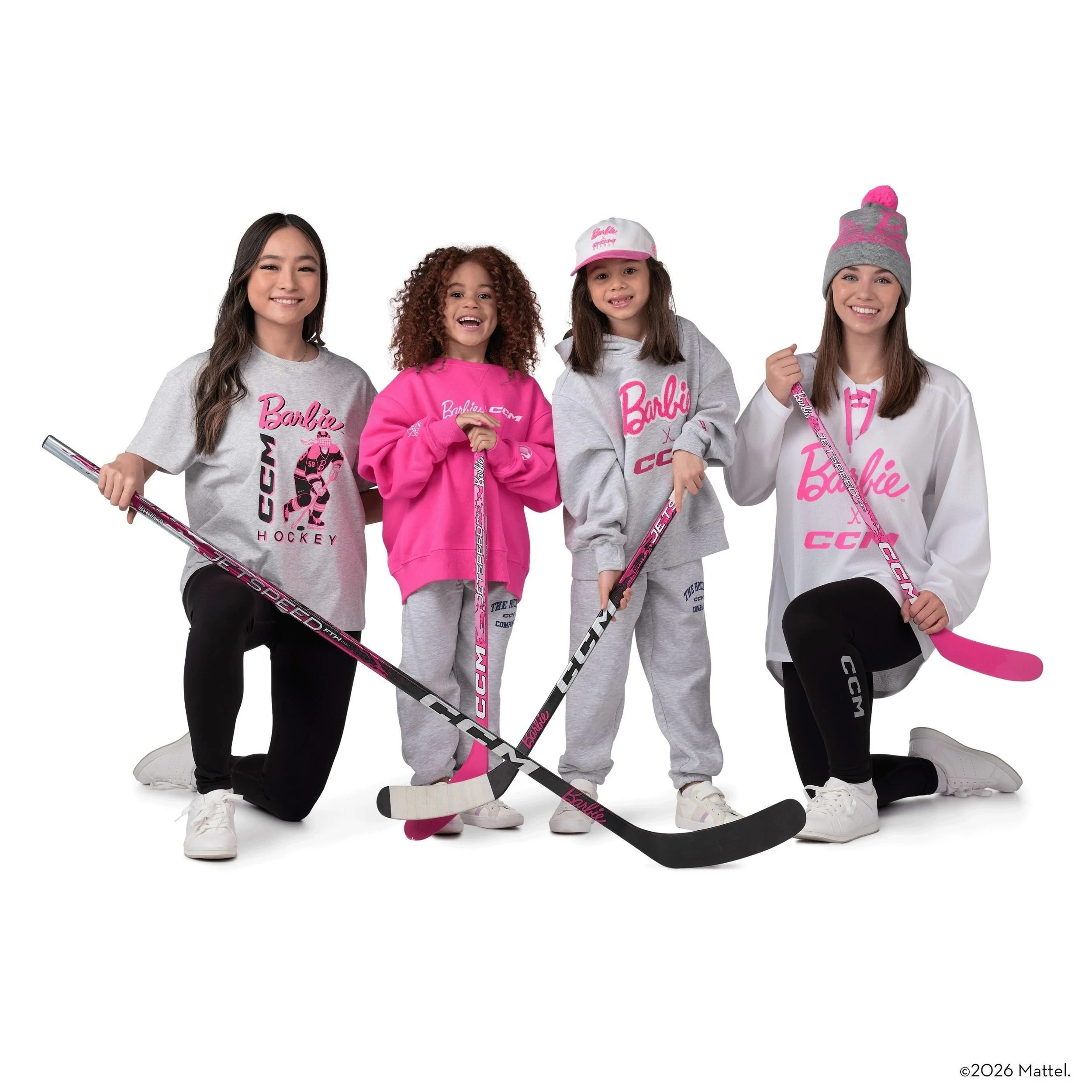
The latest signal: CCM Hockey and Barbie have announced a strategic partnership built around a shared goal of growing the game by making sure more girls see themselves in it. For a sport long defined by a very particular visual identity, this collaboration is more than a product launch. It's a category statement.
The Numbers Are Real
Let's start with the foundation. Hockey Canada reports that girls' hockey registrations grew 6% year over year, with the 2024/2025 season logging more than 115,000 women and girls registered, the highest on record. That total included 18,500 new players, representing a 30% increase in registrations since 2022.
That's not a blip. That's a trend with real momentum, and it's exactly the kind of growth that invites brands to ask a harder question: how do we make sure these players stay?
Awareness isn't the challenge anymore. Retention and representation are.
What CCM and Barbie Are Building
The first phase of the CCM x Barbie collection includes a JetSpeed FTW Pro elite stick, a mini stick, and an apparel line, products designed to put the sport's visual identity in new hands, literally. A second wave of equipment drops in August 2026, timed to Back to Hockey season, which is when new participation either becomes a habit or quietly fades.
That timing is deliberate. The real test of any growth play in youth sports isn't the launch moment. It's whether it converts first-season energy into year-two commitment.
CCM brings genuine credibility here. The brand has long supported the women's game at the highest levels. Barbie brings something different: cultural reach that extends well beyond the hockey community, into households where the sport might not be a tradition yet. Together, they're reaching the player and the parent, the fan and the first-timer.
This Didn't Come Out of Nowhere
The CCM x Barbie announcement lands in a hockey landscape that's been actively expanding its cultural footprint for a few years now, and Canadian brands have been paying attention.
We covered the PWHL x Barbie x Tim Hortons collab when it dropped last summer, and it's worth revisiting as context. That partnership featured dolls modelled after Sarah Nurse and Marie-Philip Poulin, available in Tims locations and at PWHL shops. It showed exactly how you translate athlete visibility into mainstream cultural participation, and it came with real community impact. Five dollars from every doll sold went to the Grindstone Award Foundation, with the PWHL matching online sales donations to help more girls access the game. Fandom made accessible. Purpose built in.
That collaboration didn't happen in a vacuum either. The PWHL itself is one of the fastest-growing sports leagues in North America right now. Launched in 2024 with six teams, the league added the Vancouver Goldeneyes and Seattle Torrent for its third season, its first expansion, less than two years after launch. It's already targeting another two to four teams for 2026-27, with markets like Halifax, Quebec City, Calgary, and several U.S. cities all in contention. The long-term target is 12 teams. The league drew over 123,000 fans across its Takeover Tour games last season alone. When a league is growing that fast, the brands around it grow with it.
Then there's Heated Rivalry. We've written about how Crave's original series became more than a streaming show. It sparked grassroots petitions, community rewatch parties, and a wave of online conversation that brought new audiences to hockey without requiring them to understand a power play first. The entry point was identity and emotion, not stats and tradition. That shift changes how brands need to think about audience acquisition.
The most effective hockey marketing right now often doesn't look like hockey marketing at all.
The Olympic Moment
This year's Olympic hockey tournament created a genuine mass moment for the women's game across Canada and the United States. When elite women's hockey is on a national stage with daily coverage and real social conversation behind it, it lowers the barrier for brands and signals to new audiences that this is a sport worth following.
Olympic moments don't convert casual viewers into lifelong fans on their own, but they create an open door. The brands present on the other side of that door are the ones that build lasting equity.
What This Means for Marketers
If you're a brand operating anywhere near hockey, whether that's equipment, apparel, retail, media, or youth sports, the shift is hard to ignore. Women's hockey is moving into a sustained growth phase, and the playbook looks different from the one that built the sport's traditional audience.
Representation is becoming part of the category's visual identity, not a side campaign. Product and design are functioning as inclusion tools. Retail moments and collectibles are acting like media. The brands investing in first-time players and first-time fans right now are the ones who will own disproportionate mindshare as this market keeps growing.
The CCM x Barbie partnership works because it sits at the intersection of cultural reach, product credibility, and smart timing in the registration cycle. That's not an accident.
Hockey's next audience is already here. The question is whether the brands around the sport are ready to meet them.
Have a campaign, partnership, or industry news you'd like to see covered? Send your press releases and pitches to news@socialnext.ca.
