SEO. GEO. AEO. AIO. The list of acronyms keeps growing, and honestly, it's hard to keep up, let alone figure out how to make sure your brand is actually showing up in each one.
If you were at Calgary's SocialWest 2026 conference, you would have learned that two out of three brands sitting at position one on Google don't get mentioned at all when someone asks an AI assistant the same question. That's the number David Zagury put up on screen during his paid search session, and it's the kind of thing that reorders a room. Position one used to mean you'd won. Now it might mean nothing, depending on where your customer is actually asking.
And that's exactly the question three different SocialWest speakers this year kept circling back to, from three completely different rooms: paid search, AI measurement, technical SEO, all landing on the same shift without ever comparing notes. We took notes, and built you a guide to ranking again, wherever your customers are actually asking.
What's actually changed
Google's AI Mode is default now, not a toggle you have to dig for. Gemini is embedded directly into the search box, and it's already sitting at a 21.4% mention rate across AI platforms, just behind ChatGPT. Search isn't behaving like a filing cabinet anymore, where you type a term and sort through a stack of results yourself. It's behaving like a conversation: one that narrows, follows up, and hands someone an answer before they ever see a website.
That shift sounds abstract until you look at what it's doing to clicks. Zero-click search, where someone gets their answer and never leaves the search engine at all, is becoming the norm rather than the exception. And that's before AI chatbots like ChatGPT, Copilot, and Claude enter the picture as their own destinations entirely, no search engine involved at all.
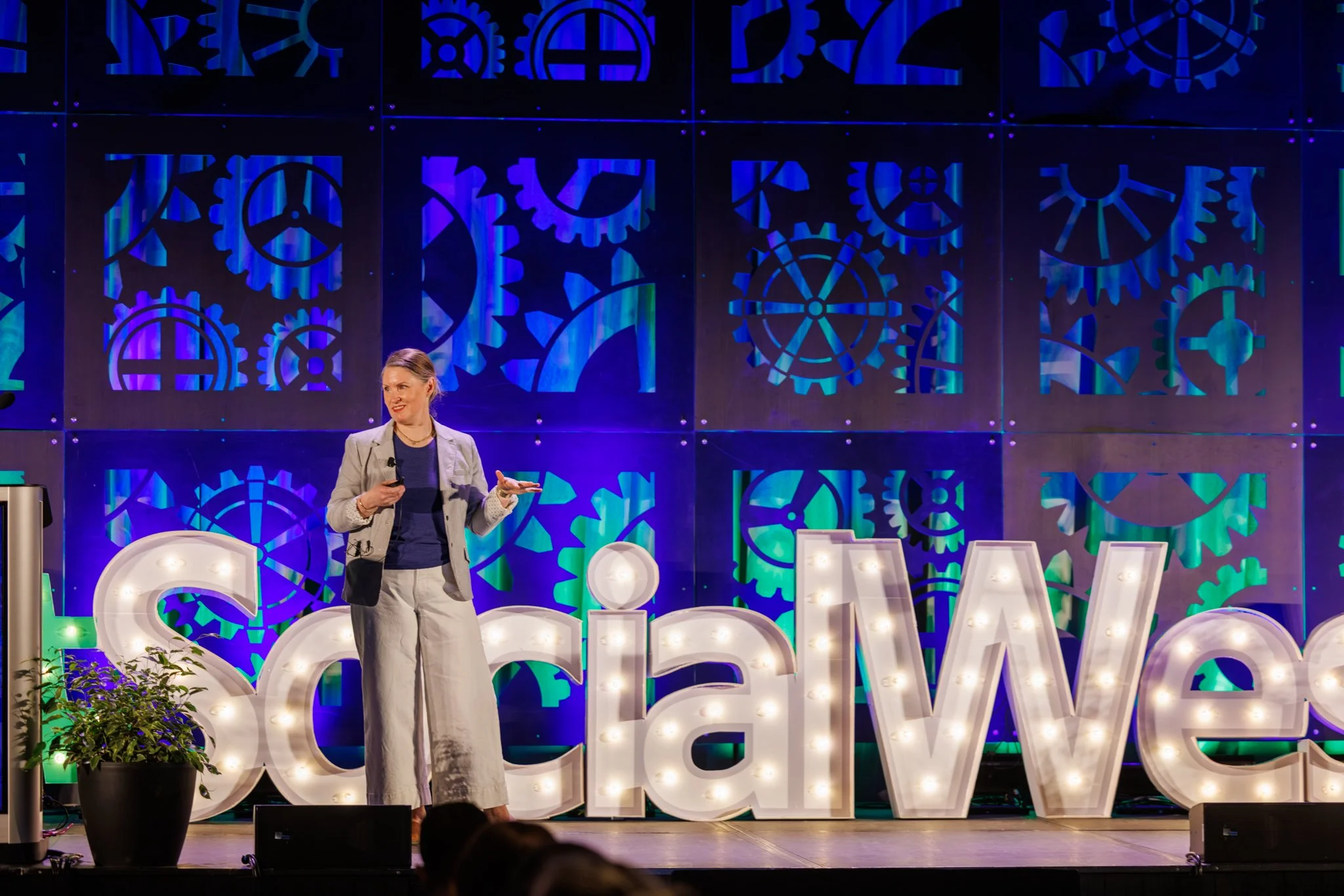
Krista Davey on stage at SocialWest 2026 | Photo by Neil Zeller
You're not starting from zero
Here's the part that should make you exhale a little: none of this means starting from zero.
Keep calm and SEO on, as Evans Hunt's Krista Davey put it on stage. Domains that already rank well in traditional search tend to be highly visible in AI results too. Google has said as much themselves, publishing their own AI optimization guidance that essentially boils down to: SEO is GEO. If you've been doing the fundamentals right, you're already partway there.
But “partway there" still means understanding what's actually happening to your content once it leaves your website. Every piece of content has to survive four gates before it ever gets to show up in an AI answer:
Retrieved — can the bots even access it in the first place
Selected — is it strong or trustworthy enough to be chosen over everything else out there
Synthesized — does it hold up once an AI model rewrites it into its own words
Cited — does your brand actually get named, or does the AI just use your content without crediting you at all
Miss any one of those four steps, and it doesn't matter how good your content is. It never gets the chance to be seen.

Chris Lamb on stage at SocialWest 2026 | Photo by Neil Zeller
Your dashboard is probably lying to you
If the four gates are about getting in, measurement is about knowing whether it worked, and this is where most dashboards are lying to you.
AI rankings, as it turns out, are basically noise. That's the core point ClickSide's Chris Lamb made on stage. Traditional rankings hold steady enough to report on. AI answers don't. Same query, different brands every time. Chasing your “AI rank" often just means chasing randomness and calling it insight.
What's actually worth measuring instead:
Brand mention frequency — how often you show up in AI answers at all, regardless of position
AI share of voice — how you're showing up compared to competitors on a given topic
Citation tracking — whether your website, YouTube channel, or social content is actually being named as a source
One easy fix: set up a custom GA4 report tracking referral traffic from ChatGPT, Claude, and Gemini. Takes 15 to 20 minutes, and gives you a real number instead of a shrug.
Where to actually start
So what do you actually do with all this? Krista Davey boiled it down to a few fundamentals worth starting with:
Don't block the crawlers. If AI bots can't access your site, none of this matters. Check your robots.txt before anything else.
Get your key content into raw HTML, not buried inside JavaScript carousels or drawers that crawlers often can't read.
Use confident, declarative language. Hedging (“we could be considered one of the best") loses to a competitor who just says “we are the best." AI models pick up on that certainty.
Davey also had a bit of myth-busting for anyone who's been chasing outdated GEO advice: skip the llms.txt file (proposed as a standard, never actually adopted), and don't go overboard on schema markup, it helps, but it's not doing as much heavy lifting as people think.
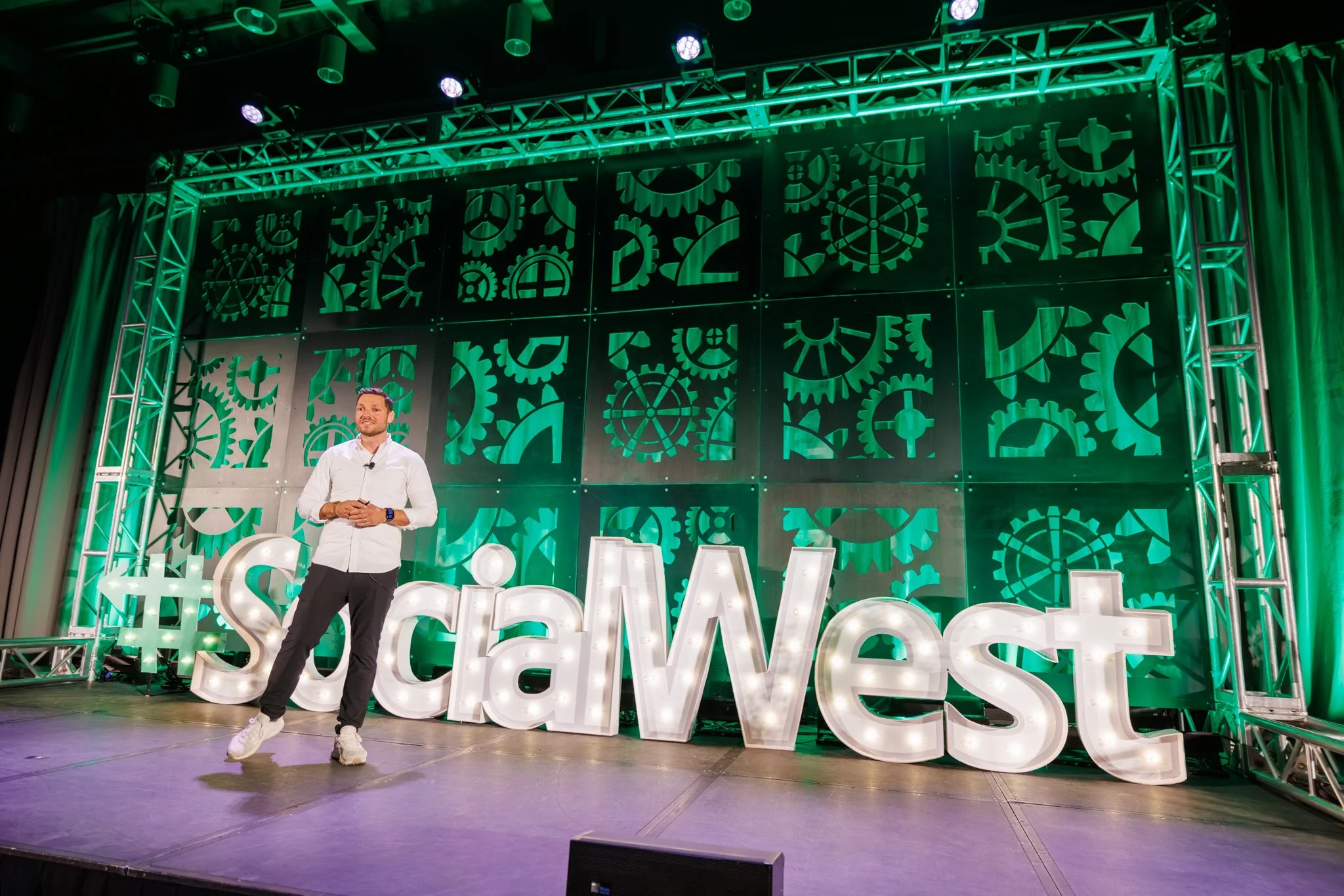
David Zagury on stage at SocialWest 2026 | Photo by Neil Zeller
Paid media's new job
So where does paid media fit into all of this? It's not about clicks anymore, it's about influence, according to NP Digital's David Zagury.
The old logic was simple. Paid search drove clicks, clicks drove sessions, sessions drove conversions. That loop still exists, but it's no longer the whole story. Now, paid amplifies visibility, visibility drives mentions, and mentions increase the odds of showing up inside an AI answer before a customer ever clicks anything at all. By the time someone does click through from an AI response, they've often already researched, compared, and half-decided. That's a much more qualified visitor, but it also means your ad showed up far later in the journey than it used to.
Zagury's data backs this up: brands running paid and organic together see conversion lifts across every industry he's looked at. The ones running them separately, or telling three different stories across their ad, their landing page, and their organic content, lose confidence from both users and AI systems alike. Consistency isn't just a nice-to-have anymore, it's what turns visibility into performance.
His closing line is the one worth remembering: the future of paid search isn't about being seen, it's about being chosen before the click.
None of Zagury, Lamb, or Davey stood up on that SocialWest stage sounding worried. They came with new things to measure and a few old habits ready to retire, and honestly, that's a good sign. Pick one thing from this list, whether that's the GA4 report, the robots.txt check, or just writing with a little more confidence, and start there. The brands already showing up in these answers didn't fix everything at once either.
