
Maybe you've been trying to make an in-person sponsorship feel like more than a logo on a step-and-repeat. Maybe you've been trying to get a creator partnership to feel less like an ad and more like something people actually want to watch. Or maybe you've been trying to build a brand story with enough legs to outlast a single campaign cycle.
This month, three brands in three unrelated industries happen to be working through those exact problems, each landing on a different answer. Here's how each one is doing it, and what's worth taking from it.
GMC × Calgary Stampede
Forty years is a long time to keep showing up to the same event. Long enough that “sponsorship" stops being the right word for it.
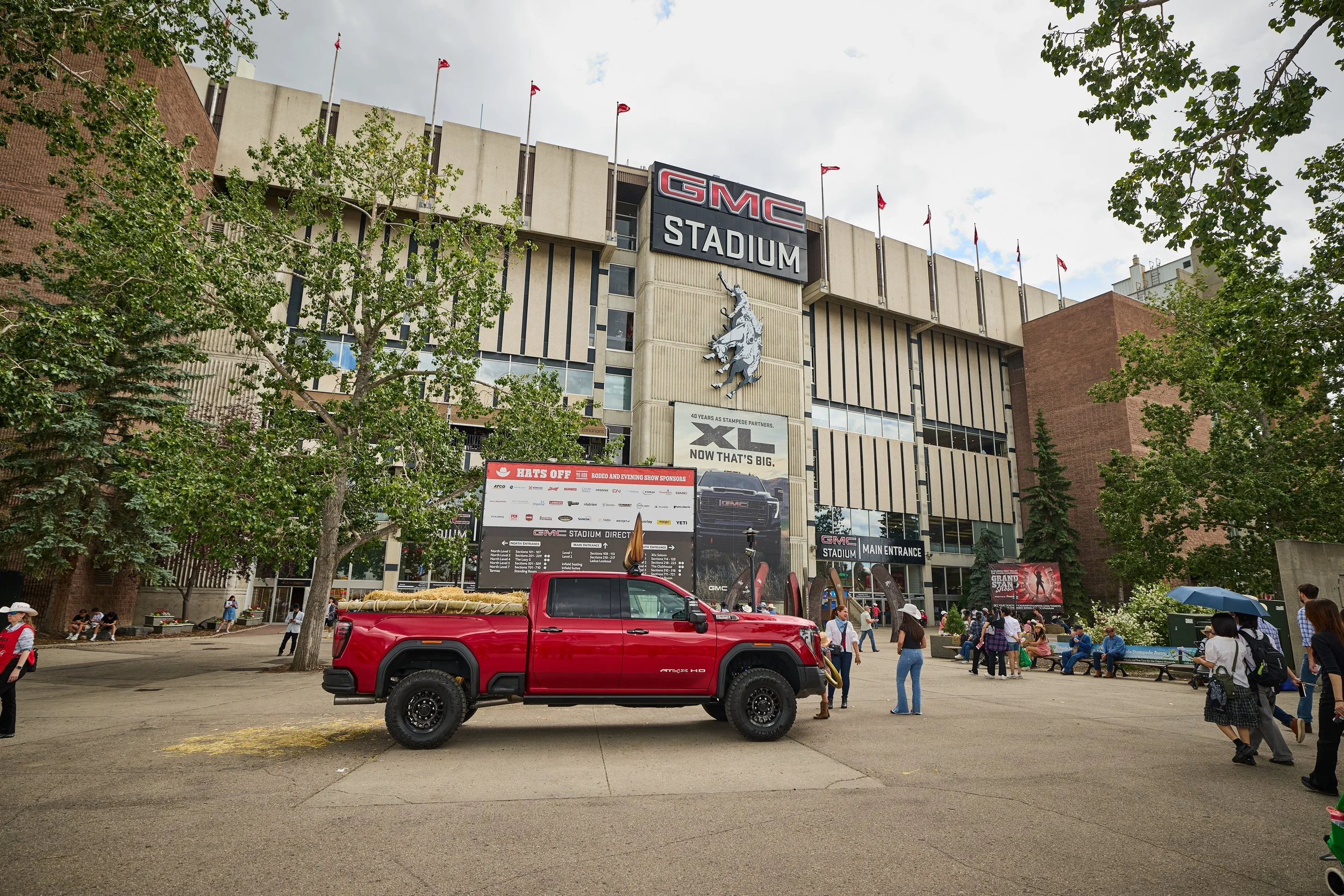
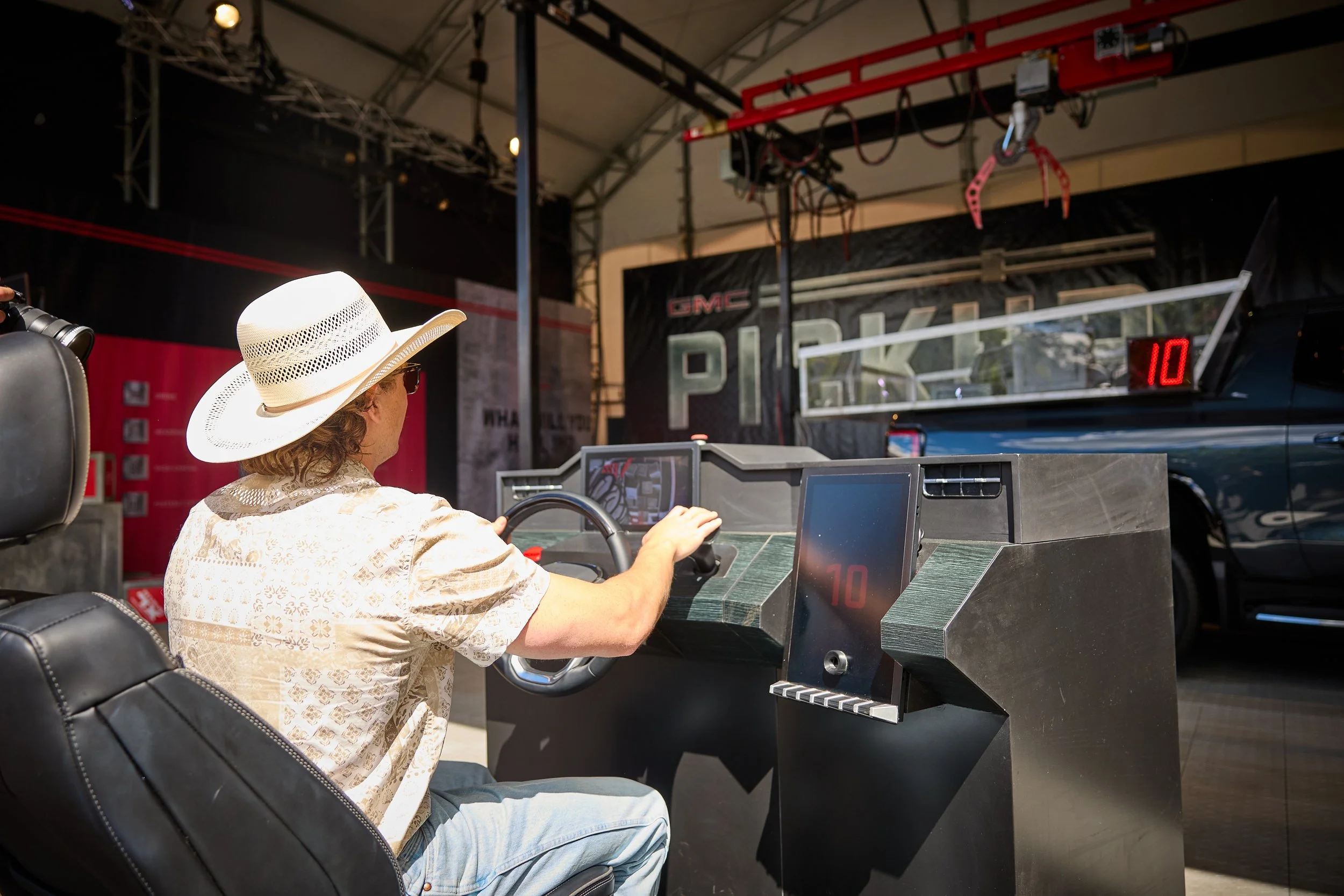
GMC's 40th anniversary as a Calgary Stampede partner could've been an excuse to coast. Instead it became the reason to build bigger: a full GMC Stadium with interactive vehicle displays, an 8-foot-tall claw machine built around the Sierra EV Denali, a dedicated creator and media program including a Brand Immersion Day out at Azuridge, and a spot in the Stampede Parade itself, putting the lineup in front of the crowd before anyone even reaches the grounds.
The timing isn't incidental, either. More than 40% of GMC's truck sales come from Western Canada, and roughly 70% of Stampede's 1.4 million attendees are local to Calgary. This isn't a brand chasing a national audience. It's one showing up, again, for the exact regional buyer who's already there.
The inspo:
A one-off activation has to work hard to earn attention. A 40-year presence doesn't have to convince anyone it belongs there, it just has to keep finding new ways to be worth showing up to. If you're already embedded in a recurring cultural moment, the harder and more valuable question isn't “should we do something here" but “what's the version of this that still feels new in year 40."
E.L.F. × the POUT-ine Challenge
Most product demos try to make the product look flawless. This one dared it to survive lunch.
The premise is simple: take a $6 buildable, transfer-resistant lip liner and put it through the most Canadian stress test available, a plate of poutine. Seven Canadian food creators, from @natdoumkos to @tryit.toronto, filmed themselves eating their way through cheese curds and gravy while wearing E.L.F.'s Main Stain Lip Marker, turning what could've been a standard swatch video into something people would actually watch for the poutine alone. The campaign ran natively on Instagram Reels and TikTok, with the format doing the selling instead of a script.
The mechanic is the whole strategy here. Nobody had to be told the product was transfer-resistant. They watched it happen in real time, bite by bite, in a context that had nothing to do with beauty marketing and everything to do with something Canadians already have opinions about.
The inspo:
The best product demo isn't a demo at all, it's a dare. Instead of telling an audience a claim is true, put the product somewhere it has to prove it on its own, in a moment people already care about. Poutine didn't need beauty marketing to be interesting. Beauty marketing needed poutine.
Canada Goose × Natural Intelligence
Every brand eventually has to decide what it's actually about, once the product itself stops being the news.
For Canada Goose, the answer is “Natural Intelligence": not a single campaign, but a running content thesis told through short films of tornado chasers, mushroom biologists, and paragliders moving through parts of the natural world most people never see, tied together by a voiceover that treats nature itself as a kind of intelligence worth paying attention to. It traces back to a Svalbard trip built around the return of the sun after months of Arctic darkness, which became the brand's top-performing organic content of the year, SVP of global marketing Victoria Freeman told Marketing Dive. That result convinced the team they'd found something bigger than one campaign, leading to an ongoing platform that now includes a recent excursion to Haida Gwaii off B.C.'s northern coast.
The strategic backdrop matters too. Destination BC, the province's tourism marketing body, commissioned global research earlier that found a large share of people, across both UK and US audiences, feel a growing “nature deficit" in the media they consume. Canada Goose isn't citing that research directly, but it's building into the same cultural moment: an audience that already senses it's disconnected from the outdoors, and a brand whose entire identity is built around surviving in it.
The inspo:
A campaign has a start and end date. A platform is a bet that you've found something true enough about your brand to keep telling, indefinitely, in new settings. Before you greenlight the next campaign, it's worth asking whether it's actually building toward something bigger, or if it's just another one-off that'll need to be replaced by the next idea in six months.
it’s all about commitment
None of these three brands are solving the same problem, and none of them needed to. GMC is proving that history is a strategy if you keep reinvesting in it. E.L.F. is proving that a claim is more convincing when an audience watches it happen instead of being told. Canada Goose is proving that a brand can outgrow the campaign format entirely and still know exactly what it's saying.
Different industries, different budgets, different bets. All three landed because someone was willing to commit to an idea past the point where it was safe to.
Seen a campaign out there that's doing something worth studying? Send it our way at news@socialnext.ca, we'd love to feature it next time.
