
What Marketers Took Home From SocialPacific 2026
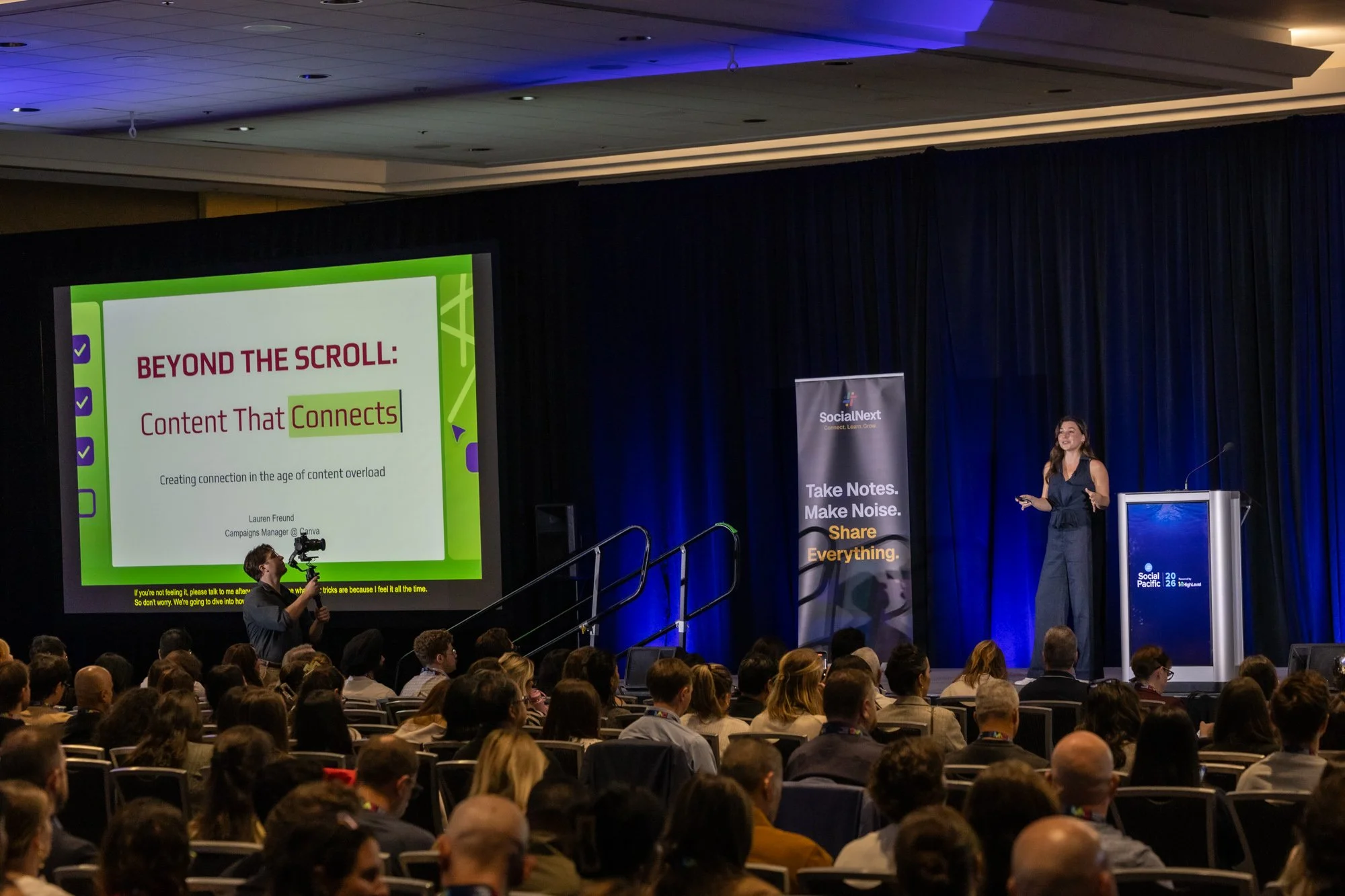
Lauren Freund on stage at SocialPacific | Vision Event Photography
For two days in September, more than 500 marketers filled the Vancouver Convention Centre for SocialPacific. Nobody needed to explain their job to the person next to them, and it showed. Over September 23 and 24, speakers, sponsors, attendees and volunteers brought a creative buzz to the hallways between sessions and out onto the seawall.
So what did people take home? After the event, attendees were asked what they've already changed about their work. A few said it was too soon to tell, which is fair. The rest gave answers that show where marketing in Canada is headed.
Getting found looks different now
If one idea followed people out the door, it was about search. Ranking on Google and waiting for the clicks isn't the whole game anymore.
The main stage kept coming back to it. The morning opened with a keynote on Search Everywhere Optimization from Neil Patel of NP Digital. In the afternoon, Charlie Grinnell of RightMetric took the room through Mapping the Dark Market, a session on turning hidden social behaviour into a strategic roadmap. Rand Fishkin of SparkToro closed the day with The End of Web Traffic and the Rise of Zero Click Marketing. When attendees named a favourite speaker, Grinnell and Fishkin came up most often.
And people are acting on it. Some are checking what AI tools say about their company and working to change it. Others are rethinking how their website shows up in AI results, or digging into answer engine optimization (AEO) and generative engine optimization (GEO). One attendee said that after the dark market session, their team's next step is figuring out what people actually want, not just what they think they want.
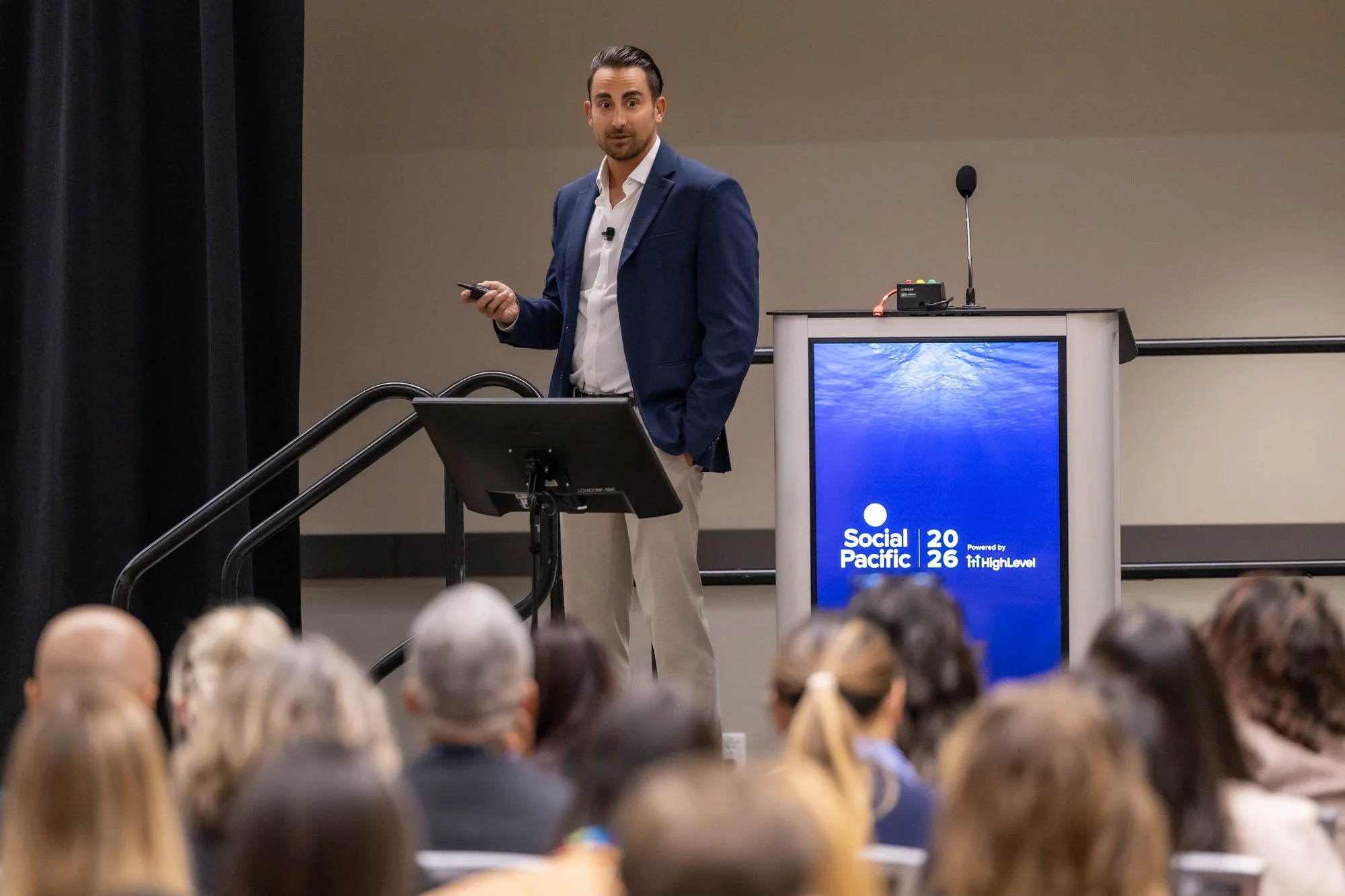
Ronnie Malewski on stage at SocialPacific | Vision Event Photography
Ideas that are already at work
One business owner left SocialPacific and bought a CRM so they could start an email marketing strategy. They weren't the only one rethinking email. Nihal Mandanna of Cyberimpact led the From Inbox to Impact workshop on day one and spoke again on day two, and email came up more than once when attendees were asked what they'd changed since.
Brand trust ran through both days. Takt's Lindsay Smith and René Thomas led the Brands Built to Be Believed workshop, then brought Brands Built for the Trust Deficit to the conference stage, and attendees kept describing their approach as practical. One said it helped their whole team get on the same page about branding, rather than leaving marketing to champion it alone.
At least one attendee is already planning campaigns around the peak-end rule, the idea that people judge an experience by how they feel at its high point and at its end. It came from Ronnie Malewski of NP Digital in How to Build a Brand People Actually Remember.
Some of the most useful takeaways were the hands-on ones. Lauren Freund of Canva packed a lot of detail into a short session, right down to what each platform counts as a view. Over in the smartphone content creation session, Will Yang of differo.ca kept the room engaged, and one attendee's answer to what they'd changed since was refreshingly simple. The way they take photos.
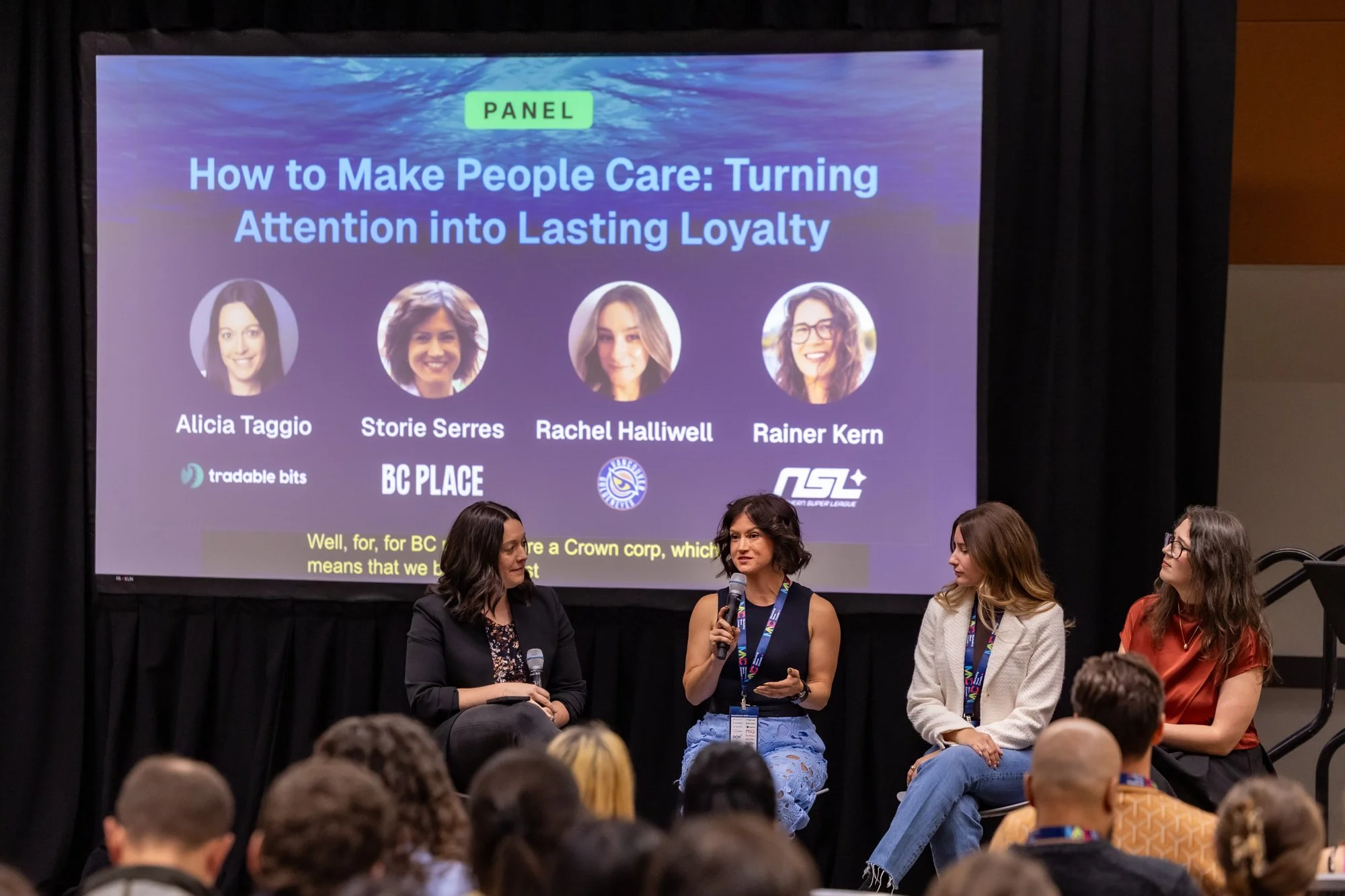
Moderator Alicia Taggio alongside panelists Storie Serres, Rachel Halliwell and Rainer Kern | Vision Event Photography
Social is becoming marketing
One of the more thoughtful reflections came from someone who works in social. They noticed that many speakers weren't really talking about social on its own anymore, and they saw that as a good thing, a sign the industry is becoming more integrated instead of treating social as its own island.
The program backed that up, moving from search to email, creator marketing, out-of-home, analytics and brand strategy. The How to Make People Care panel brought sport into the conversation too, with moderator Alicia Taggio of Tradable Bits alongside panelists Rainer Kern of the Northern Super League, Storie Serres of BC Place and Rachel Halliwell of the Vancouver Goldeneyes.
Mixed feelings about AI
AI was hard to miss on the program. In The New Influence System, James Huyler-Thomson of MiQ and Bhavika Kateja of Clark Influence looked at how human and AI intelligence shape brand ecosystems. How people felt about AI afterward didn't land in one place.
One attendee came away with a clearer boundary, using AI as a tool to build on their own skills rather than replace them. Another said the event changed how they think about AI tools.
Others are more cautious. One attendee raised the environmental cost of AI and found its growing presence across the industry hard to sit with.
New faces, familiar feeling
For a fourth-year event, a lot of the faces were new. Most of the attendees who shared feedback were there for the first time, and plenty of them talked about the people as much as the content. Even at its size, the event felt small enough to meet people.
For one returning attendee, that's the whole point. They keep coming back for the people, the fresh ideas, and the “reassurance that I'm not the only one professionally navigating the weird and wonderful chaos of the internet."
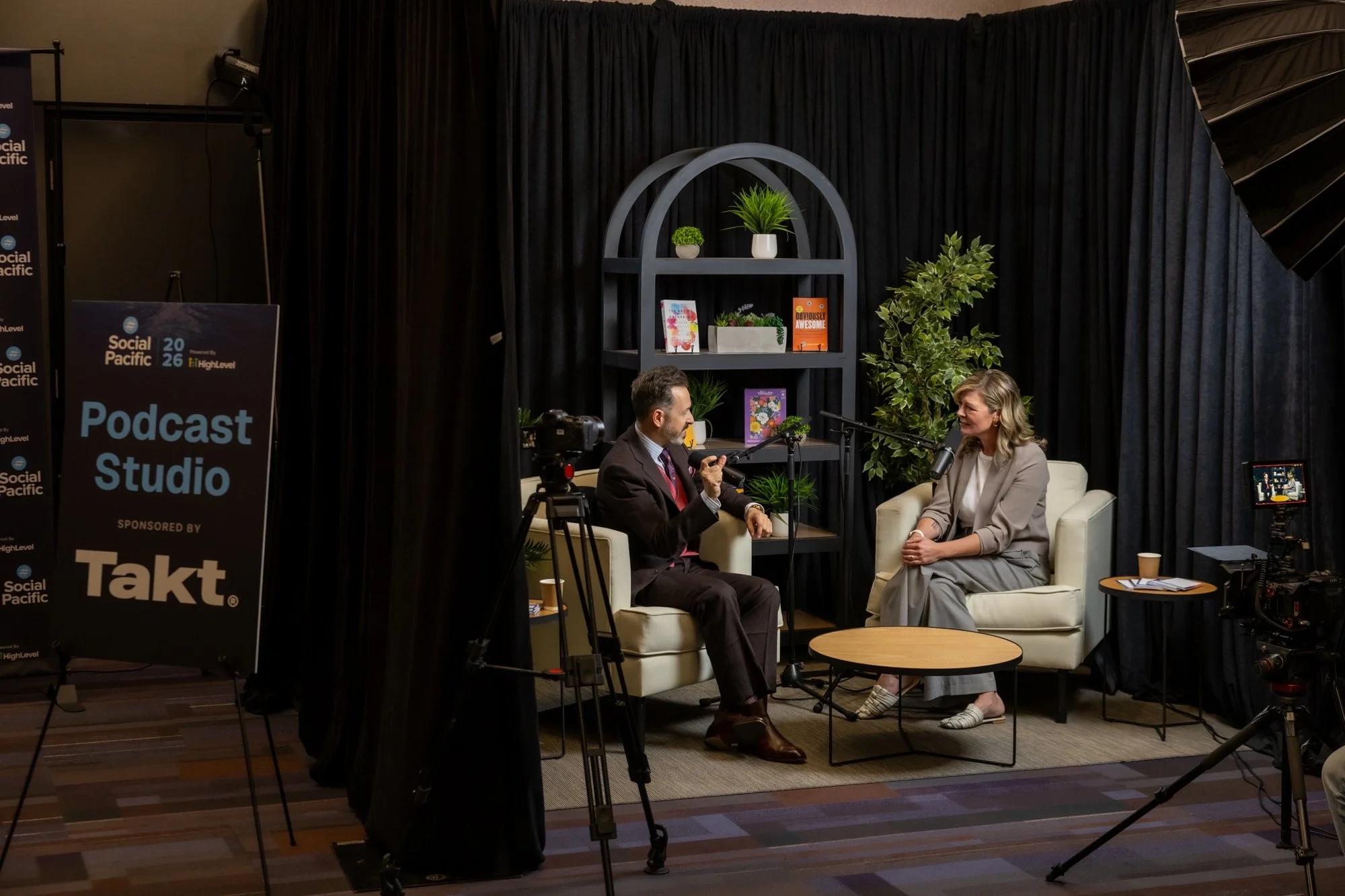
Rand Fishkin and guest host Lindsay Smith recording an episode for the Marketing News Canada podcast
Fresh episodes are on the way
And of course, we were on site recording new episodes of the Marketing News Canada podcast. Takt’s Lindsay Smith is back as host, sitting down with speakers and sponsors from the conference.
