
The New Non-Profit Brand: From Pity Narratives to Consumer-Grade Identity
Non-profits and public-interest organizations are rewriting how they show up: shifting away from guilt-driven appeals and inconsistent branding, and toward empowerment-based storytelling paired with clearer, more modern brand systems. The result is stronger trust, more sustained engagement, and campaigns that feel human instead of transactional.
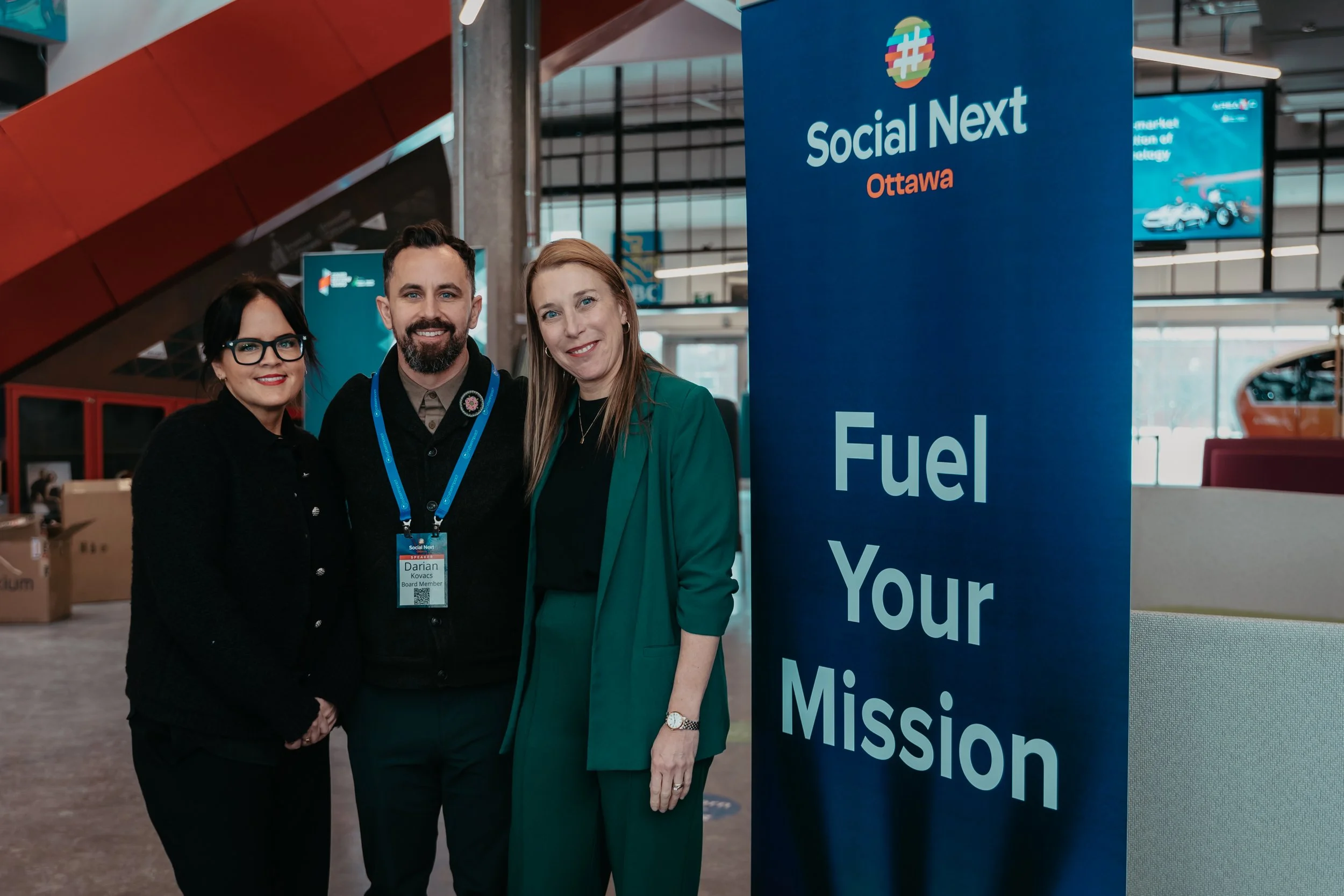
Left: Deanna Wampler, Indigenous Tourism BC, Centre: Darian Kovacs, Digital Marketing Sector Council, Right: Karine Courtemanche, Plus Company | Photo by Mat Higgins-Savidant
The old playbook is wearing out
For years, non-profit marketing leaned on urgency and deficit framing, highlighting need, crisis, and hardship to motivate support. It worked until it didn’t.
Audiences now face competing causes, constant bad news, and fast-moving feeds. The emotional lever of guilt is less reliable in a world of attention fatigue and trust erosion. Instead of motivating action, it can create avoidance, skepticism, or a short-term spike with little long-term commitment.
Daniel Francavilla, brand and content strategist and founder of The Good Growth Company, says the sector is moving away from “shock images, guilt-heavy copy and saviour narratives” because they flatten people into problems to be solved. “We’re moving toward more partnership language and stories that frame community members as co-creators and leaders, not passive recipients,” he explains.
This shift isn’t about hiding need. It’s about refusing to reduce people to their worst moment and building narratives that support dignity, agency, and partnership.
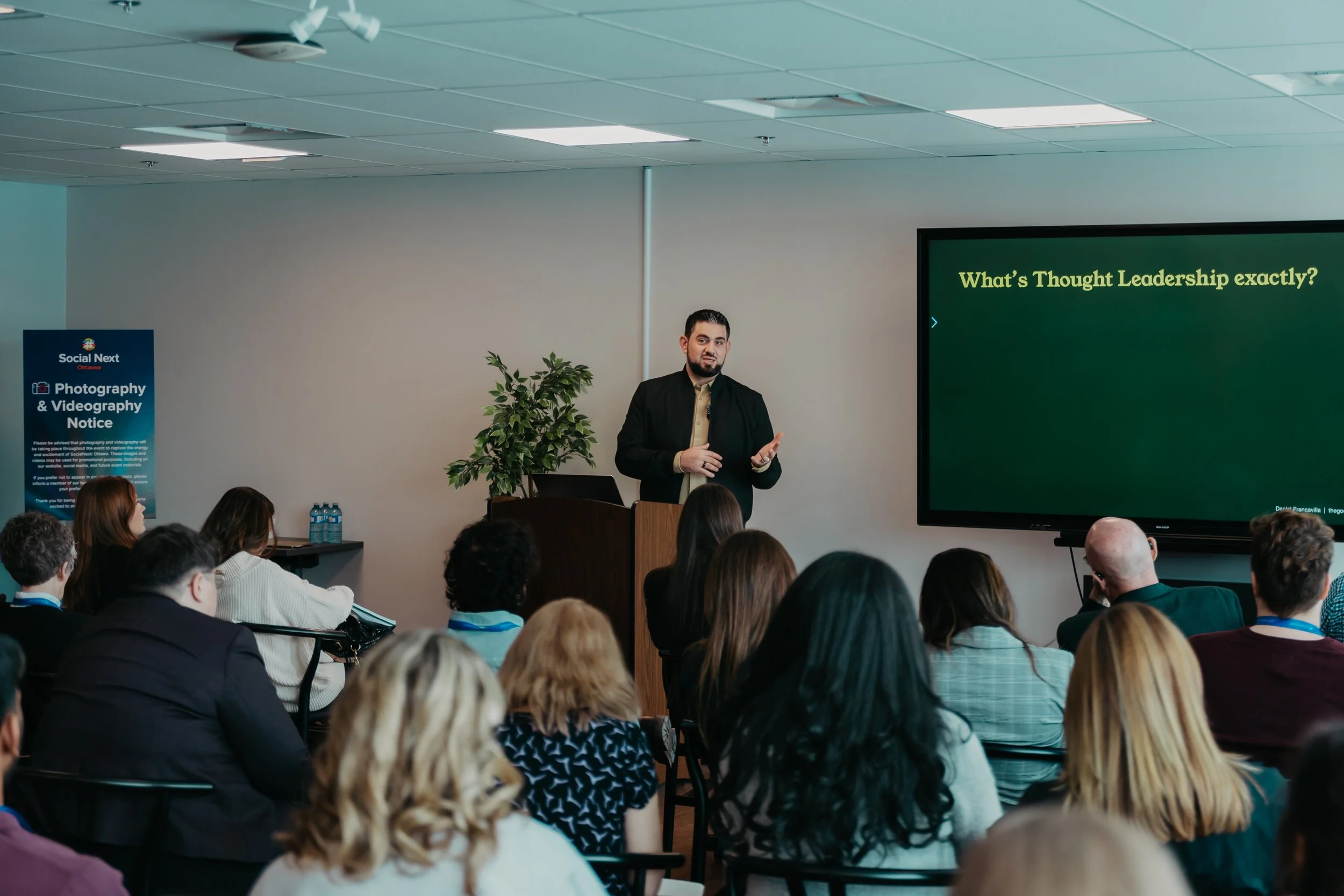
Daniel Francavilla at SocialNext: Ottawa 2025 | Photo by Mat Higgins-Savidant
What’s replacing “sadness marketing”
Organizations making the biggest headway today are reframing impact stories around possibility, participation, and progress.
Instead of centering crisis as identity, they’re showing:
People as protagonists, not props.
Change over time, not just need in the moment.
Proof over promise: outcomes, transparent data, lived-experience voices.
Community co-creation: “nothing about us without us.”
Francavilla has also noticed storytelling becoming more strategic and more shared across teams. “This year I’ve noticed more leaders speak about storytelling beyond those working in marketing or communications,” he says. “More organizations are treating storytelling as a strategic asset, not a nice-to-have and pairing it with data, impact metrics, and clear next steps for supporters.”
He adds that it can’t sit with one communications person alone. “Storytelling is for everyone,” he says. Moments worth sharing need to be captured by staff, volunteers, and community members. One quote that has stuck with him recently is, “A moment unmarked is lost forever.”
This approach doesn’t soften reality. It strengthens it because it shows what support does, not just what the absence of support looks like.
Breast Cancer Canada’s #BeyondOneSize campaign shows what the new playbook looks like in practice. A simple bra metaphor makes the point that there isn’t one kind of breast cancer, there are more than 50, each requiring tailored care. The result is awareness that educates and empowers, not pity-based storytelling, and a clean, modern creative approach that feels built for today’s feeds.
Campaigns like this are why the sector is moving toward partnership language, proof, and clarity, not shock, guilt, or saviour narratives.
The trust-first lesson from public sector comms
Public sector teams have been navigating these tensions in real time, often under intense scrutiny. Kevin Parent, now Team Lead of Digital Communications at the Canadian Institute for Health Information and former Head of Social Media for Ottawa Public Health, says outdated communications weren’t just ineffective. They harmed trust.
“What felt outdated was one-way conversations, being preachy, and telling your audience what you think they should know rather than listening to what they need to know,” Parent says. What replaced it was “an audience-first, engagement-driven approach where the first steps were always listening and identifying gaps or root causes.”
Parent points to a pivotal moment early in the pandemic, when masks became mandatory in Ottawa and backlash surged. Many residents felt the shift came out of nowhere, saying, “didn’t you just tell us not to wear a mask?” For internal teams, the progression made sense. For the public, gaps in exposure and the nuance of evolving guidance created confusion.
So Ottawa Public Health led with empathy and context. “We wrote a long-form thread and started by saying, point blank, ‘we know it seems like we said not to wear a mask, then wear a mask, and now they’re mandatory. We know this was confusing and we’re sorry.’ No one had ever seen a large government organization say anything like that before.”
That transparency became a repeatable trust tactic. “We came back to this many times throughout the pandemic, with long-form posts that were open, empathetic, genuine and authentic,” Parent says. “We helped people make sense of what they were hearing, which empowered them to make informed choices.”
He credits a line from journalist Ed Yong as a guiding principle: “Helping people make sense of things is a very different activity than simply telling them what is happening.”
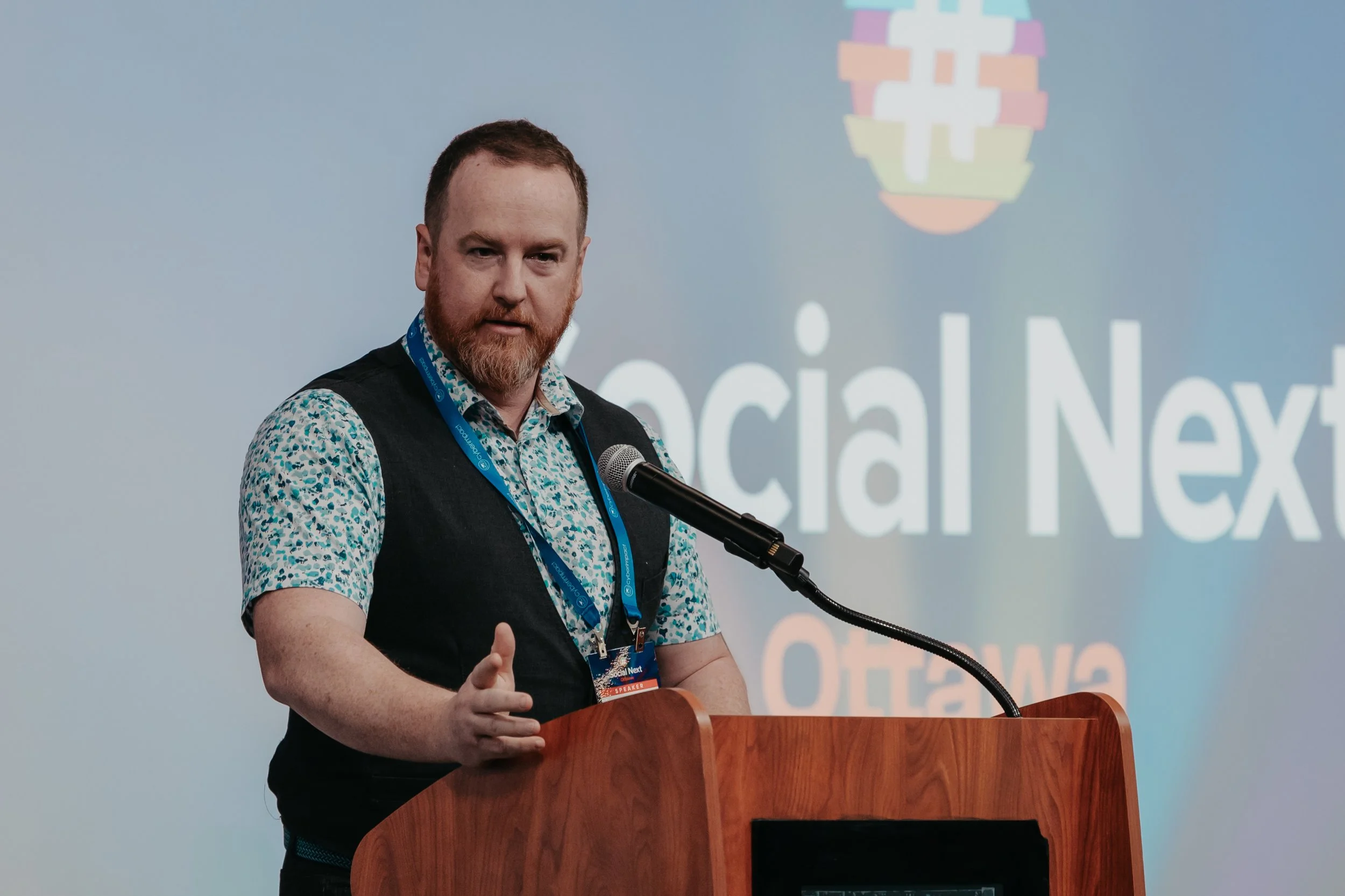
Kevin Parent at SocialNext: Ottawa 2025 | Photo by Mat Higgins-Savidant
Non-profits are becoming real brands
As storytelling evolves, brand is evolving too. Non-profits and public sector teams are investing in clarity and consistency long expected from consumer brands, not for polish, but to reduce friction in trust.
Francavilla sees teams moving away from generic, one-size-fits-all outreach and into more intentional content systems. “The most effective nonprofit marketing teams are moving away from generic mass blasts and toward personalized journeys, segmented content, and channel-specific creative,” he says.
Visually, he argues the sector is also upgrading how it shows up, moving away from stock-photo-style graphics and toward formats that feel real and immediate, especially video. More process, more people, more context, content that’s social-first and trust-forward.
Brand as a trust signal in crowded feeds and AI discovery
As AI reshapes discovery and platforms prioritize credibility, brand consistency has become a signal. The more clearly an organization communicates what it stands for and proves it, the more likely it is to be found, shared, and supported.
“Clarity in one glance is more important than ever,” Francavilla says. Whether a person or an AI encounters your work, they should instantly understand who you serve, what you do, and what impact looks like.
That clarity needs alignment across touchpoints. “Everything from taglines to visuals and tone should be aligned on your website, social channels, email marketing, and even staff LinkedIns,” he notes, since AI overviews pull from multiple sources at once. “Verifiable proof” matters too, recent stories, outcomes, financials, third-party coverage, and up-to-date pages that help both humans and machines confirm credibility.
Even with nonprofits still enjoying relatively high baseline trust, he’s clear on what sustains it. “People trust people, visible leadership, staff, and community voices all reinforce the logo.”
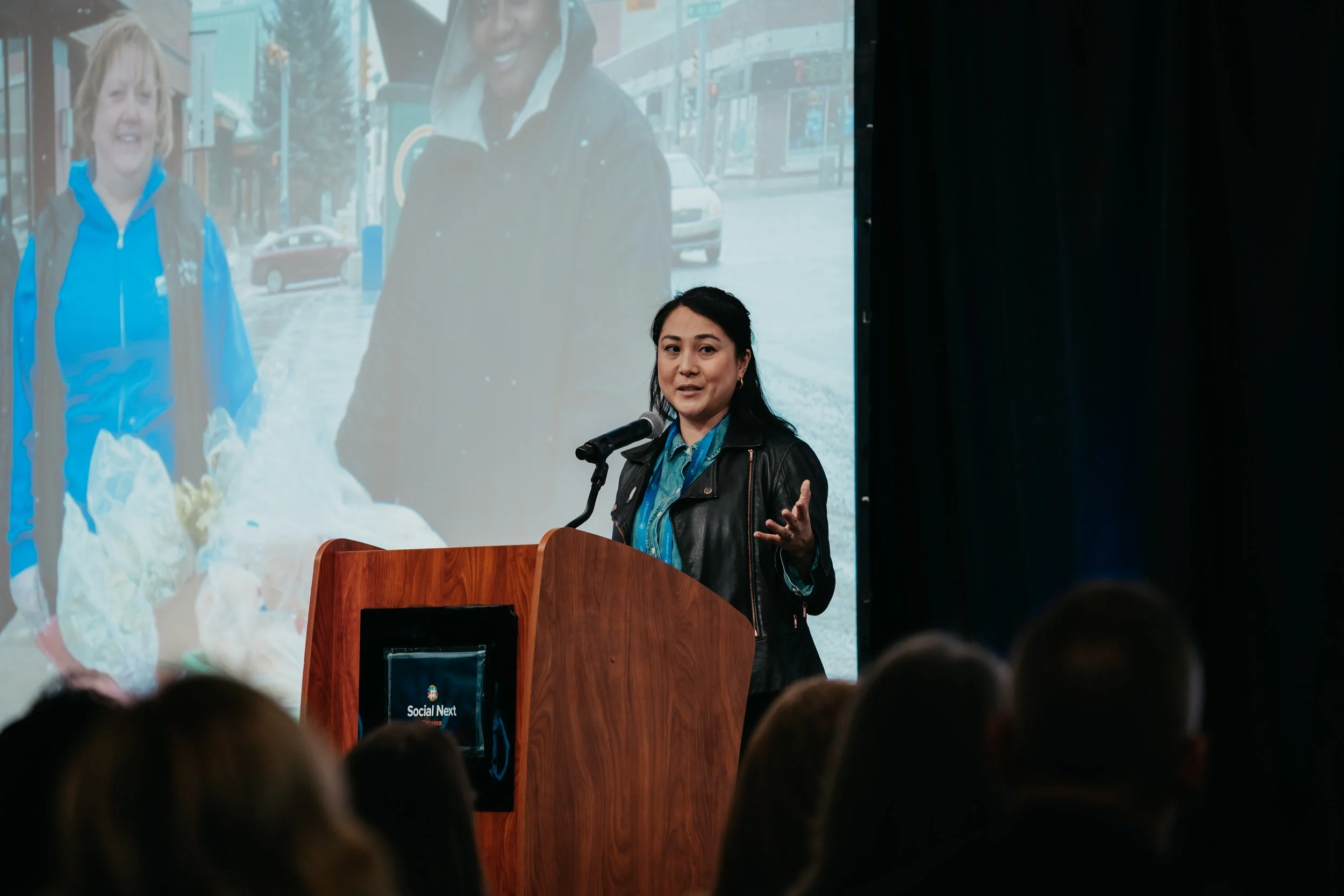
Lourdes Juan, Knead Technologies | Photo by Mat Higgins-Savidant
Dignity-first storytelling, how to do it without harm
Privacy and vulnerability are real concerns in mission-led storytelling. Francavilla says the solution is co-creation.
“Aim for co-creation over extraction by involving individuals in how their story is framed, where it’s used, and when it’s retired,” he advises. Giving beneficiaries the chance to speak in their own words often strengthens the work. He recalls a food bank shoot where participants were eager to share impact and make direct appeals to donors, in a way that felt true to them.
He also points to Community-Centric Fundraising as a useful lens, centering community needs, voice, and leadership for shared power and outcomes, rather than focusing only on donor experience.
“Show people’s goals, strengths, views and actions first,” he says, “and position your organization as a platform or amplifier, not the hero.”
What marketers can steal from the new playbook
This evolution isn’t just relevant to non-profits. It’s a masterclass in modern brand building for any organization trying to earn trust.
Steal this checklist:
Replace “look how bad it is” with “look what’s possible with you.”
Make your community co-authors, not subjects.
Build a repeatable social brand kit, fifteen templates beats one glossy PDF.
Show impact with proof points people can understand in seconds.
Make one clear ask per campaign. Clarity beats complexity.
Parent adds that modernization isn’t only external. It’s organizational. “Take steps to lower the levels of risk-aversion in your org and build operational processes to allow you to be nimbler,” he says. “Listen to your audience. Learn what they care about and what motivates them. And trust your communications team to do their jobs.”
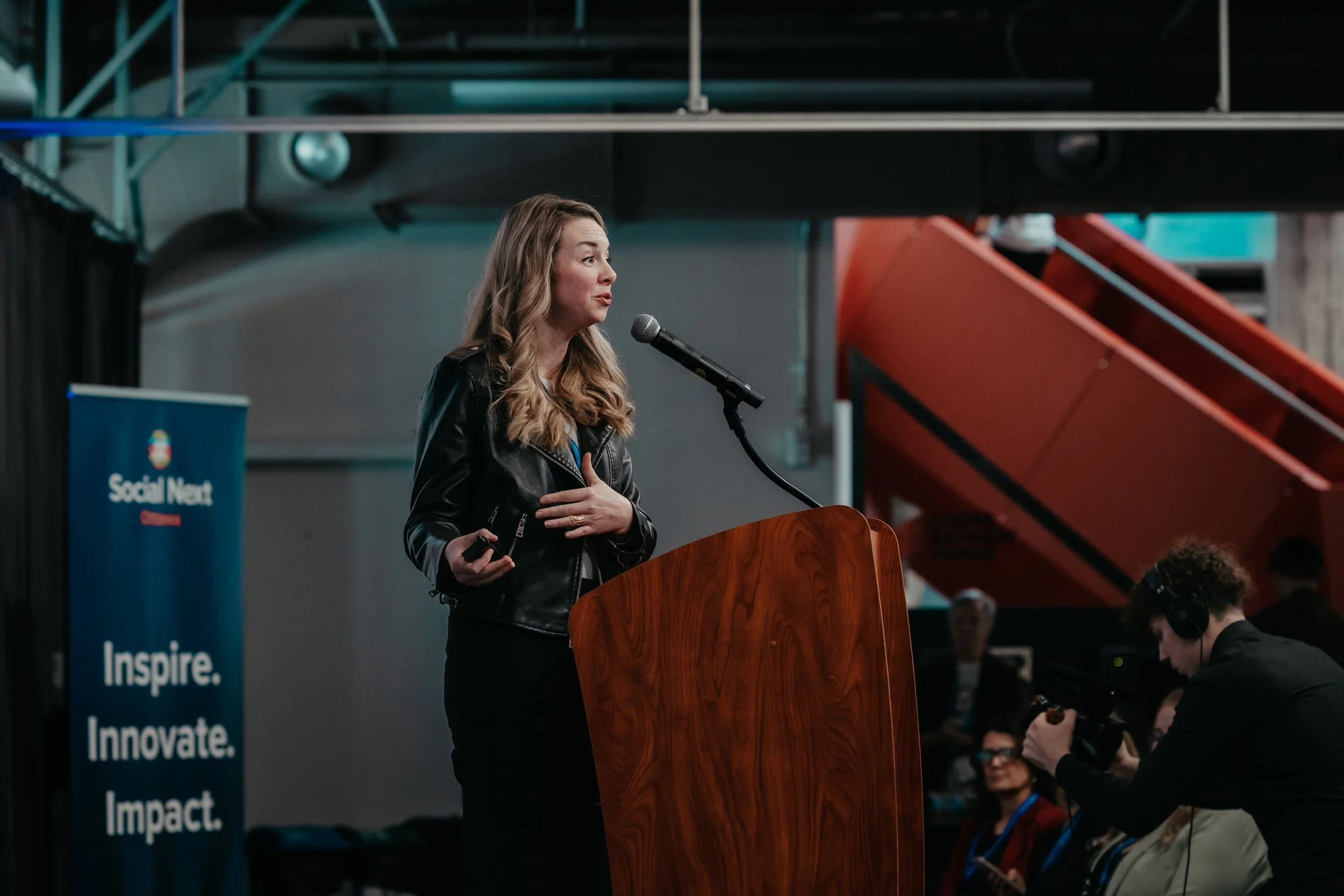
Emily Baillie, Compass Content Marketing | Photo by Mat Higgins-Savidant
Why this matters for SocialNext
The changes underway in mission-led marketing are bigger than a trend. They’re a redefinition of what trust, storytelling, and brand should look like in 2026.
That’s exactly why Ottawa’s SocialNext: Nonproft & Public Sector is an annual SocialNext conference dedicated to nonprofit and public sector marketers. It’s built as a home for the teams doing this work, those shifting toward dignity-first narratives, stronger brand systems, and clearer trust signals for the public good.
If you’re rethinking how your organization shows up, SocialNext: Nonprofit & Public Sector is where that conversation happens each year.
Thanks to Daniel Francavilla and Kevin Parent for sharing their thoughts and expertise with Marketing News Canada.
About Daniel:
Daniel Francavilla is a brand and content strategist, educator, and founder of The Good Growth Company, helping nonprofits and public-sector teams build brand-first, human-centred marketing. He teaches at OCAD University and George Brown College, and regularly leads training for Canadian organizations. Daniel consults on thought leadership, branding and strategies to grow trust, community, and impact.
About Kevin:
Kevin leads the Digital Communications Team with the Canadian Institute for Health Information. He previously led the social media team for Ottawa Public Health, where his team's pandemic comms were celebrated by the likes of The World Health Organization, The Rockefeller Foundation, Macleans magazine, CBS Sports, Arlene Dickinson, and Ryan Reynolds...to name a few. Kevin is an old ginger dad, so please be patient with him.
