
Cyberimpact’s Nihal Mandanna and Evans Hunt’s Areï Rodelys on why asking your audience beats guessing, and where most teams drop the follow-through.
Somewhere between your send button and your subscriber’s eyes, an AI is now deciding what your email says. Apple Mail and Gmail summarize and sort messages before anyone opens them. A long, carefully built email about flu clinics might reach a reader as a single line about walk-in shots at three locations. Whatever survives that summary has to be something the reader already wanted.
Nihal Mandanna, Growth Director at Cyberimpact, made this point at SocialPacific in September. Stop guessing what subscribers want, he said, and ask them. His company’s State of Email Marketing in Canada 2026 report estimates that 15 to 20% of real emails never reach the inbox because they fall short on relevance, trust or compliance.
The report draws on anonymized data from more than 12,000 Cyberimpact users across Canada and covers campaigns and newsletters sent in 2025. Average click-through rate fell to 2.24% that year, down from 3.13% in 2024. Open rates went the other way, rising to 44.43% from 40%. The report itself cautions against reading too much into that, though, since Apple Mail Privacy Protection preloads images and counts them as opens even when no one reads the email. Clicks are the harder signal to fake, and they’re slipping.
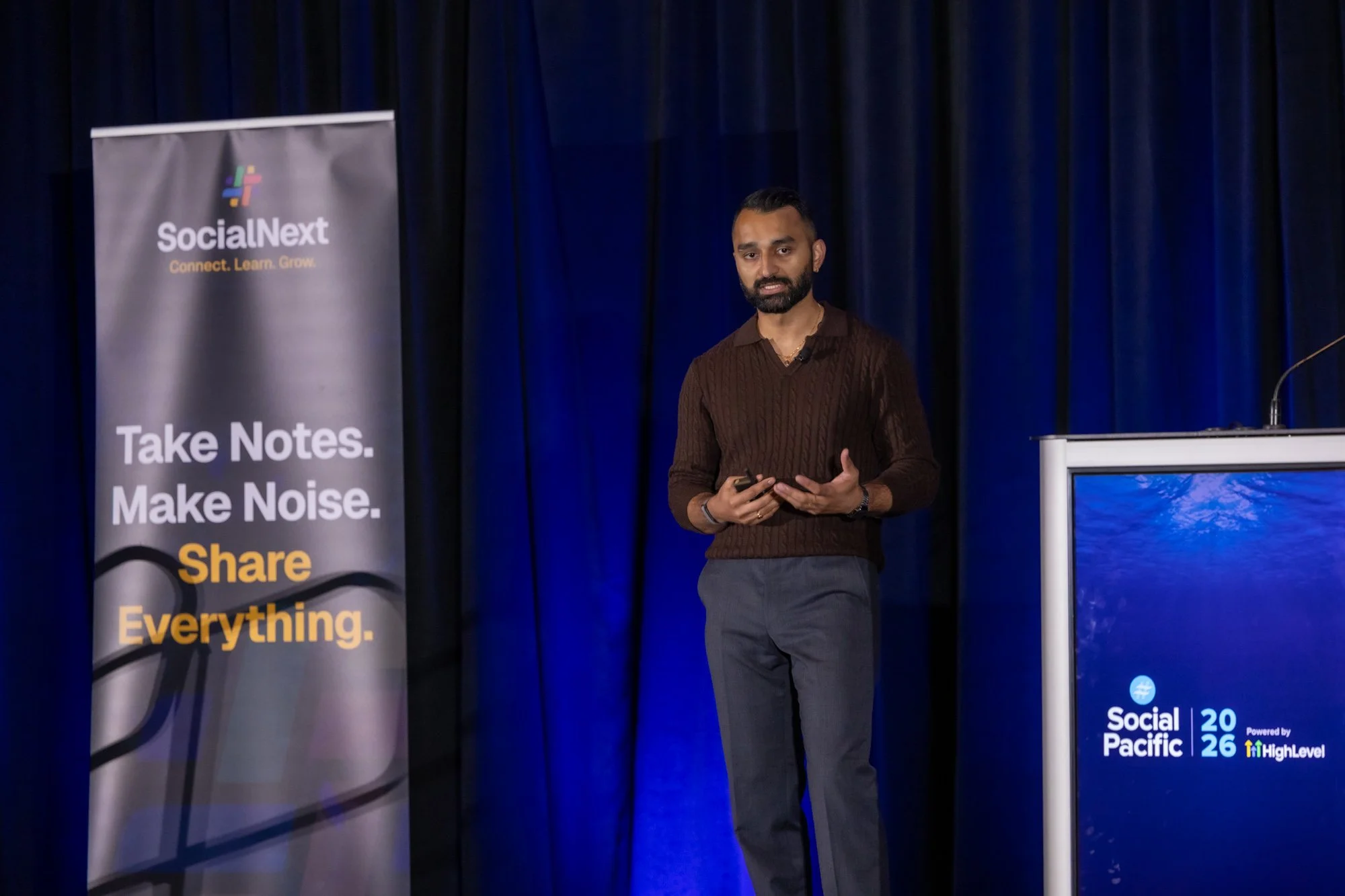
Nihal Mandanna CP on stage at SocialPacific 2026 | Photo by Vision Event Photography
The data you get by asking
The data Nihal is talking about is zero-party data, meaning what people tell you directly about what they want. It’s different from inferred behaviour or anything bought from a third party, and it comes with responsibility. You own the list, which means you own the relationship.
Asking doesn’t have to happen all at once. A sign-up form can collect a few basics, and the rest can come out over months of sending. The preference centre is where most teams fall short. Vague options like “promotions” tell a subscriber nothing about what they’ll actually get, so Nihal recommends using the categories you really send, plus language and frequency. For bilingual audiences, that means people who choose French get French.
Why people leave, and why they stay
Among unsubscribes on Cyberimpact’s platform in 2025, the most common reason given was “never subscribed” at 39.7%, followed by “not interested anymore” at 35.7%. The report points out that people sometimes forget they signed up or tap the first option just to get out, so those answers are imperfect. Its larger point is that knowing why people stay matters more than knowing why they leave, and the only way to learn that is to ask.
Respect the answer
Asking also creates an obligation. If a subscriber says they only want event updates and keeps getting product promos, the question did more damage than never asking. Nihal was blunt that respecting preferences sometimes costs you on the dashboard, and that it’s worth paying. Bixi shows what it looks like when the data is used well: riders get emails triggered by where they dock, so the message fits the moment. CEED, a Halifax organization and Cyberimpact customer, segmented at sign-up so only interested contacts heard about its incubator program. Sign-ups for the program rose 200%, and unsubscribes from the broader list dropped.
Cyberimpact’s own Tuesday surprise
Cyberimpact’s team expected late-day sends to be ignored, then reviewed more than 700 emails from its own newsletter and found that Tuesday late afternoon performed best. Only 11 emails had gone out in that window, which is a small sample the team itself says may change. The report’s takeaway is that if you don’t know your audience’s habits, you should ask them.
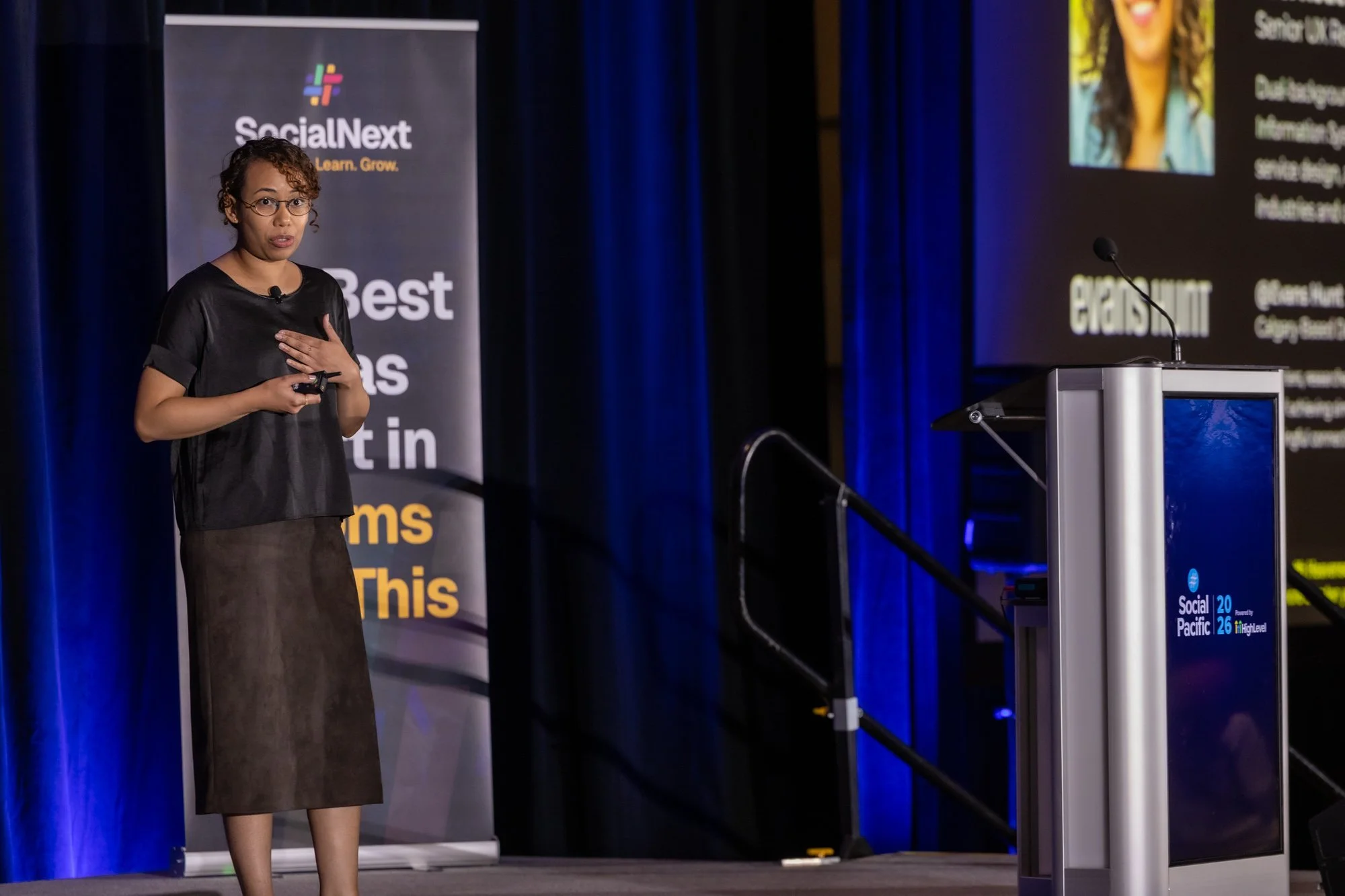
Areï Rodelys on stage at SocialPacific 2026 | Photo by Vision Event Photography
Beyond the inbox
Email is only one place where teams guess instead of ask. Areï Rodelys, a Senior UX Researcher at Calgary agency Evans Hunt, sees the same gap across whole organizations. Delivery keeps speeding up, and research has to fit into ever-shorter windows to influence anything. Her solution is to let people who aren’t researchers talk to customers too, which she calls democratizing research.
More people listening is good, she said, but without guardrails, research turns into noise that never adds up to a clear insight, a tool for winning internal arguments, or a way to confirm what someone already believed through leading questions and convenient readings.
A knowledge base the whole team can trust
The fix she proposes centres on what happens after the conversation. Research is intangible, so if it isn’t findable, it doesn’t exist, she said. A shared knowledge base becomes the team’s source of truth, with clear rules on what qualifies. Some insights need more validation before they count as fact, and some don’t belong in the repository at all. People running their first conversations should get training and coaching, ideally after shadowing a researcher. The researchers themselves shift into stewards, keeping the system healthy and freeing up time for deeper work.
It also reaches beyond UX. Creative teams can test whether a message is clear and whether it signals trust. Technology teams can watch someone use a prototype before it ships.
The follow-through problem
Both speakers point to the same failure. Plenty of organizations already ask in some form. Where they fall down is the follow-through, the preference that gets ignored, or the customer interview that becomes an anecdote in one person’s notes instead of an insight the team can find later.
