
Inside YZD's Awareness Campaign: What Small Marketing Teams Can Learn From a 370-Acre Launch
How a 370-acre destination with no residents yet is building awareness, and why the same playbook works for a single storefront.
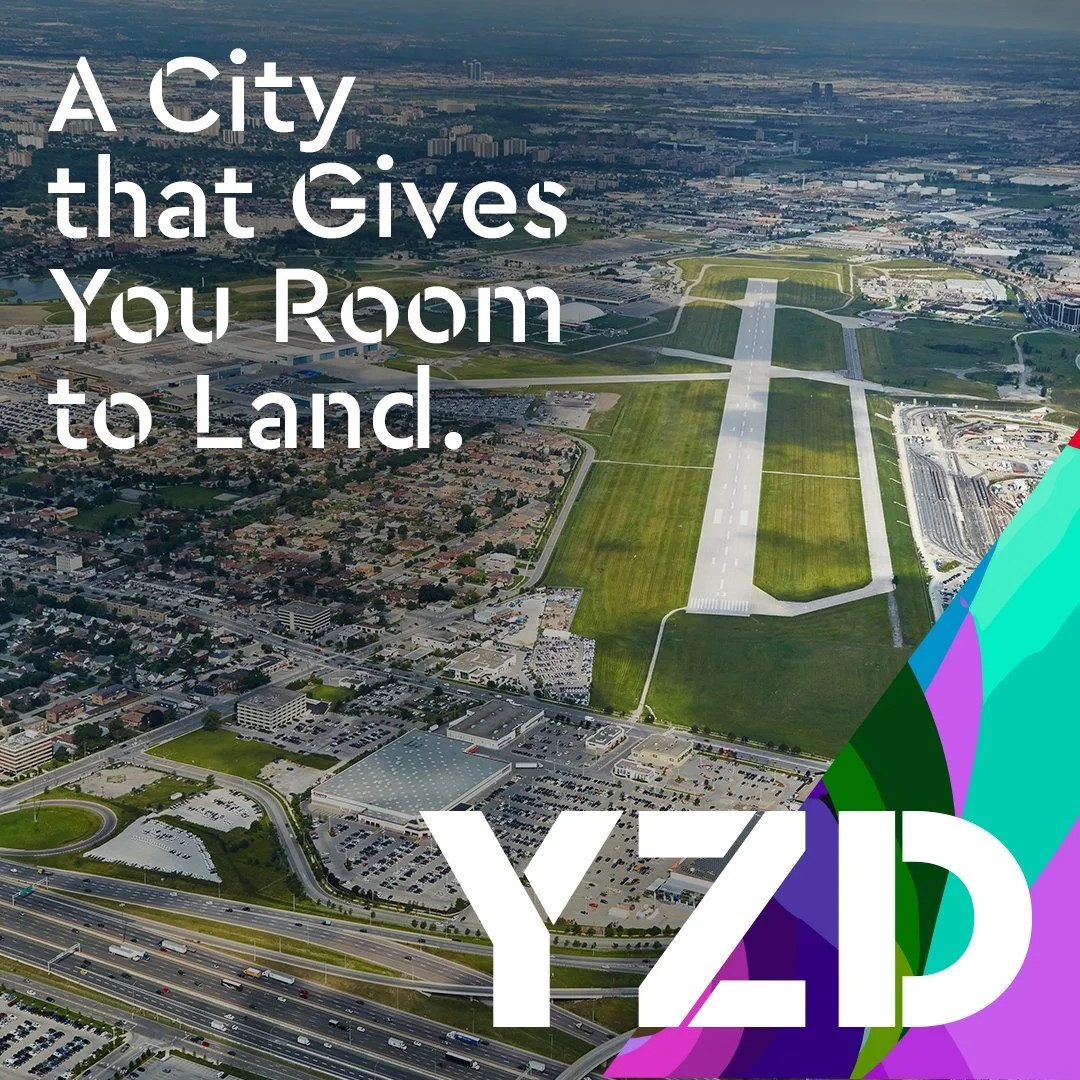
Toronto's next major destination doesn't have a single resident yet. YZD, the 370-acre redevelopment of the former Downsview Airport lands, is still years away from its first completed neighbourhood, but Northcrest Developments just launched its first major brand campaign anyway. “Your Place to Land" is running on OOH at Wilson subway station, a 15-second spot on CP24, and digital across Meta, Spotify, and YouTube, all built to introduce a place most of the GTA hasn't thought about since it stopped being an airport.
That's an unusual marketing problem. There's no product to sell, no unit to tour, no move-in date to count down to. So what is a campaign like this actually supposed to do? We put that question to Chantelle Cole, VP of Brand, Marketing & Communications at Northcrest Developments, and the answer has less to do with real estate than it does with a principle any marketer building awareness ahead of a launch can use.
Defining Success Before There's Anything to Sell
Long before a single unit is built, Cole says the campaign is measured in something less tangible: awareness, familiarity, and whether people feel any pull toward the site at all. Success right now means growth in how many people know YZD exists, have some feeling about it, and are choosing to spend time there today, years ahead of anyone moving in.
That answer only makes sense once you see what's already been happening on the ground. More than a million people have visited YZD through concerts, drive-in movies on the former runway, free skating, workshops, and pop-up programming, according to Cole, none of it built to sell anything, all of it building familiarity with a place that used to be closed off entirely. The campaign's media plan came directly out of that groundwork: YZD has both a hyperlocal audience already showing up to events and a much broader regional audience that's never heard of the place, and the split between those two groups shaped where the money went.
Why Wilson Station, Why CP24
The media placement itself follows the same logic. Wilson subway station sits at one of the main transit gateways into YZD, which made it an obvious choice for OOH: people passing through are already close enough to the site to act on what they see. CP24 does different work, introducing YZD to people across Toronto and the GTA who may never pass anywhere near Downsview. Cole describes the approach as balancing proximity and reach rather than picking one, hyperlocal placements building awareness right at the site while broader channels carry the story further out.
Asked where she'd put the money first if the budget were a fraction of what it is, Cole didn't hesitate: closest to the site. Someone who sees messaging near YZD can show up the same day, walk the runway, and experience the transformation directly, a stronger connection than an ad seen from across the city ever builds on its own. The regional reach still matters, but it's built on top of that local foundation, not instead of it.
The Playbook Scales Down
Here's the part that matters if you're not sitting on a Pentagram-designed brand identity and a FUSE Create-built media plan. Cole's advice to a smaller developer or local business trying to build the same kind of “arrival" awareness starts in the same place YZD did: give people a reason to show up before the thing is finished. A community event, a market, a piece of public art, some free programming, anything that lets someone make a memory in the space rather than just read about it. That's where YZD started too, long before there was a campaign to build around it.
Asked directly whether this logic scales down to a single neighbourhood block or a single storefront, Cole's answer was unambiguous: absolutely. In her view, the principle underneath “Your Place to Land" has more to do with how people build relationships with places than it does with acreage, and marketing works best when it amplifies something that's already happening instead of trying to manufacture interest from nothing.
What the Numbers Don't Capture
On the numbers side, Cole says the team is tracking the usual campaign metrics alongside a longitudinal tracking study, regular surveys, and social listening, but she's quick to point out that the numbers only tell part of the story. What she comes back to is whether people keep returning to the site and whether they're starting to describe themselves as part of it, which isn't something a dashboard captures particularly well.
That's worth sitting with for anyone planning a launch campaign of their own. It's tempting to lean on reach, impressions, and media weight because they're easy to put in a slide deck. What YZD is tracking instead is whether anyone actually shows up.
