
How to Build an Ad Testing Framework That Actually Works

The average person scrolls past roughly 4,000 ads a day. At that volume, “distinctive" isn't a differentiator anymore, it's table stakes. So what actually makes someone stop?
It's not enough to just look different. Dell has spent years building one of the most recognizable colour cues in tech, and a study cited at SocialWest found that only a small fraction of viewers could actually pick it out as theirs, with a meaningful share crediting it to a competitor instead. If a signature colour can't survive that kind of scroll, most brands are underestimating how much noise they're actually competing against.
There's a second problem that has nothing to do with volume. Even teams that manage to cut through don't always know why. An ad performs, someone scales it, and a few weeks later the returns quietly disappear, because no one wrote down a hypothesis going in, so no one can tell what broke coming out.
Two SocialWest sessions this year tackled both problems, from opposite ends.
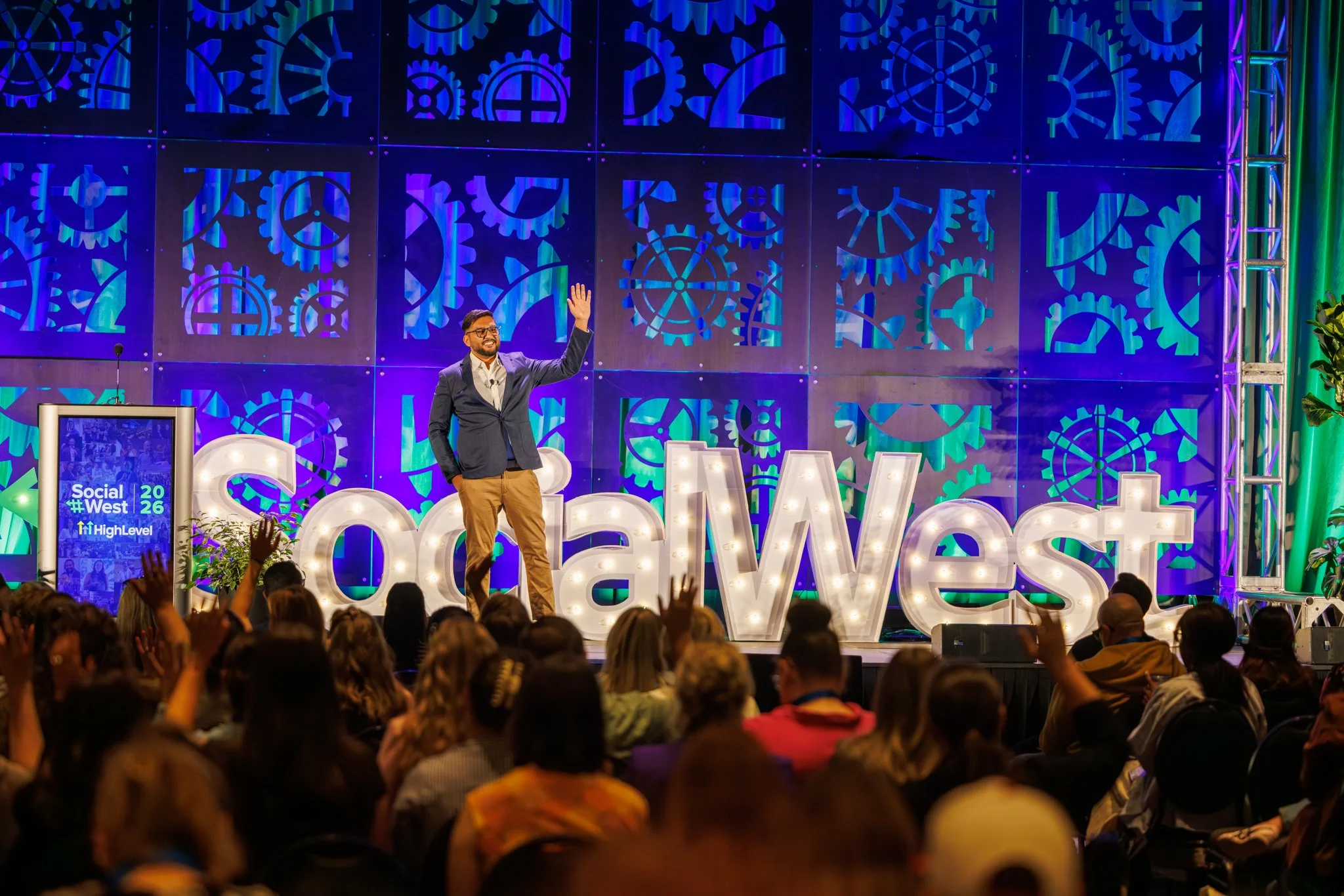
Akshay Sud on stage at SocialWest 2026 | Photo by Neil Zeller
It's a Habit, Not a System
Masterclass’s Akshay Sud's session opened with a reframe that's stuck with a lot of people who were in the room: most of what marketers call “testing" is really just repeating whatever felt good last time. That's a habit. It's not the same thing as a system, and the difference matters more than it sounds like it should.
A system starts before the ad runs, not after. It means deciding in advance what you're trying to learn and what result would actually prove or kill it. Sud walked through how to tell whether a winning ad is worth building a hypothesis around at all, and it's a shorter list than most teams assume.
From there, he made the case that knowing an ad worked and knowing why it worked are two entirely different skills, and that most brands stop at the first one. His own example involved a founder-led ad his team had chalked up to one obvious reason, until they actually pulled it apart and found three separate things doing the work, only one of which anybody had noticed.
He also drew a hard line between a creative brief and what he called a “vibe with a deadline attached," and gave the room a quick way to tell which one they were actually writing.
For teams without the headcount to run this like a lab, Sud's advice scaled down without losing the structure: fewer variables, smaller tests, no analyst required, just a habit of writing down what you now know instead of letting it evaporate.
The Pivot: A Perfect System Can Still Produce Sameness
Here's the catch: a team can do everything Sud described and still ship an ad that gets lost in the scroll. A system tells you what worked. It doesn't tell you whether it still feels distinct sitting next to four thousand other ads doing the same thing.
That's where Farzin Ghayour of StackAdapt’s session picked up. He opened with a study on Dell: despite years of consistent, heavy investment in that signature blue, only a small fraction of viewers could correctly identify it as Dell's, and a meaningful share credited it to a competitor instead. If a brand with that much consistency and spend can't own its own colour in people's memory, “be distinctive" has stopped being a strategy. It's just the baseline everyone's already failing to clear.
Remaster, Don't Resize
Ghayour's answer starts with a distinction a lot of teams skip past: running one ad everywhere isn't the same as adapting it for where it's actually running. He walked through a real campaign built across connected TV, digital out-of-home, display, and audio, where the story stayed the same but the execution changed with every medium, not just the dimensions. What worked in a fifteen-second cinematic cut on a screen fell apart entirely as an audio-only placement, and vice versa.
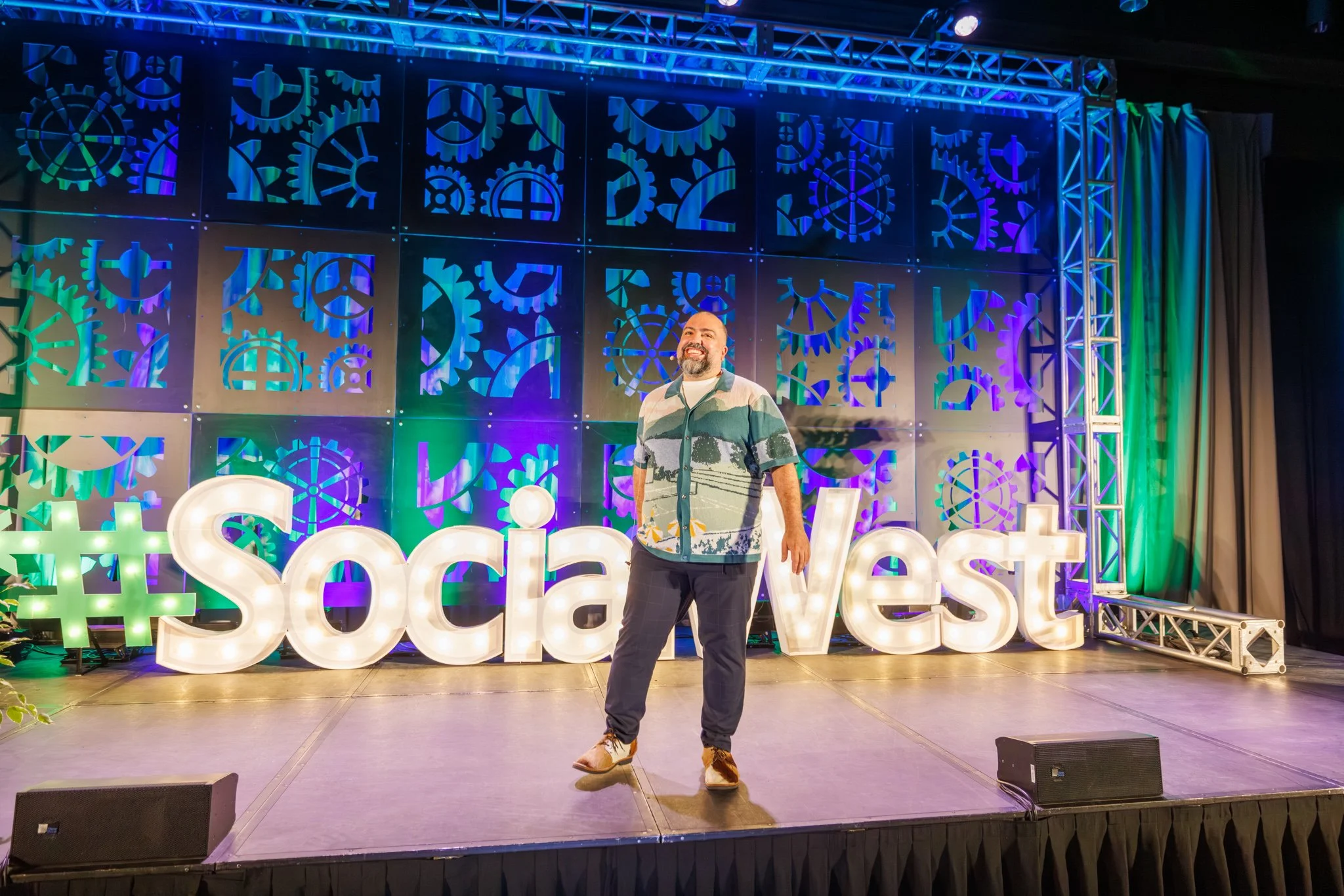
Farzin Ghayour on stage on SocialWest 2026 | Photo by Neil Zeller
Personalization, Two Ways
The rest of Ghayour's talk split into two approaches: letting the viewer personalize the ad themselves, and letting the technology do it without anyone having to ask. On the first, he showed examples of interactive formats where a prospective student or a shopper could select what actually applied to them mid-ad, rather than a brand guessing and hoping the targeting held. On the second, he ran through a handful of automated tactics, dynamic location, weather, live inventory, retargeting, that adjust a base ad in the background before anyone sees it.
Bringing It Together
Sud and Ghayour were solving two different problems, but the problems only make sense as a pair. A system tells you what's worth testing and repeating. Personalization determines whether the thing that got proven right still feels like it was made for the person watching it. Skip either one and a brand ends up optimizing the wrong thing efficiently.
Most teams are already doing a version of one or the other. Few are doing both on purpose.
