
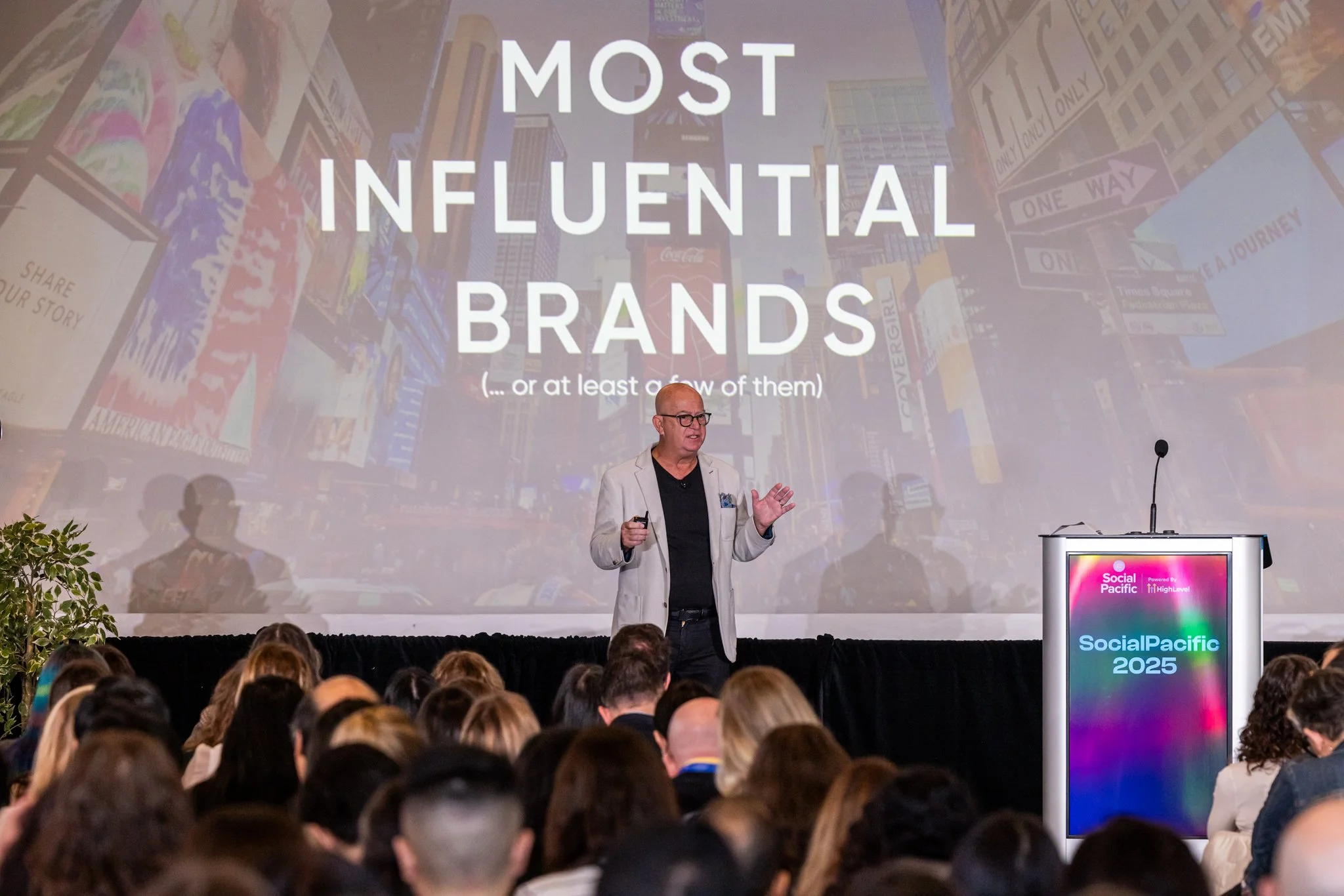
Steve Levy, Ipsos on stage at SocialPacific 2025 - Photo by Neil Zeller Photography
Ipsos has released its 2025 Most Influential Brands in Canada report. On the surface, not much has changed. The Top 5 brands are identical to last year.
But under the rankings, something more interesting is happening.
This year’s findings were presented in Toronto by Ipsos Canada’s Steve Levy and were also highlighted at SocialPacific 2025, where marketers discussed how AI, geopolitics and consumer pressure are reshaping brand influence in Canada.
The takeaway is not just who ranked where. It is how influence is being earned in a year defined by economic tension, trade questions and rapid AI adoption.
Here is what stands out.
Canada’s Top 10 Most Influential Brands in 2025
Google
Amazon
YouTube
Apple
Facebook
Costco
Walmart
Visa
Netflix
Tim Hortons
The stability at the top tells its own story. Large tech platforms are no longer disruptive. They are infrastructure.
AI Is Now Expected, Not Impressive
Google held onto the number one position by integrating AI deeper into everyday life. Amazon continues to reshape how Canadians shop through logistics and ecosystem control. YouTube strengthened its creator and health initiatives. Apple moved more deliberately, focusing on refinement over speed.
Even outside the Top 10, ChatGPT has become a household name.
What is different this year is that AI is no longer a headline feature. It is assumed. Consumers are rewarding brands that make life easier in quiet, practical ways.
For marketers, that matters.
Talking about AI is not the strategy. Building it into real utility is.
Canadian Identity Has Commercial Weight Again
Ipsos introduced a new influence dimension this year called True North. It measures patriotism, pride and perseverance.
In a year shaped by trade tensions and tariff conversations, Canadians started paying closer attention to where products come from and who benefits from their spending.
Sobeys leaned into its “So Canadian” positioning.
No Frills helped shoppers navigate tariff-related price increases.
Tim Hortons returned to the Top 10 for the first time since 2018, fueled in part by renewed cultural relevance.
Canadian identity is not just emotional storytelling right now. It has economic weight. But it only works when paired with value.
Value Is Winning
One of the clearest signals from this year’s rankings is the tension between values and value.
Consumers still care about corporate responsibility. But rising costs forced many households to prioritize price and practicality.
Costco’s return to the Top 10 is telling. Its supply chain agility allowed it to manage tariff pressures and pass savings to members. Half of Canadians agree Costco understands their needs. The category average is 21 percent.
Walmart invested billions into supply chain modernization and introduced new commerce partnerships that make buying easier and faster.
Operational strength has become brand strategy.
Culture Still Matters, but Access Matters More
Visa climbed through sponsorships and small business initiatives. Netflix maintained cultural relevance through Canadian productions and major franchise finales.
But cultural presence alone is not driving influence.
The brands that are winning combine scale, accessibility and usefulness. They are part of daily routines, not just marketing moments.
What This Signals for 2026 Planning
For Canadian marketers, three things stand out.
First, AI integration matters more than AI messaging. Utility beats hype.
Second, Canadian positioning works when it connects to real economic benefit. Patriotism without affordability will not move behaviour.
Third, operational decisions are now brand decisions. Supply chain, partnerships and platform integration directly influence perception.
The Top 5 brands did not change this year. But the conditions around them did.
Influence in 2025 looks less like bold campaigns and more like embedded usefulness. The brands Canadians rely on most are the ones that reduce friction when things feel uncertain.
That is a strong lens to bring into 2026 strategy conversations.
