

You've got the tool. You've got the subscription. You've maybe even built a few prompts you're proud of. And the output is still... fine. Serviceable. Nothing you'd send without a rewrite. The problem isn't the platform you chose. It's what you handed it before you hit generate.
It was one of the loudest signals at SocialNext: Montréal in June 2026. Across five sessions from speakers spanning agencies, platforms, and independent consultancies, the same diagnosis kept surfacing: the process underneath the prompt is where most teams are losing. Not “use AI more." Think harder before you do.
The tool isn't the problem. The brief is.
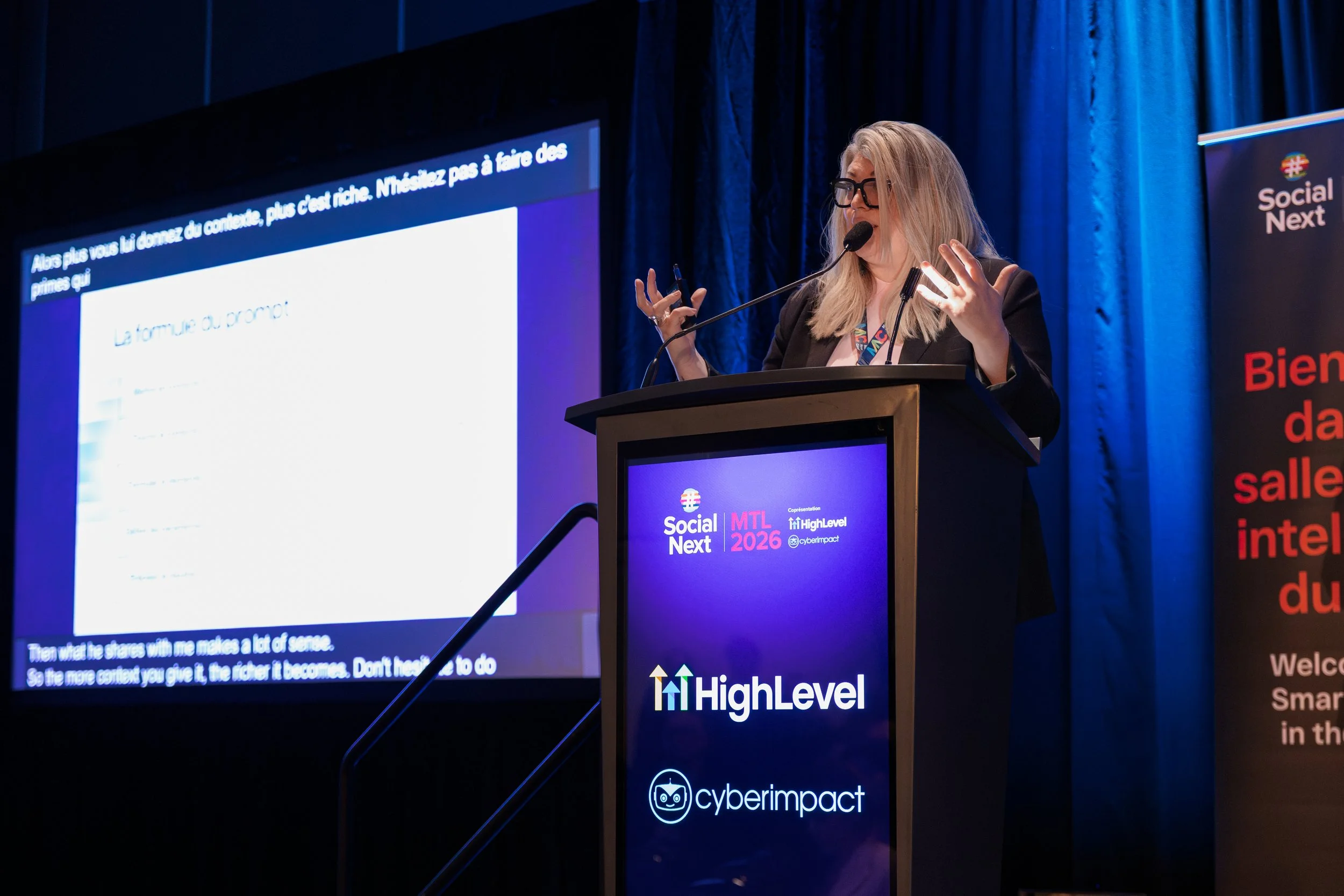
Marie-Hélène Laporte on stage at SocialNext: Montréal | Photo by Mat Higgins-Savidant, Rightwell Media
What “Using AI" Actually Looks Like on Most Teams
Marc Allard of Glowtify has a name for what he sees across most teams right now: the vending machine mentality. AI is redefining how businesses operate in real time, he argued at SocialNext: Montréal, and most teams are treating it exactly like that. A transaction. Not a collaboration.
The pattern showed up in DCM's own workflow too. Marie-Hélène Laporte described ChatGPT becoming her Swiss Army knife, something she reached for constantly. But reaching for a tool constantly and using it well are two different things. The gap is almost always the same: context. What does the tool actually know about your brand, your audience, your objectives? What have you told it? What have you not?
The vending machine mentality produces vending machine output. Technically correct. Utterly generic. And Canadian marketers are starting to feel the ceiling on it.
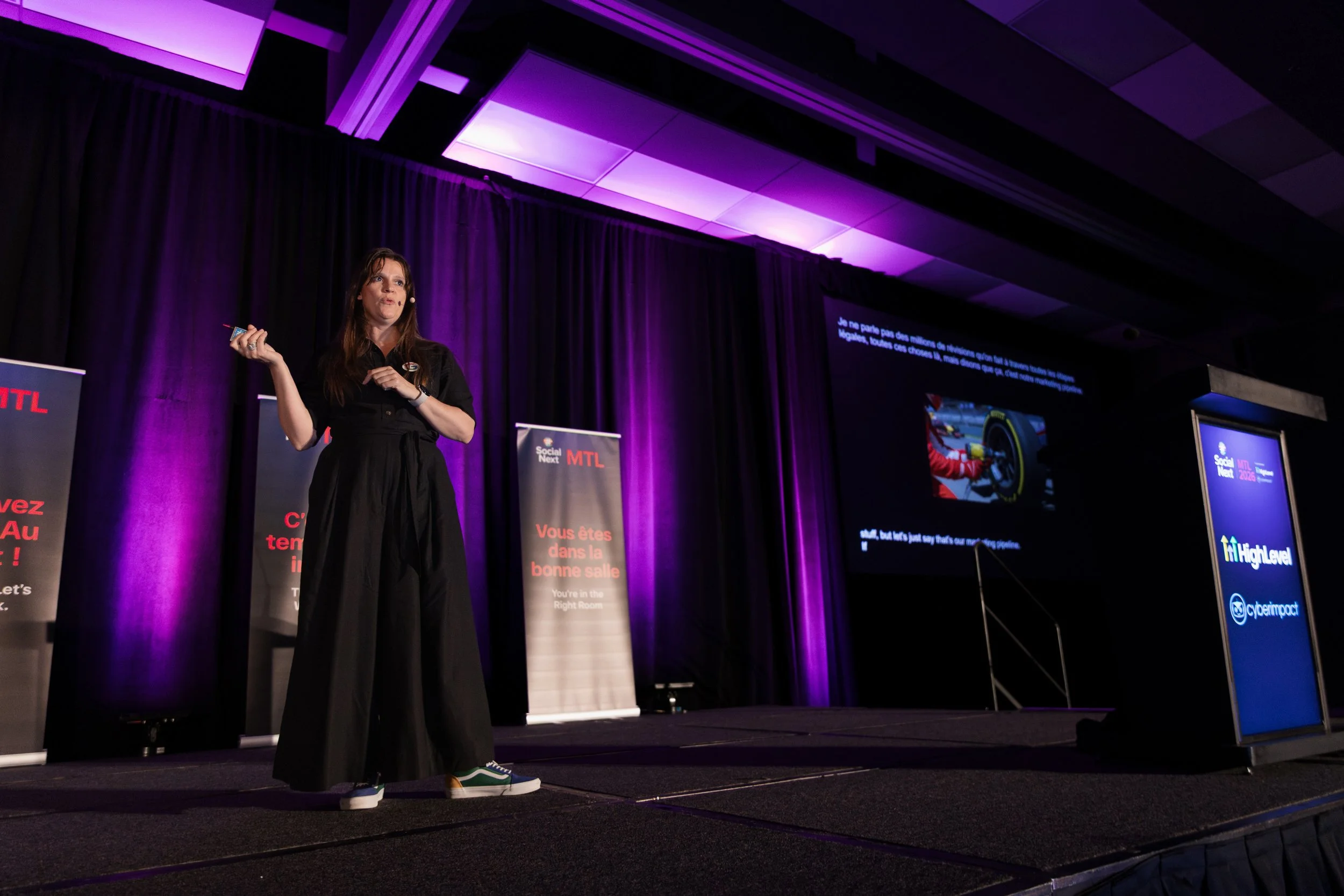
Jullie Sanchez on stage at SocialNext: Montréal | Photo by Mat Higgins-Savidant, Rightwell Media
The Brief Is the Strategy
The reframe that kept coming up across sessions wasn't about prompting technique or which model to use. It was more fundamental than that. From Google's seat, Julie Sanchez put it in terms of consumer behaviour: habits are changing fast, and the marketers keeping pace are the ones who treat AI as a thinking partner, not a drafting shortcut.
That distinction matters because a thinking partner requires briefing. It needs context about what you're trying to do, who you're talking to, what you've already tried, and what good looks like. Skip that step and you're not using AI strategically. You're just outsourcing the part of the work you were already rushing through.
Laporte's framing was useful here too. The teams getting real value out of generative AI aren't the ones with the most prompts. They're the ones who did the strategy work first, then brought AI in to accelerate execution. Research, then strategy, then drafting. In that order. The brief isn't a step you do before the real work starts. The brief is the work.
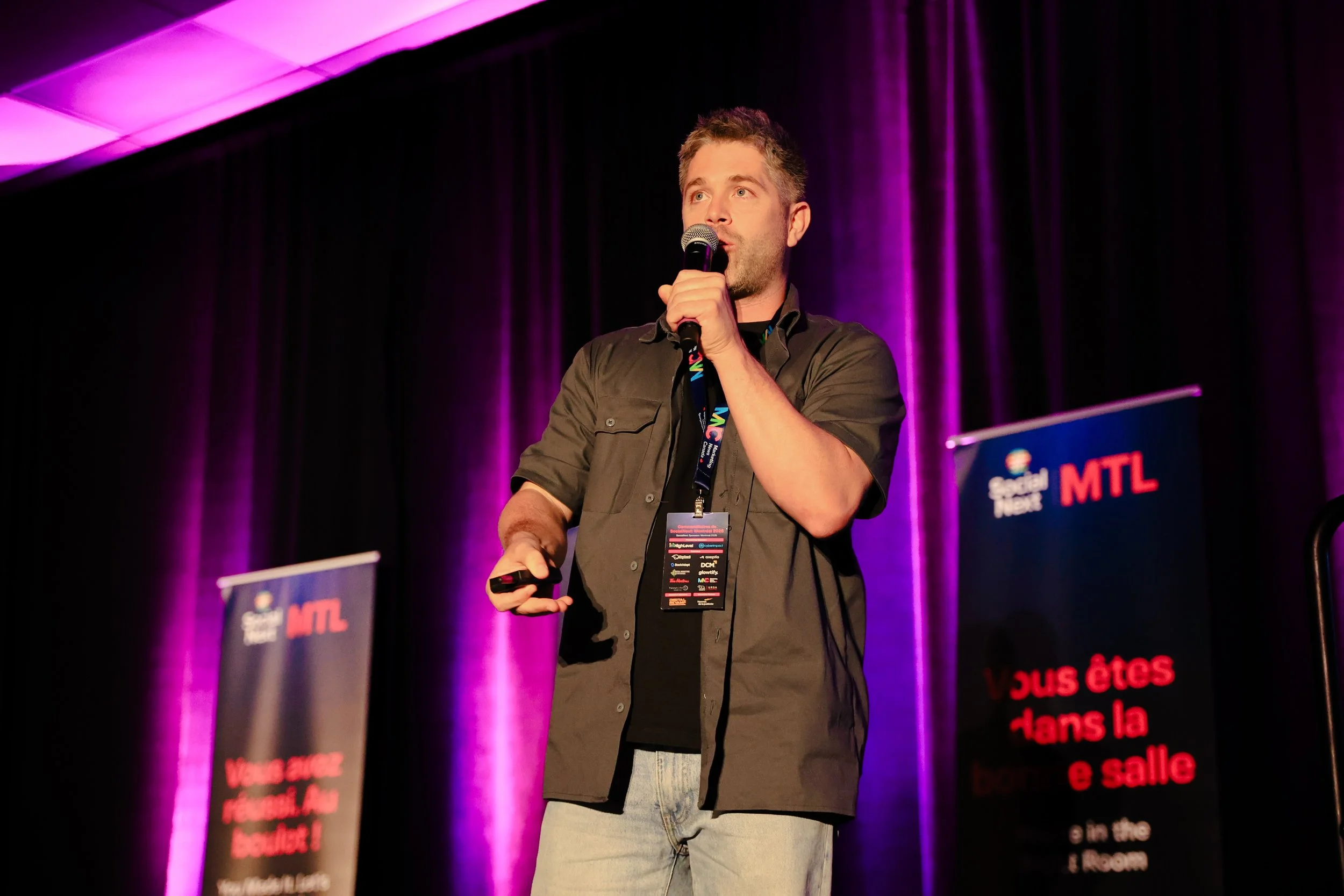
Marc Allard on stage at SocialNext: Montréal | Photo by Mat Higgins-Savidant, Rightwell Media
Build Context Your Whole Team Can Use
One of the more practical ideas to come out of SocialNext: Montréal was what Allard called a “company brain." The concept is straightforward: instead of every team member starting from scratch each time they open an AI tool, you build a shared bank of context that anyone can draw from. Your brand voice. Your audience profiles. Your messaging pillars. Your past campaign learnings. All of it documented, organized, and ready to feed into a prompt.
The problem most teams run into isn't that AI can't do the work. It's that every person on the team is briefing it differently, which means the outputs are inconsistent, and the time spent cleaning them up eats whatever efficiency the tool was supposed to create.
A company brain solves for that. It's not a technology problem or a budget problem. It's a documentation problem, and most teams already have the raw material. They just haven't structured it in a way that makes it usable. Building that shared context layer is one of the highest-leverage things a marketing team can do right now, not because it makes AI smarter, but because it makes every person using it more consistent.
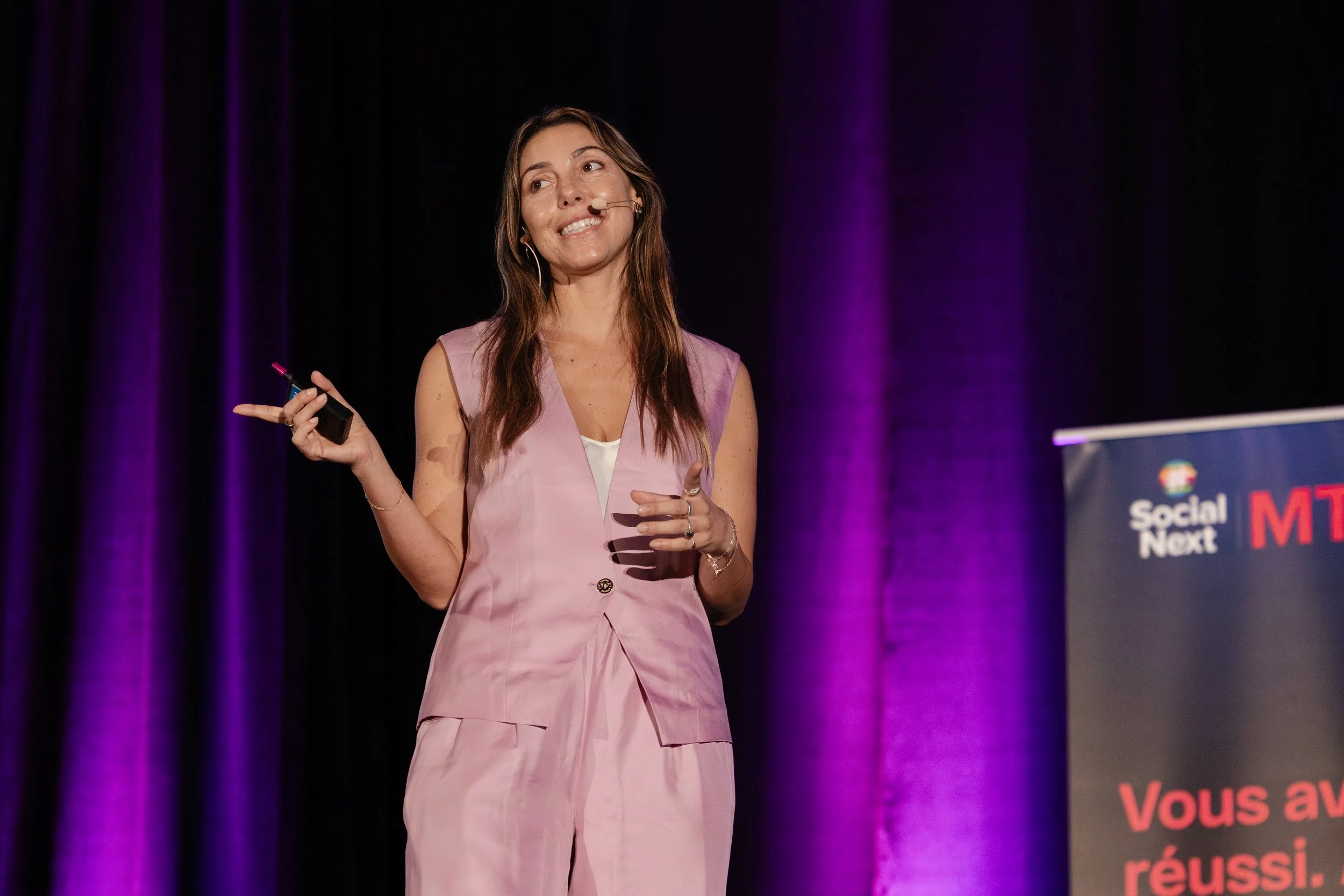
Alexia Krizia La Palerma on stage at SocialNext: Montréal | Photo by Mat Higgins-Savidant, Rightwell Media
The One Thing AI Can't Replace
Even the most enthusiastic advocates for AI adoption at SocialNext: Montréal were clear on one point: the tool has a ceiling, and it sits right where human judgment begins.
Data tells you what works. Wisdom tells you when to ignore it. That was Alexia Krizia La Palerma of REBL House Inc's framing, and it's not a knock on measurement or a case for going with your gut over evidence. It's a recognition that the most consequential marketing decisions, the ones about brand, tone, timing, and what a moment actually means to an audience, require something AI can't generate from a prompt. It requires someone who has been paying attention.
The operational reality isn't far off. At HighLevel, Emma Jackson observed that the teams using AI most effectively aren't the ones who have removed humans from the process. They're the ones who have been deliberate about where humans stay in it. AI handles the volume. People handle the judgment calls. That division only works if you know which is which, and you've built your process around it intentionally.
The brief gets you into the work. Judgment is what makes the work worth reading.
