
Your analytics dashboard tells you one story. Your audience is telling a different one somewhere else.
That was the thread running through three sessions at SocialNext: Montréal that, by the end of the day, started to feel less like separate talks and more like the same argument made three different ways.
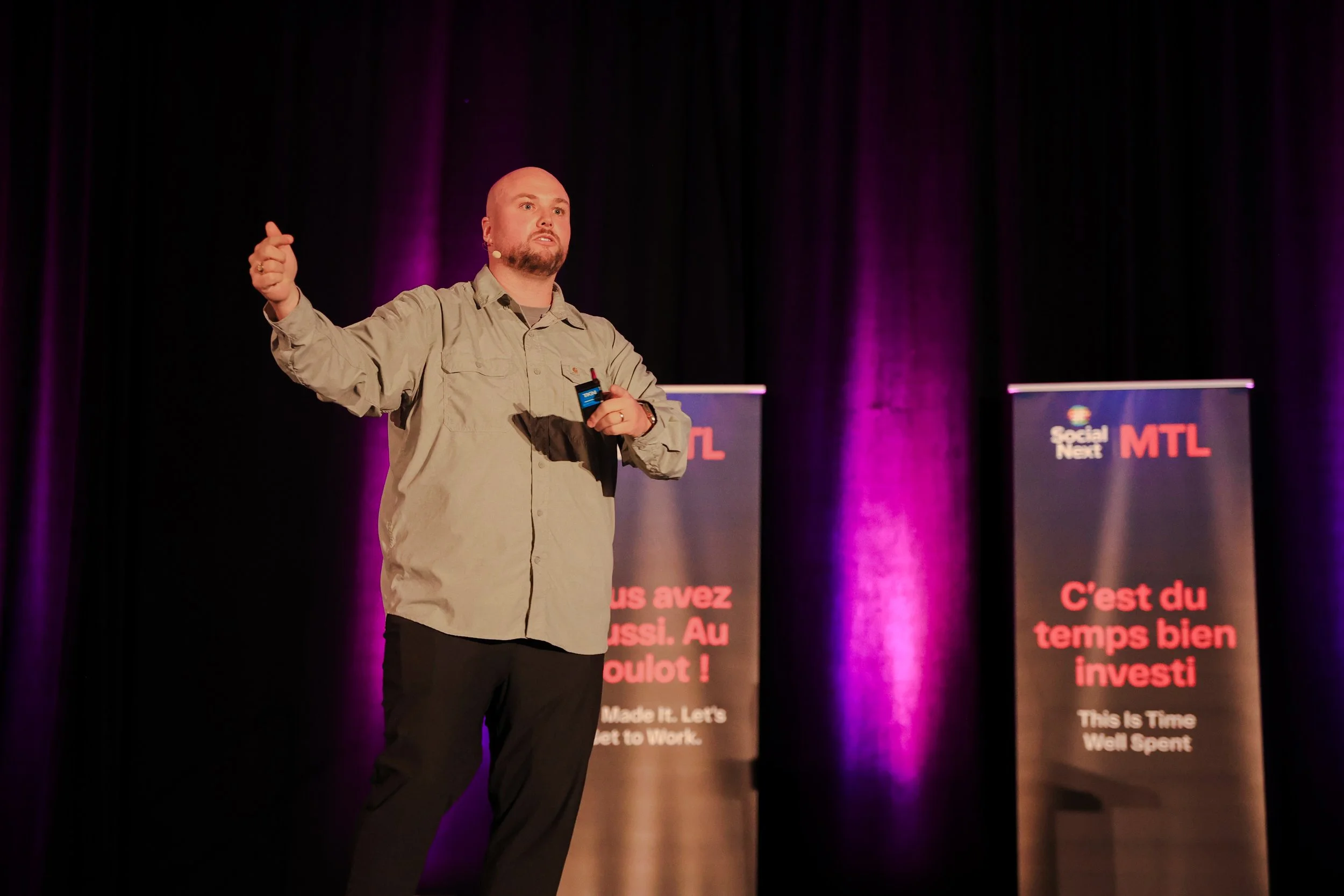
Charlie Grinnell on stage at SocialNext: Montréal | Photo by Neil Zeller
The problem with the data you have
Your marketing strategy is probably built on a lie. That was how Charlie Grinnell opened his closing keynote, and the room got very quiet very fast. Not bad data exactly. Just incomplete data. The kind that only captures what people are willing to say out loud.
Grinnell runs RightMetric, a Vancouver-based research firm that looks at digital behaviour across the internet rather than asking people questions. His point: there is a massive gap between the audience you think you have and the audience you actually have, and that gap lives in places your tools are not set up to see.
He calls it the dark market. Reddit threads where people are asking real questions about your category. AI chat sessions where someone is doing pre-purchase research you will never know about. Niche communities where the most influential voices are not influencers at all. They are anonymous people with direct experience and no reason to be diplomatic about it.
He walked through two client examples. A skincare brand that had spent years refining a very polished, fashion-forward content strategy, only to find that the people most influencing purchase decisions in their category were Reddit moderators and amateur chemists on TikTok. A luxury travel company that thought it had a content problem, when what it actually had was a reviews problem. The content quality was fine. The conversation was just happening somewhere they were not looking.
His advice: stop listening for your brand and start listening for your category. The questions worth asking are uncomfortable ones. Where does your audience actually go when they want an honest answer? What would they never say in a focus group but openly share in a community? Who do they trust more than you, and why?Why Reddit is now a search engine
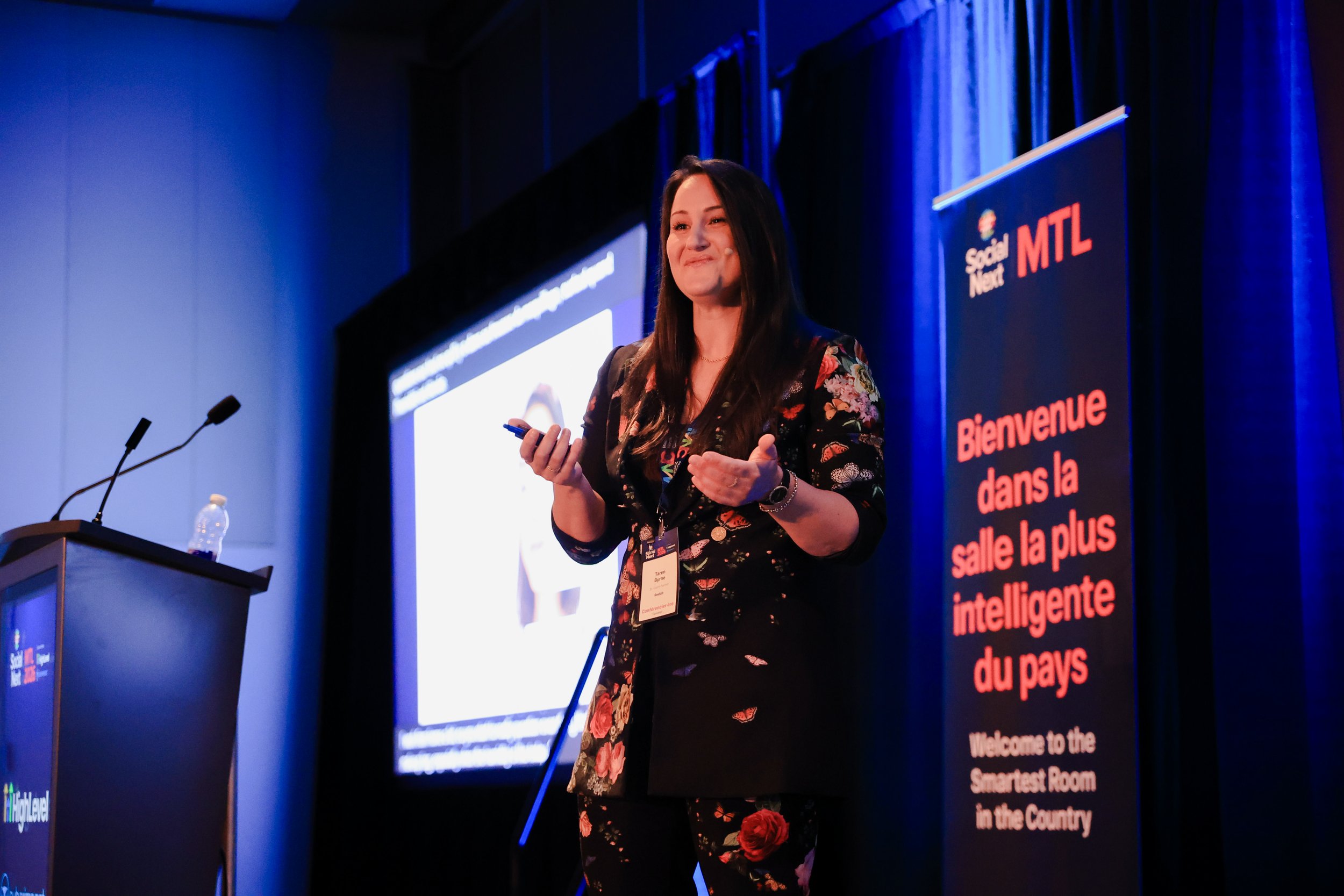
Taren Byrne on stage at SocialNext: Montréal | Photo by Neil Zeller
Most marketers are still thinking about Reddit wrong. That was the premise Taren Byrne walked into the room with, and by the end of the session it was hard to argue.
Reddit is not social media in the way we usually mean it. People do not go there to share what they had for lunch or follow a brand they like. They go there specifically to ask questions and get answers from strangers who have actually tried the thing they are considering. The content rises because communities vote it up, not because an algorithm decided to push it. That is a meaningfully different information environment.
It matters a lot right now because of what AI search is doing to how people find products. LLMs pull from Reddit constantly because the platform has exactly what they need: natural language, real experience, nuanced responses, and perspectives that have already been vetted by other humans. When someone asks ChatGPT or Perplexity for a product recommendation, there is a good chance the answer being surfaced is rooted in a Reddit thread about your category.
That means the conversations happening in subreddits, conversations your brand had nothing to do with and may not even know about, are increasingly the raw material shaping how AI describes your product to someone who has never heard of you.
Byrne's three takeaways for brands: show up where the conversations are happening, spark conversations worth having, and focus on adding value rather than volume. The brands that do well on Reddit are not the loudest ones. They are the ones that answer questions like a person who actually knows something.
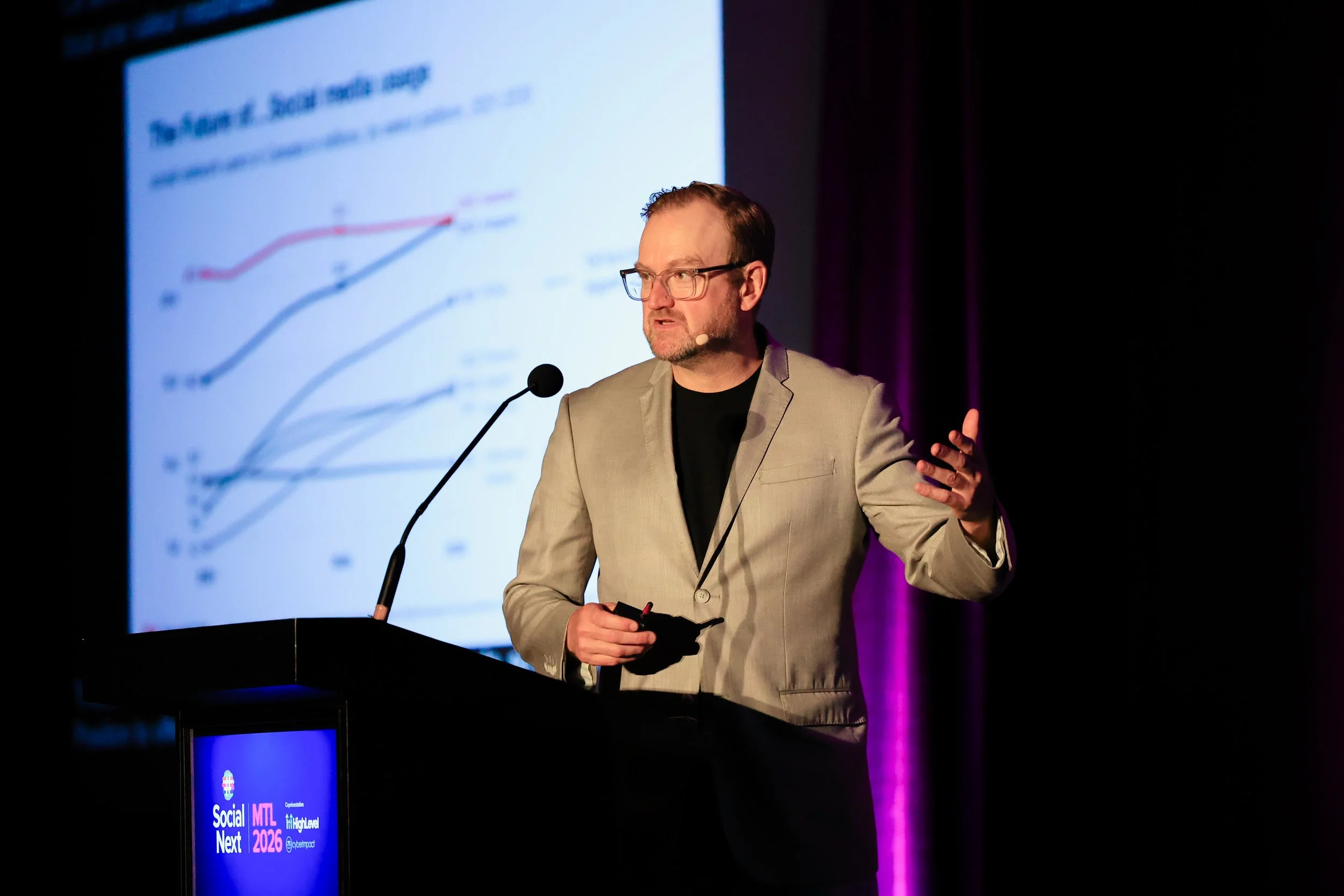
Paul Briggs on stage at SocialNext: Montréal | Photo by Neil Zeller
The macro picture
The numbers behind all of this are worth sitting with. AI monthly users in Canada have gone from 5.6 million in 2023 to 17 million in 2026. About 80 percent of Canadian consumers are already using an AI tool to search for products. Paul Briggs from EMARKETER brought that data to Montréal, and it reframed the urgency of everything the earlier sessions had been pointing at.
The shopping journey is not going to look the same in three years as it does today. Brands that are still optimizing for the version of search and discovery that existed five years ago are already behind where the behaviour actually is.
What it adds up to
None of this is an argument for abandoning the channels you know. It is an argument for widening what you pay attention to. The brands that figure out the dark market first, the conversations happening about their category in places they are not monitoring, are going to have a real advantage over the ones that keep optimizing for the audience they can already see.
It starts with questions. Not dashboards. Not more social listening on your own brand name. The actual uncomfortable questions about what your audience does when you are not in the room.
SocialNext: Montréal is one of six SocialNext conferences held across Canada, alongside SocialWest, SocialNext: Ottawa, SocialNext: Toronto, SocialEast, and SocialPacific. Read the full Montréal conference recap here.
