
In his 1971 landmark text The Psychology of Computer Programming, computer scientist Gerald Weinberg theorized that no matter what the problem is, “It’s always a people problem.” Even in the early days of math computing, people have always been a project’s biggest risk variable.
Now, almost sixty years later, not much has changed, and people problems have been a constant topic in digital marketing strategy and tech development ever since. More often than not, problems that slow your roll originate from the relationships that surround and shape your work. So how do you turn common ‘people problems’ into ‘people strengths’?
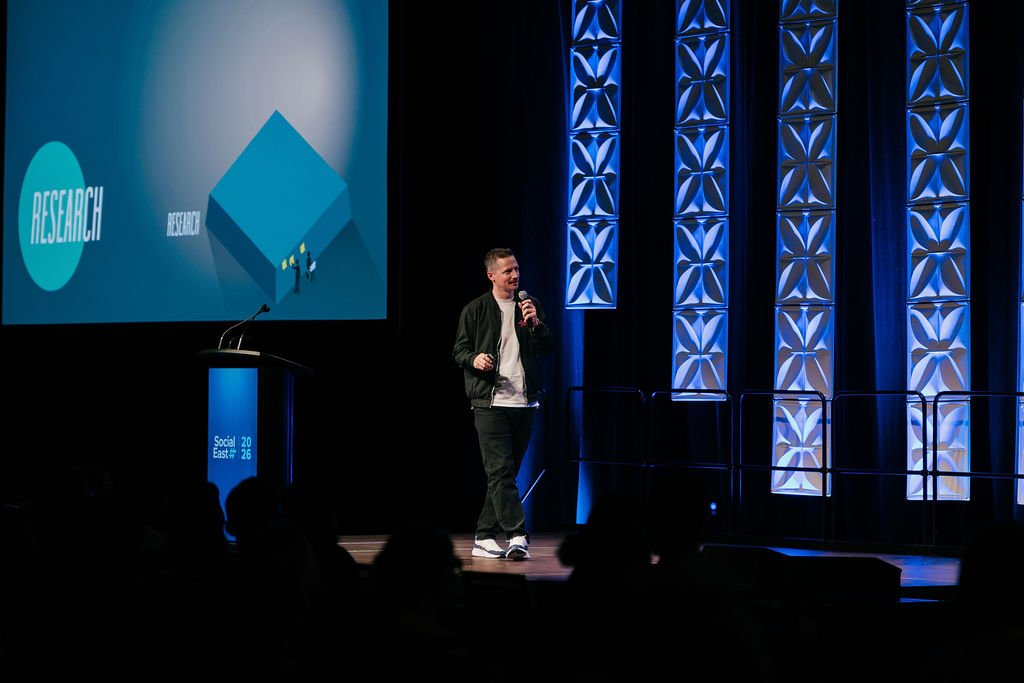
Brad Moore on stage at SocialEast 2026 | Photo by Mathieu Higgins-Savidant, Rightwell Media
People Problem: Late-Stage Input
As the President & CEO of Giant Shoe Creative, Brad Moore reaffirms the importance of maintaining the human element to ship effective marketing campaigns. But the human element can also be the biggest hurdle. We’ve all been there: a campaign or project is blessed at the outset, months of development go by then right before the launch, decision-makers raise objections, delaying or derailing the project. Moore’s 2026 book Who Let the CEO Back in the Room? explores how projects break down near the finish line because of late-stage input.
“A few big factors for late-stage input are misaligned priorities, unregulated processes, or the trifecta: lack of mentoring = unmet expectations = late-stage input = armageddon,” Moore says.
“From managers, receiving late-stage input might be a result of not inviting the right people into the room at the right time.” To get ahead of this people problem, Moore developed the Pyramid Process, an outlined framework to guide a project from conception to delivery that can reduce destructive late-stage input. The root of this people problem is communication.
“Confrontation is always essential,” he adds. “The earlier it’s addressed, the less likely [an issue] will become a conflict. Getting to know your team and how to communicate with them with an analysis like DiSC or strength assessments can break down some of those barriers. One thing is certain: if a person in leadership wants to be heard, they eventually will. So bring them in early.”
By anticipating the communication styles of your collaborators, and building communication into your process flow, you can reduce late-stage input by ensuring early-stage buy-in.
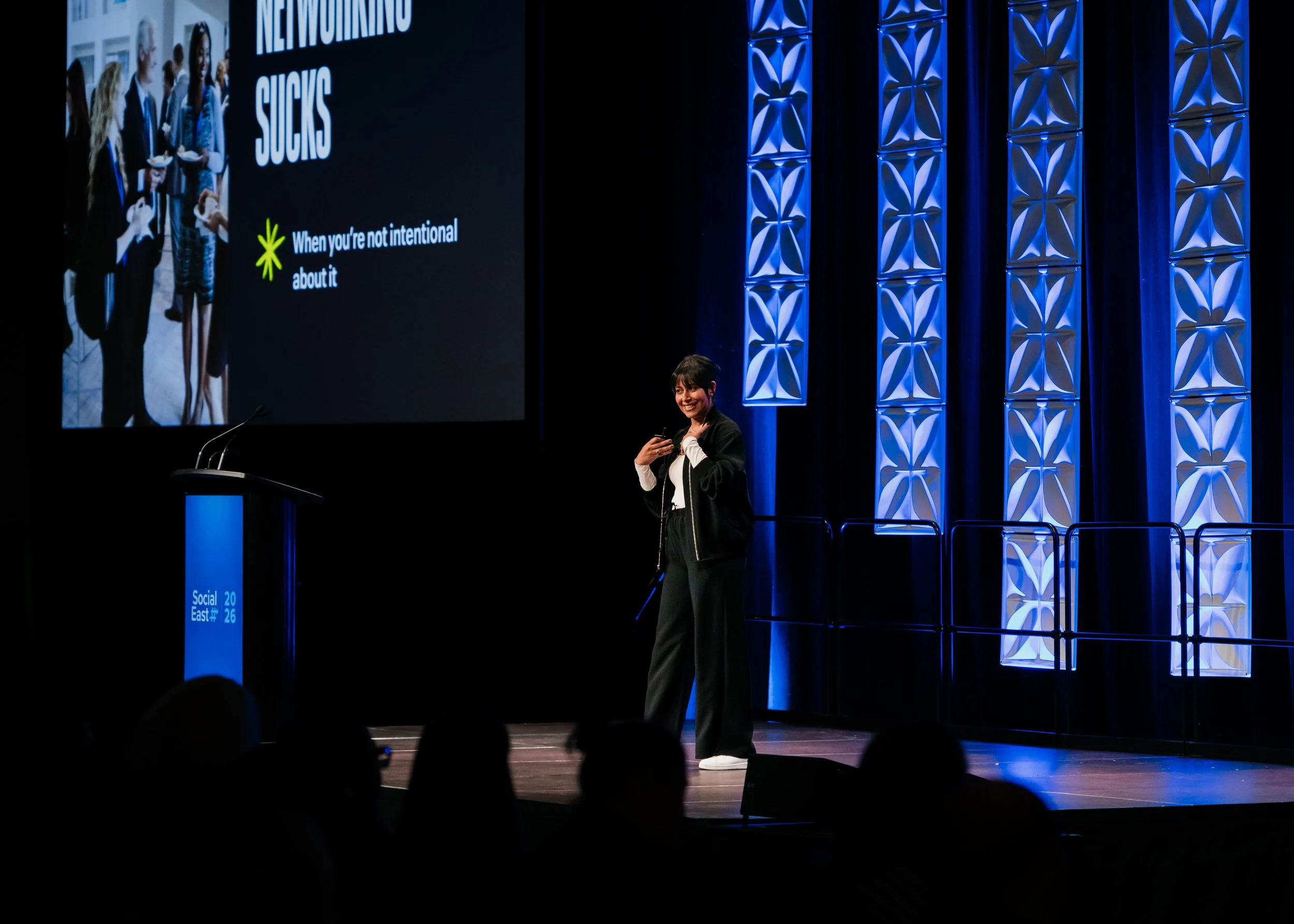
Azrah Manji-Savin on stage at SocialEast 2026 | Photo by Mathieu Higgins-Savidant, Rightwell Media
People Problem: Chronically Online
Whether we like it or not, we live online. According to Metricool’s 2026 Well-Being Survey, 74% of social media professionals work outside working hours, and almost half can’t completely disconnect outside of work, either. TLDR: We are chronically online and it’s becoming a problem.
In our digital lives, we spend so much time generating content, crafting posts, chasing impressions, and performing personality that we’ve lost our knack for in-person engagement.
But living your brand IRL can be to your advantage: 95% of professionals say face-to-face meetings are still essential to building long-term business relationships, and most event organizers view in-person events as more valuable than other channels, especially as AI-generated content makes digital trust harder to build. As CEO and co-founder of SYZL, Azrah Manji-Savin believes, “Who you are in person is important, and it matters more than ever.”
Here’s the thing: most of us weren’t taught how to network, and quite frankly, “networking” can be uncomfortable. But Manji-Savin suggests that personal branding and networking can set you apart in an environment where everything is automated, designed, and targeted.
Connecting with people the ‘old-fashioned way’ can turn awkward moments into marketing strengths, and Manji-Savin says thinking FAST will take your connections to the next level:
Focus
on the first ten seconds of an interaction for people to feel valued. Be present in your conversation. As Manji-Savin says, “What a better way to build our own personas, sense of self, and reputation than allowing someone else to feel heard and seen.”
Ask questions
not just ones that generate a yes or no response, ask vertical and open-ended questions (why, how, who) to allow response and continue the convo.
Share
something thoughtful, be relatable, and invite the conversation into your world.
Timebox
everything. Exit with grace by creating a reason to reconnect later.
FAST is a helpful starting point to help guide your in-person relationships, which we know create more impact than a LinkedIn post. “One interaction is a moment, but multiple moments is your reputation,” Manji-Savin says. Lean into your people problems and turn them into strengths.
