
The Campaigns That Don't Stop When June Does
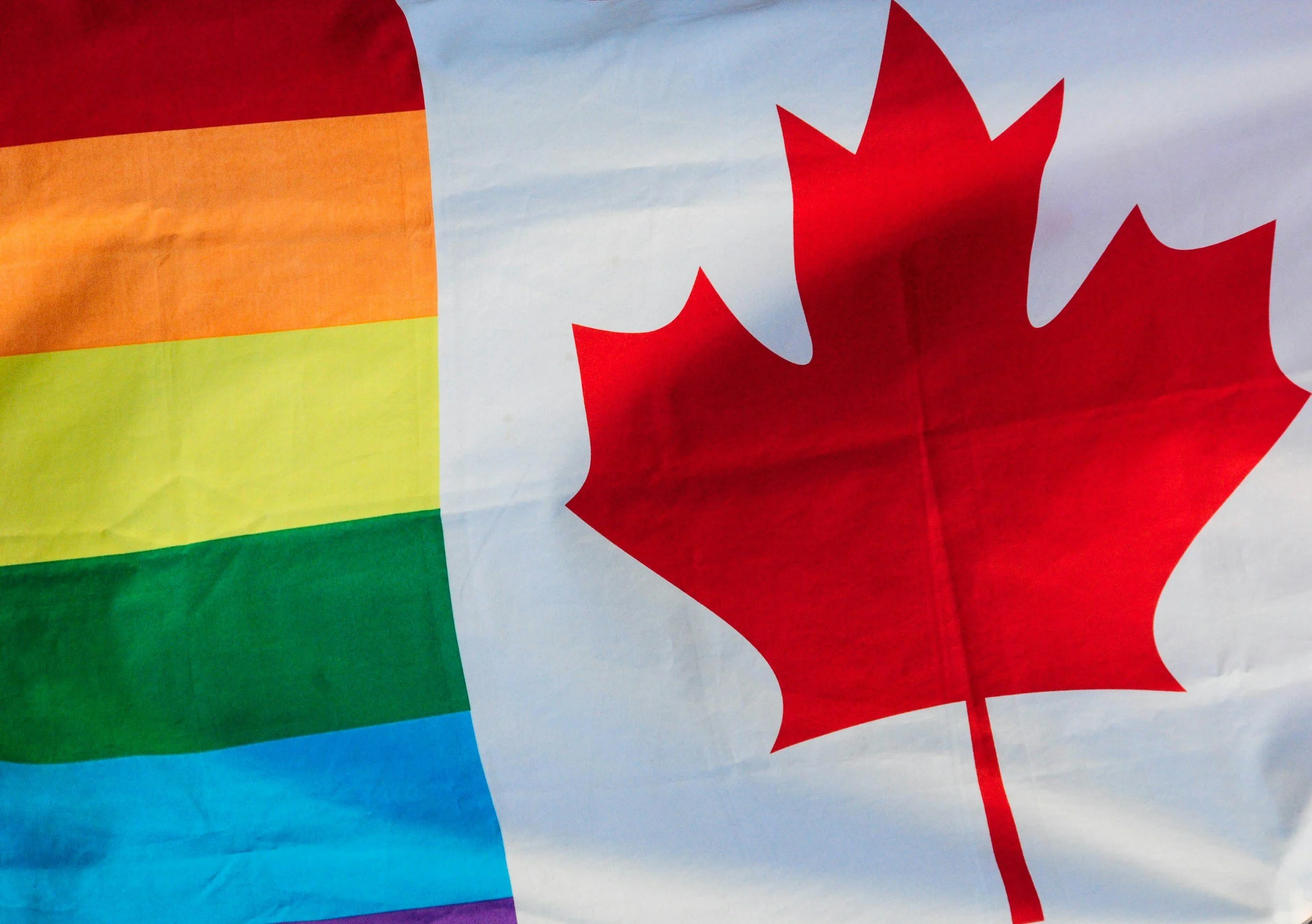
A new survey from Omnisend found that 56% of Canadians still believe Pride Month participation from brands matters. But 32% now expect companies to demonstrate year-round support, not just June visibility. And 46% said only brands that genuinely support LGBTQ+ communities should participate at all.
Those numbers land differently in 2026. Across North America, corporate sponsors are pulling back from Pride events at a pace not seen since before the pandemic. Pride organizations from Vancouver to Halifax are absorbing real funding gaps as brands that showed up loudly in 2022 and 2023 quietly recalibrate, treating inclusion like a liability they can manage down.
That's not the whole story, though. It's not even the most interesting part of it. Because while the pullback has been making headlines, a different set of Canadian brands has been doing the opposite: building something that doesn't stop when June does.
These five campaigns don't have a lot in common on the surface. Different industries, different audiences, different scales. But they share one thing: stopping would feel strange. Not controversial. Not brave. Just strange. Like ending something that was never meant to be temporary.
Here's what they built, and why it holds.
Ottawa Senators x Heated Rivalry: The Jersey Drop Nobody Saw Coming
When rumours started circulating that season two of Heated Rivalry would be set in Ottawa, the Senators saw an opening. The show, adapted for Crave from Rachel Reid's Game Changers novel series, follows the secret relationship between hockey rivals Shane Hollander (#24) and Ilya Rozanov (#81). It had built a devoted, vocal fanbase. And with Ottawa potentially becoming part of the story, the franchise decided to have some fun with it.
The result was the Hollander and Rozanov Custom Collection: custom Senators jerseys bearing the fictional characters' names and numbers, available in three versions at Ottawa Team Threads. Net proceeds go directly to Ottawa Pride Hockey, an inclusive hockey community founded and run by queer and trans individuals. Kat Ferguson started the team after playing in the Friendship Series in Boston in 2019, her first experience in a locker room that felt genuinely safe, and came home wanting to build the same thing in Ottawa.
The jerseys sold out at the Canadian Tire Centre ahead of a game against Montreal. Online orders kept coming in from across the globe. They sold out a second time.
The Senators didn't create a Pride product and call it a campaign. They responded to something their fans were already talking about, attached it to a real community organization with roots in the city, and let the story do the work. The jerseys aren't rainbow-coloured. They don't say "Hockey is For Everyone" on the sleeve. They just have two fictional boyfriends' names on the back, and every purchase goes somewhere that matters.
The Senators and Ottawa Pride Hockey had been working together for two seasons before the collection launched. This deepened it.
MAC VIVA GLAM: The Product Is the Campaign
MAC Cosmetics was founded in Toronto in March 1984 by Frank Toskan and Frank Angelo. When the brand found success in the early 1990s, the founders wanted to give back to the communities that had supported them, particularly at a time when HIV/AIDS was devastating fashion and beauty communities. In 1994, they launched VIVA GLAM, with drag icon RuPaul as the first face.
The model has never changed. One hundred percent of the selling price of every VIVA GLAM lipstick goes directly to the MAC AIDS Fund, which supports organizations working on HIV/AIDS prevention and care, LGBTQIA+ youth, gender equality, and access to healthcare worldwide. Not a portion. Not net proceeds. All of it.
More than thirty years later, VIVA GLAM has raised over $545 million USD, supporting more than 60 million people across 92 countries. It remains the largest charitable initiative in the beauty industry.
This June, Chappell Roan was announced as the 2026 VIVA GLAM face. She's been a MAC Global Brand Ambassador since December 2025, and her visual identity has been built on the same values the campaign has championed since day one. Three new shades (UnNatural Red Head, Roan of Arc, and Damnsel), a $300,000 donation to her Midwest Princess Project, and 100% of every purchase still going where it's always gone.
The giving isn't tied to June. It isn't tied to a specific cause of the year. It's baked into the product itself, available year-round, and has been since the beginning. The campaign faces are famous, but they're not the point. The point is that every unit sold has always meant something, regardless of what month it is.
MAC is a Canadian brand. VIVA GLAM is its longest-running, most defining statement about what it stands for.
BMO Rainbow Deposits: Turning Every Rainbow into Action
During Pride season, anyone in Canada or the United States can photograph any rainbow, on a flag, in the sky, in a mural, on another brand's packaging, and deposit it through the BMO Rainbow Deposits web app. For every rainbow deposited, BMO donates $1 to Rainbow Railroad, up to $50,000 CAD. You don't need to bank with BMO to participate.
A bank that opens its campaign to anyone, regardless of where they do their banking, is making a different kind of statement. The goal isn't to acquire customers. It's to fund something real.
BMO launched Rainbow Deposits in 2022, developed with FCB Canada. It's now in its fifth year. The site is live right now. The donation counter is running. Rainbow Railroad, the Canadian-founded organization that helps LGBTQI+ people escape state-sponsored violence and persecution, has received up to $50,000 CAD each year the campaign has run.
In 2024, BMO placed "Rainbow Reminders" beside other brands' rainbow installations across Toronto and Montreal: QR codes that turned every competitor's Pride content into a deposit opportunity. The execution changed but the mechanism underneath it didn't. Spot a rainbow. Change a life.
IKEA Canada x Rainbow Railroad: A Cake That Does Something
IKEA Canada has been raising the Intersex-Inclusive Progress Pride flag at every Canadian location on May 17, the International Day Against Homophobia, Biphobia and Transphobia, since 2018. The flag goes up in Whistler for Pride and Ski Festival. It goes up across the country every June. That practice is the foundation. The Rainbow Cake is what most people see.
For the third consecutive year, starting June 1 and running through July 31, IKEA Canada is donating 100% of Rainbow cake sales to Rainbow Railroad. By the end of this season, the total contribution to the organization will reach $600,000. Every slice counts.
Rainbow Railroad was founded in Canada in 2006. It helps LGBTQI+ people facing persecution and violence find safety through emergency relocation and crisis response. In a year when more people around the world are being displaced for who they are, the money goes somewhere specific and urgent. IKEA Canada CEO Selwyn Crittendon put it plainly in the 2026 announcement: "Pride is not just a moment. It's a movement, and we're proud to stand as allies every day of the year."
A slice of cake is not a bold creative statement. It doesn't need to be. It runs two months. It raises real money. It comes back every year.
Canada Post Places of Pride: Permanent by Design
Canada Post released the second and final set of its Places of Pride stamp series on June 5, 2026. Four stamps, four stories, four corners of the country.
Little Sister's Book & Art Emporium in Vancouver, the queer bookshop that fought a years-long legal battle against Canada Customs and won a landmark Supreme Court ruling on equality and freedom of expression in 2000. The 1978 Metamorphosis festival in Saskatoon, considered the first celebration of queer culture in Western Canada, where about 200 people gathered over Thanksgiving weekend to organize, dance, and march on City Hall. The 519 in Toronto, the first City of Toronto community centre run by and for the 2SLGBTQIA+ community, a home for activism and coalition-building since 1976. The Turret in Halifax, a Gay and Lesbian club that operated from 1976 to 1982, hosting the 1977 Atlantic Gay Conference and serving as one of the only safe gathering spaces for Atlantic Canada's queer community.
The 2025 series honoured Club Carousel in Calgary, Truxx in Montréal, Hanlan's Point Beach in Toronto, and the 3rd North American Native Gay and Lesbian Gathering in Beausejour, Manitoba, the gathering where the term “Two-Spirit" was first adopted.
Each stamp is designed by Kelly Small and illustrated by queer artist Tim Singleton. Each First Day Cover is cancelled in the city the stamp commemorates.
The stamps go into circulation. They sit in drawers, on envelopes, in collections. They don't come down on July 1. Canada Post planned a two-year series, announced both years upfront, and delivered. In a season when other institutions are retreating, a Crown corporation used the most literally permanent format available to mark queer history from coast to coast.
What These Campaigns Have in Common
None of these are June activations. They're commitments that happen to peak in June.
The Senators jerseys exist because the team has an ongoing relationship with Ottawa Pride Hockey. MAC has a product model that doesn't turn off. BMO's web app is live right now. IKEA Canada's cake runs through July. Canada Post's stamps are already in circulation.
The difference between a commitment and a seasonal activation isn't just philosophical right now. It's financial. It's structural. And audiences are getting better at telling them apart.
These aren't necessarily the biggest or loudest brands in their categories. But they're the ones that would feel strange to stop.
Which Canadian campaigns are you watching this Pride Month? Tell us at hello@marketingnewscanada.com
