
Paid social media marketing is undergoing its most significant structural shift in over a decade– and the marketers who adapt their thinking now will have a meaningful edge. At SocialNext: Toronto, attendees received great insights and lessons from several paid social media experts. We’ve summarized them for you to take into your own marketing practices.
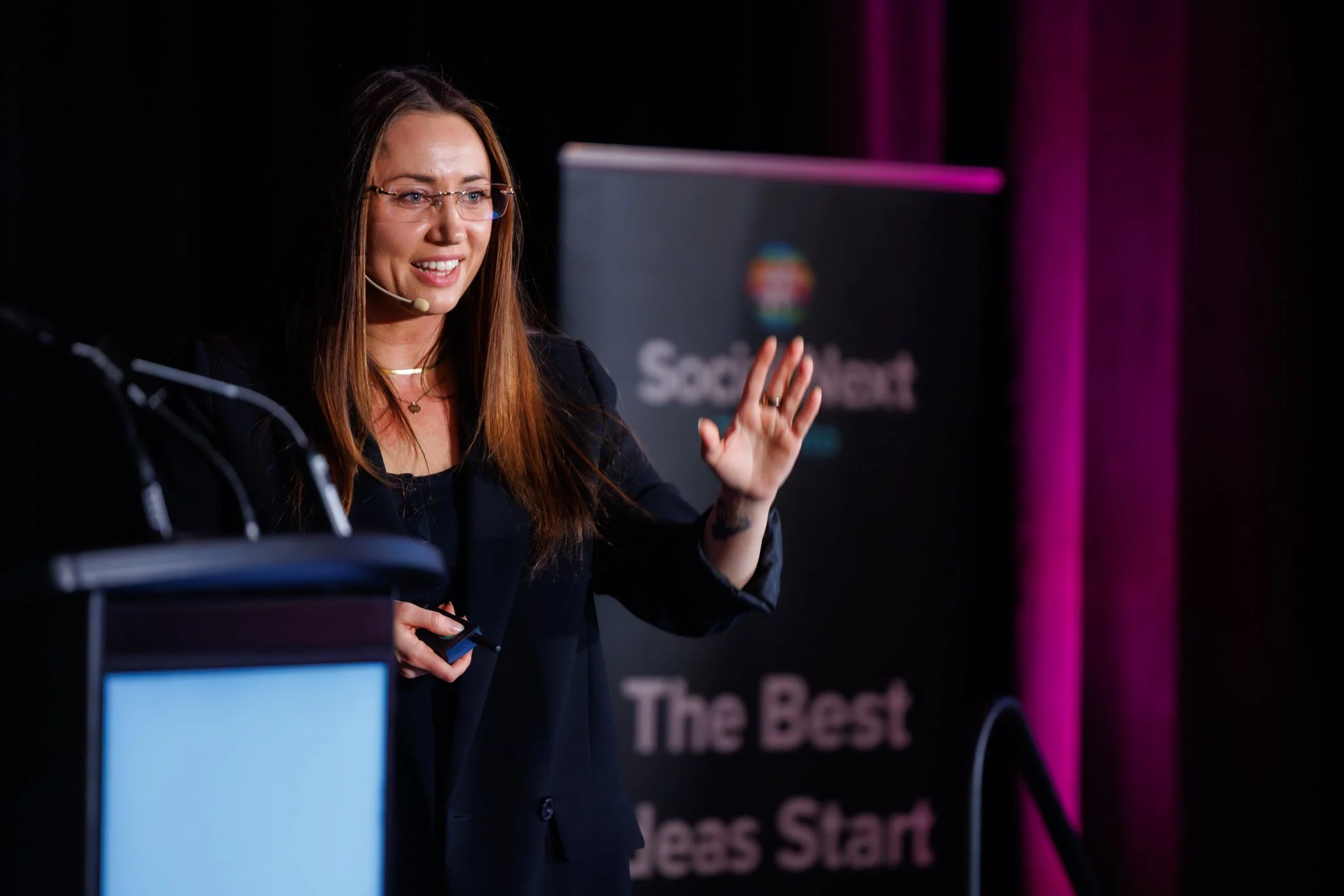
Caley Dimmock on stage at SocialNext: Toronto 2026 - Photo by Neil Zeller
The old playbook no longer works
For the better part of fifteen years, the logic of paid social was straightforward: define your audience, build targeting segments, run your ads. That era is effectively over. As Caley Dimmock outlined in her talk “From Chaos to Conversion”, Meta's Andromeda update in April 2025 replaced rule-based targeting with an AI-driven delivery engine that reads your creative itself to determine who should see it. Detailed targeting and lookalike audiences, once the backbone of any serious media buyer's strategy, are now largely redundant. Meta's algorithm is finding those people anyway.
Felipe Barrientos of Meta reinforced this shift, highlighting how Advantage+ and AI-powered campaign tools are actively reshaping the ad auction. The platform is no longer a tool you configure and control. It's a system you feed.
What hasn't changed, though, is the underlying goal: getting the right message to the right person at the right moment. The mechanism has changed; the objective hasn't.
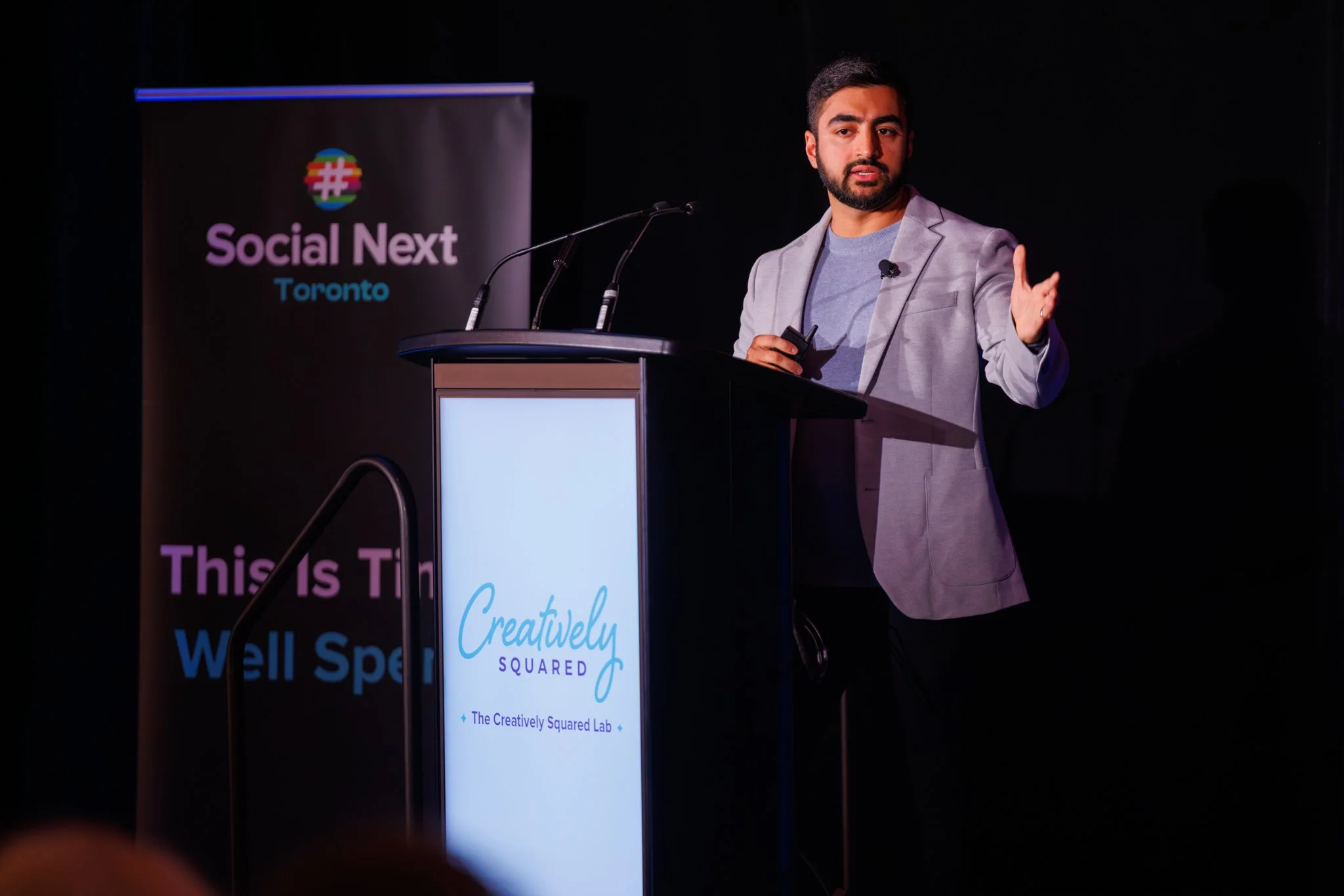
Qasim Mian, Creatively Squared on stage at SocialNext: Toronto 2026 - Photo by Neil Zeller
Creative is now the primary targeting lever
This was perhaps the most consistent message for sessions centered around paid social: creative is no longer just the thing people see. It is now the signal the algorithm uses to find your audience.
Qasim Mian of Creatively Squared put it plainly during his talk, “Reach Without Attention Is Just Expensive Waste”: reach was always a proxy for attention, and attention has to be earned, not assumed. The old media model, where buying placements meant buying eyeballs, broke permanently with social media. Today, the quality of your creative directly determines what you pay in the auction. Poor creative gets penalized. Repetition gets penalized.
Dimmock's practical advice made this concrete: before publishing any ad, ask yourself whether a stranger could identify within seconds exactly who the ad is for. Specificity in creative (calling out archetypes, answering "is this for me?" immediately) does the targeting work that broad audience settings once handled.
Both speakers pointed to a significant structural problem: platforms require roughly ten times more creative volume than most organizations produce, and an estimated $50 billion is wasted annually on creative that never finds its audience. A major culprit is the disconnect between performance data and creative teams — the feedback loop is broken, and creative decisions are being made without the signal that would actually improve them.
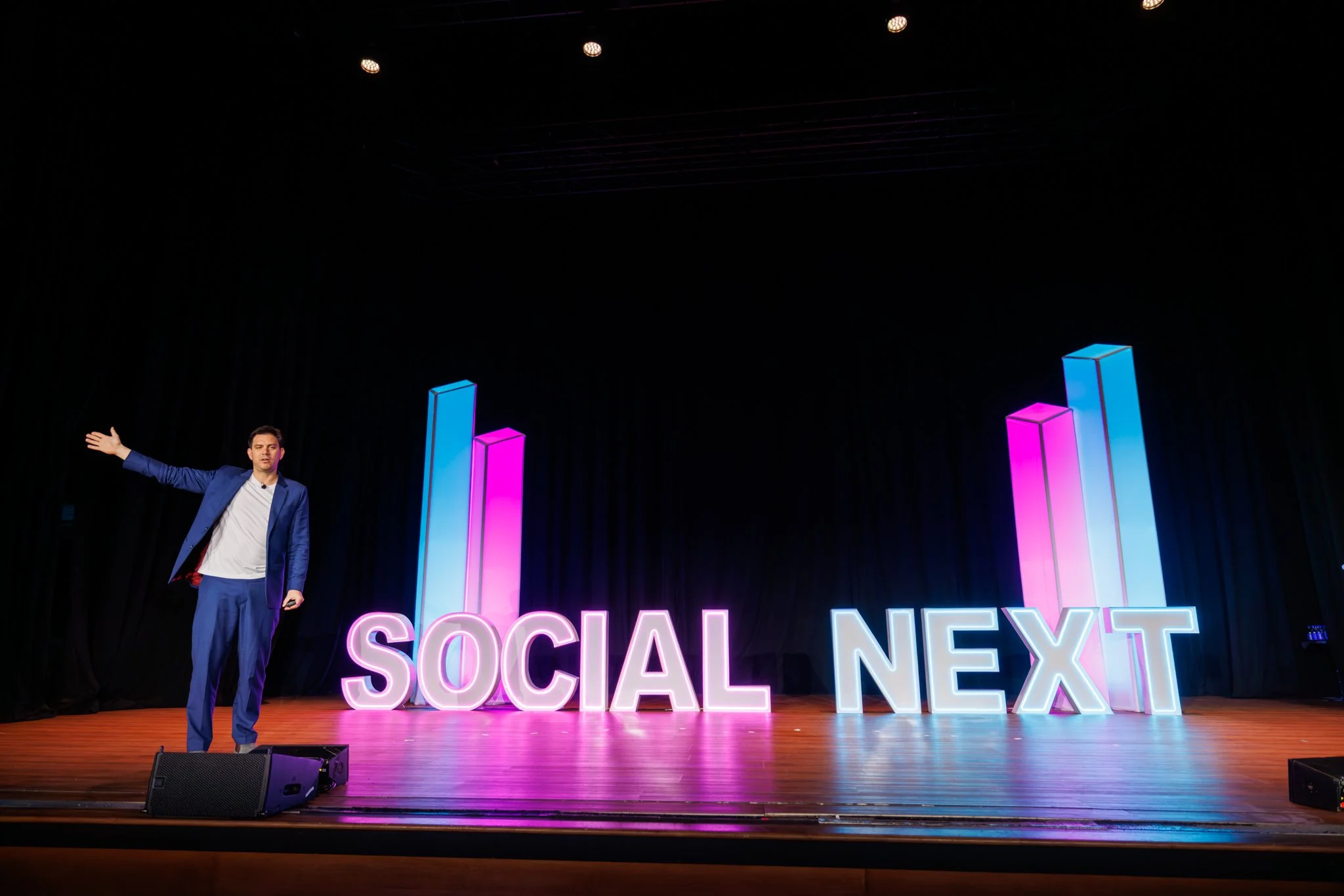
Felipe Barrientos, Meta on stage at SocialNext: Toronto - Photo by Neil Zeller
What marketers should take away
Three practical lessons emerge from these sessions:
First, consolidate your campaign structure.
The days of running dozens of ad sets to test targeting combinations are over. One broad ad set, properly fed, outperforms a cluttered architecture that muddies algorithmic signals.
Second, invest in creative volume and variety.
Diversification isn't just a hedge, but a competitive advantage in the auction. More creative options give the algorithm more chances to find what resonates.
Third, close the loop between performance and creative.
The data exists. The gap is organizational, not technical. Getting campaign analytics into the hands of your creative teams earlier (and more regularly) is now a strategic priority, not a nice-to-have.
The fundamentals of good marketing haven't changed: know your audience, speak to their needs, and be clear about what you're offering. What has changed is that the platform now needs your unique and brand-specific creative to do that work explicitly and visibly for the algorithm to do its job.
This piece is part of our ongoing coverage of SocialNext Toronto 2026, one of six national conferences produced by SocialNext.
About the writer:
June Findlay is a multifaceted communications professional with 15 years of marketing and advertising experience, specializing in digital and social media marketing, including roles on brand and agency sides. Throughout her career, she's worked with agencies such as Dentsu and WPP and developed campaigns for brands such as The Lincoln Motor Company, The YMCA of Greater Toronto, UNICEF Canada, and MadeGood. A sharp writer, insightful commentator, and founder of Little Kernel Communications (her freelance practice serving B2B and B2C clients), she is also a sought-after speaker empowering audiences to make meaningful changes in their lives and their work. June has spoken for notable organizations and institutions like the University of Toronto, Global News Radio, Toronto Metropolitan University, The National Forum for Voluntary Organizations (Sweden), CBC Newsworld, and more.
