
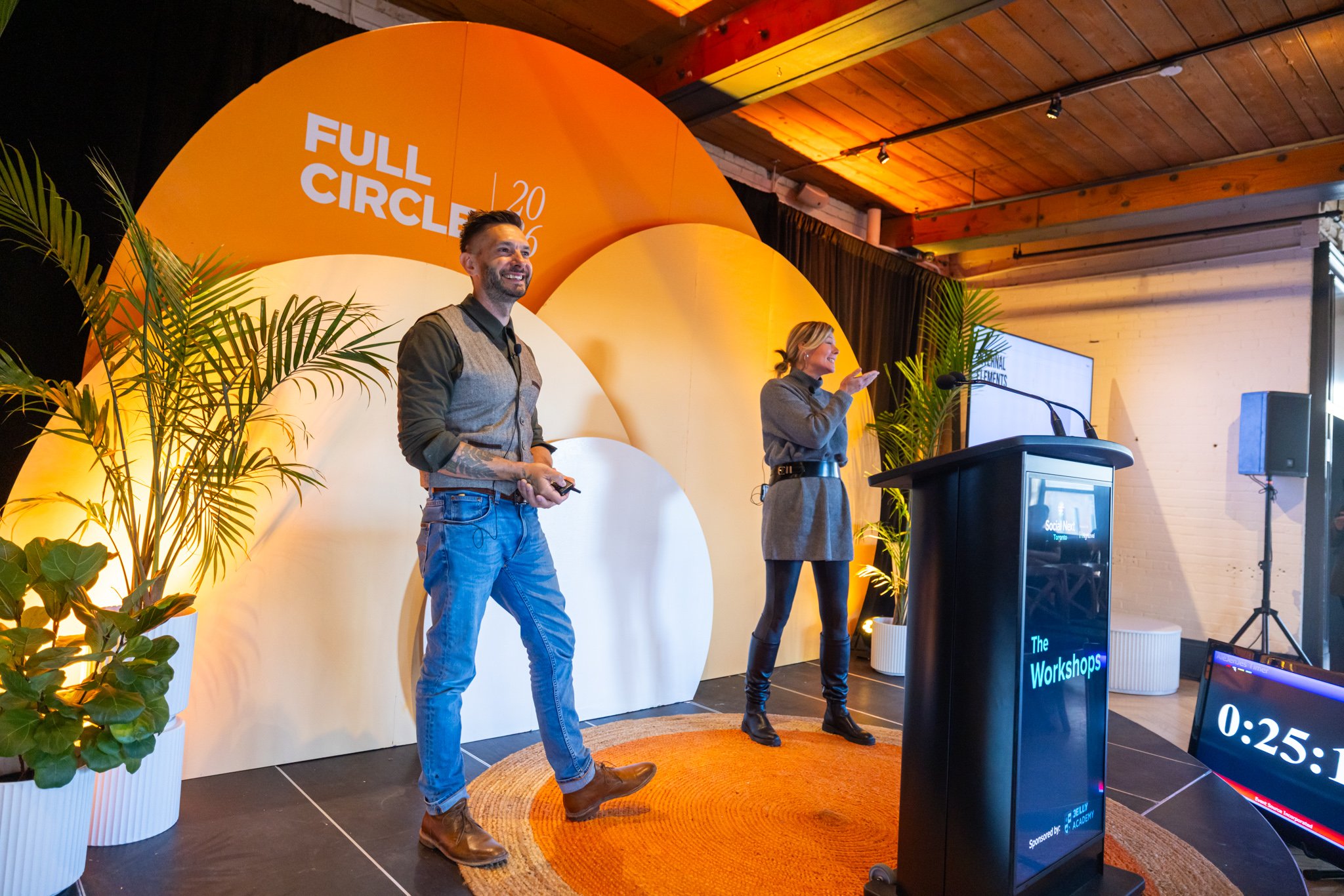
Lindsay Smith and René Thomas of Takt - Photo by Neil Zeller Photography
There are brands who know who they are and move through the world authentically, and those who *think* they do. The difference is in the strategy and planning they’ve done (or avoided completely) before they upload a single post, send the first email, or even release the first product.
Showing up authentically is a challenge that many brands take on, but often find difficult to maintain, especially when it comes to building strategic frameworks that set the foundation for everything your brand does. The issue, according to Lindsay Smith and René Thomas of Takt: most brand frameworks are built in silos and by a revolving door of people, agencies and consultants that rarely, if ever, work together. This leaves most frameworks unable to withstand various stress tests (changes in audience, culture, product and more) rendering the brand vulnerable.
How does one ensure that their brand can withstand the stress tests of time?
The solution: Takt’s “secret sauce” that has won them business with numerous clients–the Corporate Brand Identity Matrix, a framework developed over numerous years, designed to handle the full complexity of how an organization actually operates.
Inspired by thinkers like Simon Sinek (of the famed “The Golden Circle” theory), and based on academic work from Greyser and Urde, the 9-square grid framework includes elements such as value proposition, brand promise, core competencies and culture, acting as building blocks to determine a brand’s identity.
Once these elements are built, the next step in the process is to apply Pressure Test lines to expose any weaknesses to be addressed and discussed. Questions can include: “What do you claim to do better than anyone else?” and “How do you show up for the people you share?”
The most important part of the process, according to Smith and Thomas: group participation and inclusion, all the way to the executive leadership team. “Make sure they have bought into the process and support it from start to finish.”
This piece is part of our ongoing coverage of SocialNext Toronto 2026, one of six national conferences produced by SocialNext.
About the writer:
June Findlay is a multifaceted communications professional with 15 years of marketing and advertising experience, specializing in digital and social media marketing, including roles on brand and agency sides. Throughout her career, she's worked with agencies such as Dentsu and WPP and developed campaigns for brands such as The Lincoln Motor Company, The YMCA of Greater Toronto, UNICEF Canada, and MadeGood. A sharp writer, insightful commentator, and founder of Little Kernel Communications (her freelance practice serving B2B and B2C clients), she is also a sought-after speaker empowering audiences to make meaningful changes in their lives and their work. June has spoken for notable organizations and institutions like the University of Toronto, Global News Radio, Toronto Metropolitan University, The National Forum for Voluntary Organizations (Sweden), CBC Newsworld, and more.
