
Google Marketing Live 2026: Everything Canadian Marketers Need to Know
We tuned in virtually to Google Marketing Live on May 20, representing Canada amongst marketers from more than 100 countries for Google's biggest ads and commerce event of the year. As always, GML sets the tone for where search, video, and AI-powered advertising is heading, and this year's announcements had plenty of implications for Canadian marketers. Here's what was revealed and what it means for your work.
The throughline was clear: AI is no longer just a feature layer, it's the infrastructure. From Gemini-powered ad creation and always-on campaign advisors to agentic commerce and open-source measurement, Google is betting that the next era of marketing belongs to those who can harness AI-driven intelligence at scale.
Ads that actually answer
Google is rolling out new ad formats built for AI Mode in Search, powered by Gemini 2.5, designed to bridge the gap between discovery and purchase. Users can now fully describe what they need in the search box, and ads respond in kind, functioning more like conversations than interruptions. New AI Max features also give partners easier access to these formats while keeping brand alignment front and centre.
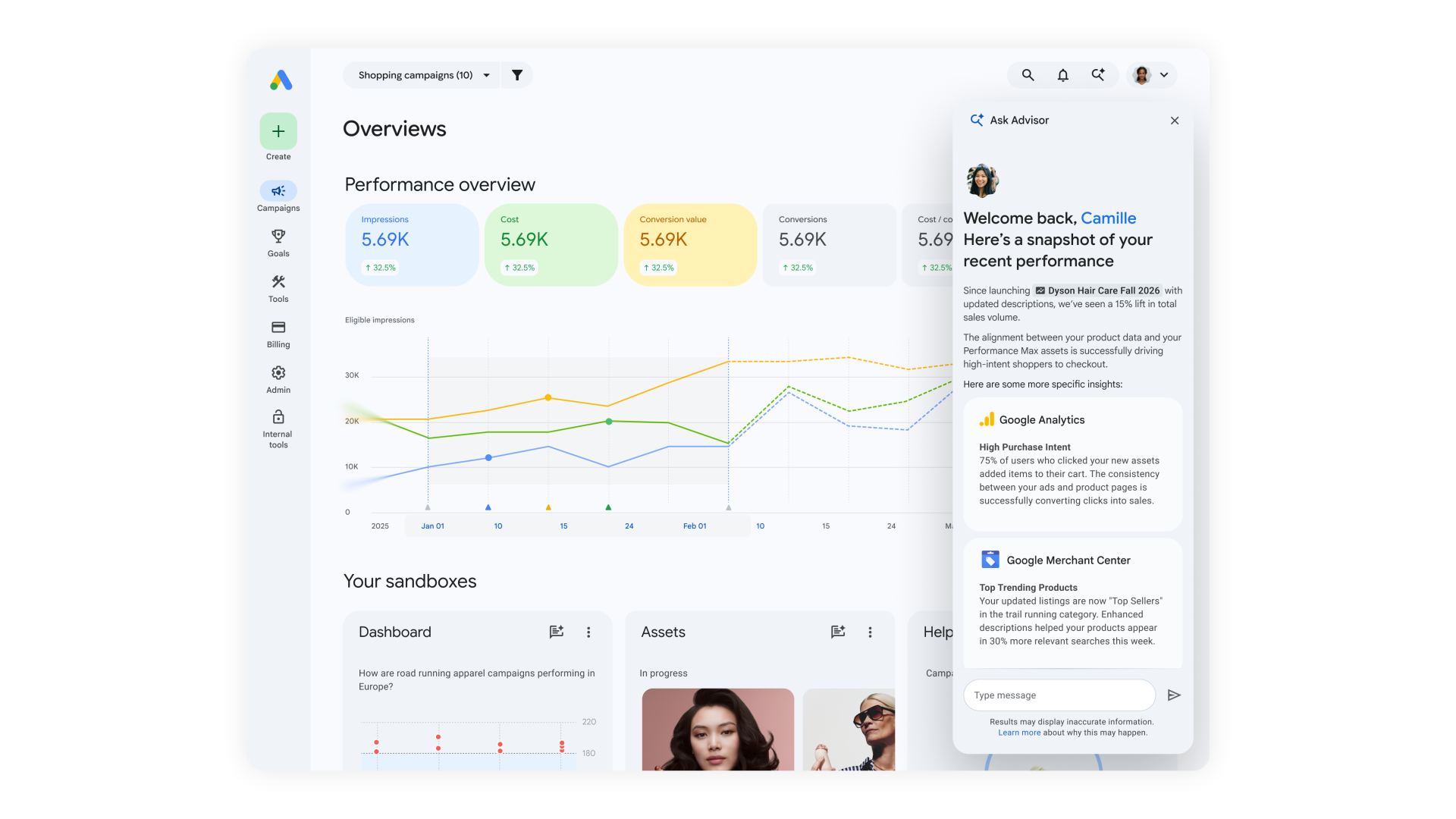
Gemini Advisor: an always-on strategic partner
Google is introducing a Gemini-built Advisor that will span all Google Ads products, monitoring performance, flagging issues, and surfacing recommendations proactively. Gemini Spark is also being integrated directly into Gmail, extending AI assistance into the tools marketers already use daily.
Asset Studio: scale creative without losing your brand voice
New Gemini-powered features in Asset Studio help marketing teams scale their unique visual identity globally, adapting assets for different markets and audiences while keeping creative direction consistent.
Agentic commerce: checkout inside AI Mode
Google is expanding Universal Commerce Protocol (UCP) capabilities, bringing checkout experiences directly into AI Mode in Search and the Gemini app. Merchants also benefit from Direct Offers integration, creating a more seamless path from browsing to buying without leaving the AI experience.
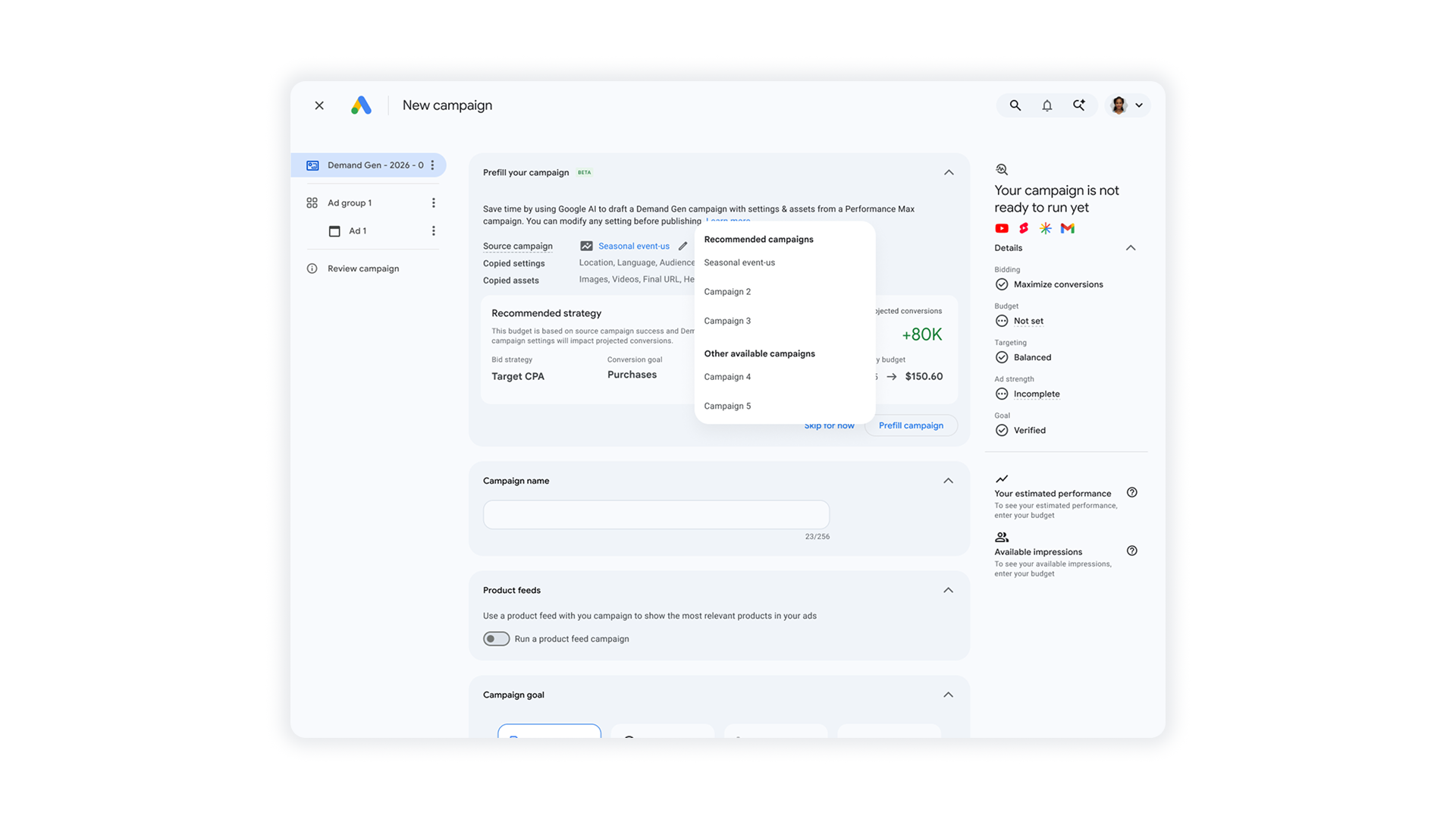
Demand Gen gets smarter
YouTube Demand Gen is expanding with new Google Maps inventory connecting brands with people exploring locally, checkout links rolling out in nine new markets, and product feeds expanding to more surfaces and verticals, including automotive. AI-assisted campaign creation is also launching to help teams get started faster. YouTube remains the number one creator platform globally, with more than 2 billion Shorts watched every month.
Meridian joins Google Analytics 360
Google's open-source Marketing Mix Model, Meridian, is now integrated directly into Google Analytics 360, giving marketers a unified measurement layer that connects media spend, attribution, and modelled outcomes in one place.
Canadian spotlight: RBC's Heidi Giggie wins the 2026 Google Ads Impact Award
One of the highlights of this year's event was a Canadian win. Heidi Giggie, Director of Integrated Digital Media at Royal Bank of Canada, was named the 2026 Google Ads Impact Award winner, recognized for a campaign that delivered results most teams only put in decks.
RBC's challenge was a familiar one: too many high-intent prospects slipping through the cracks in unbranded search, at exactly the stage where credit card customers are won or lost. Rather than patching individual channels, Giggie's team built a coordinated, full-funnel strategy that let Google's AI tools work together, using each surface to feed the next, from early brand discovery on YouTube and Gmail all the way through to search conversion.
The numbers that came out the other side were hard to argue with: a 76% increase in approved credit card applications, 341% scaled reach, and 80% more total search conversions. It is the kind of result that tends to shift internal conversations about what AI-powered campaigns are actually capable of, and a strong proof point for Canadian marketers wondering whether the full-funnel approach is worth the coordination effort.
What it means for Canadian marketers
With 82% of discovery journeys starting on Google or YouTube, and Google being the first step 92% of the time, the platform's role in the funnel is hard to overstate. The Meridian and Analytics 360 integration is worth watching closely for teams that have struggled with measurement gaps. The expansion of Demand Gen into Maps and new verticals opens real doors for local and regional campaigns. And the RBC result is a useful north star: the brands seeing outsized returns right now are the ones treating AI tools as a coordinated system rather than individual features.
