
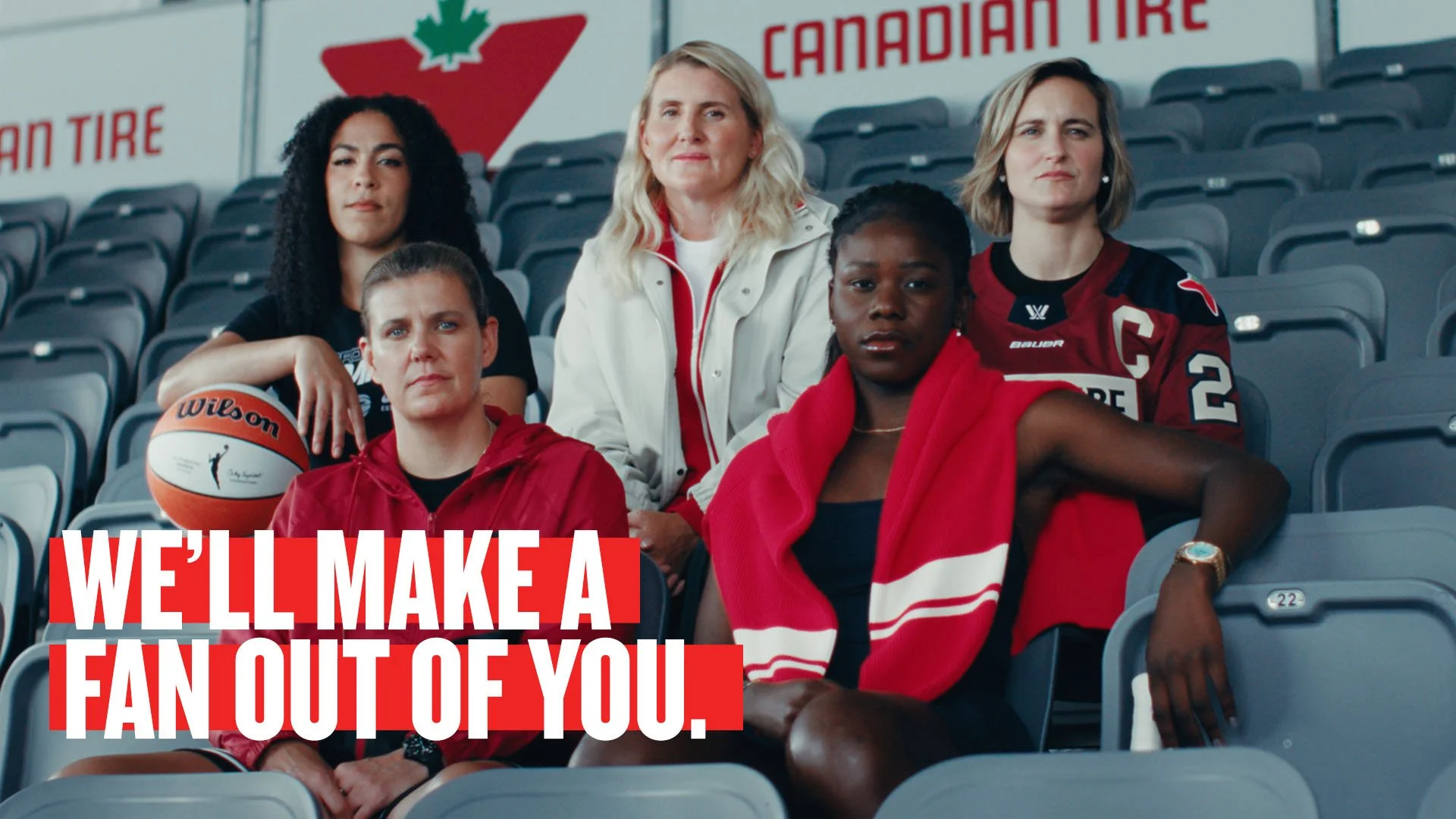
Marketers from the PWHL, NSL and BC Place on turning new fans into loyal ones, and how Canadian Tire’s 50/50 milestone fits in.
Canadian Tire Corporation (CTC) wants more Canadians to become fans of women’s sport. In October, it launched We’ll Make a Fan Out of You, a national campaign built on the idea that visibility drives fandom, and that more people will follow women’s sport once it’s easier to find.
The launch came alongside an announcement on October 14 that CTC has met its commitment to direct a minimum of 50 percent of its sports sponsorship investment to women’s professional sport. The target was set in 2023 through the company’s Women’s Sport Initiative, and CTC says it’s the only major Canadian company to publicly declare equal investment across women’s and men’s professional sport. It hasn’t disclosed the dollar amount behind that share.
CTC points to research to explain the shift toward visibility. A Canadian Women & Sport study, cited in the company’s release, found 75 percent of Canadians say they’re fans of women’s sport. Among those fans, 62 percent say they don’t know where to find the sport they want to watch.
On the broadcast side, Canadian Tire will become presenting partner of the PWHL on CBC’s Hockey Night in Canada. According to Canadian Tire, the campaign opened with a 30-second spot and features athletes including Hayley Wickenheiser, Kia Nurse, Vicky Mboko, Christine Sinclair and Marie-Philip Poulin, along with media partnerships with CBC, Bell Media, The Gist, and sports influencers, alongside a national contest. Canadian Tire and SportChek are founding partners of the PWHL and the Northern Super League, and the company is an official partner of the Toronto Tempo, Canada’s first WNBA team.
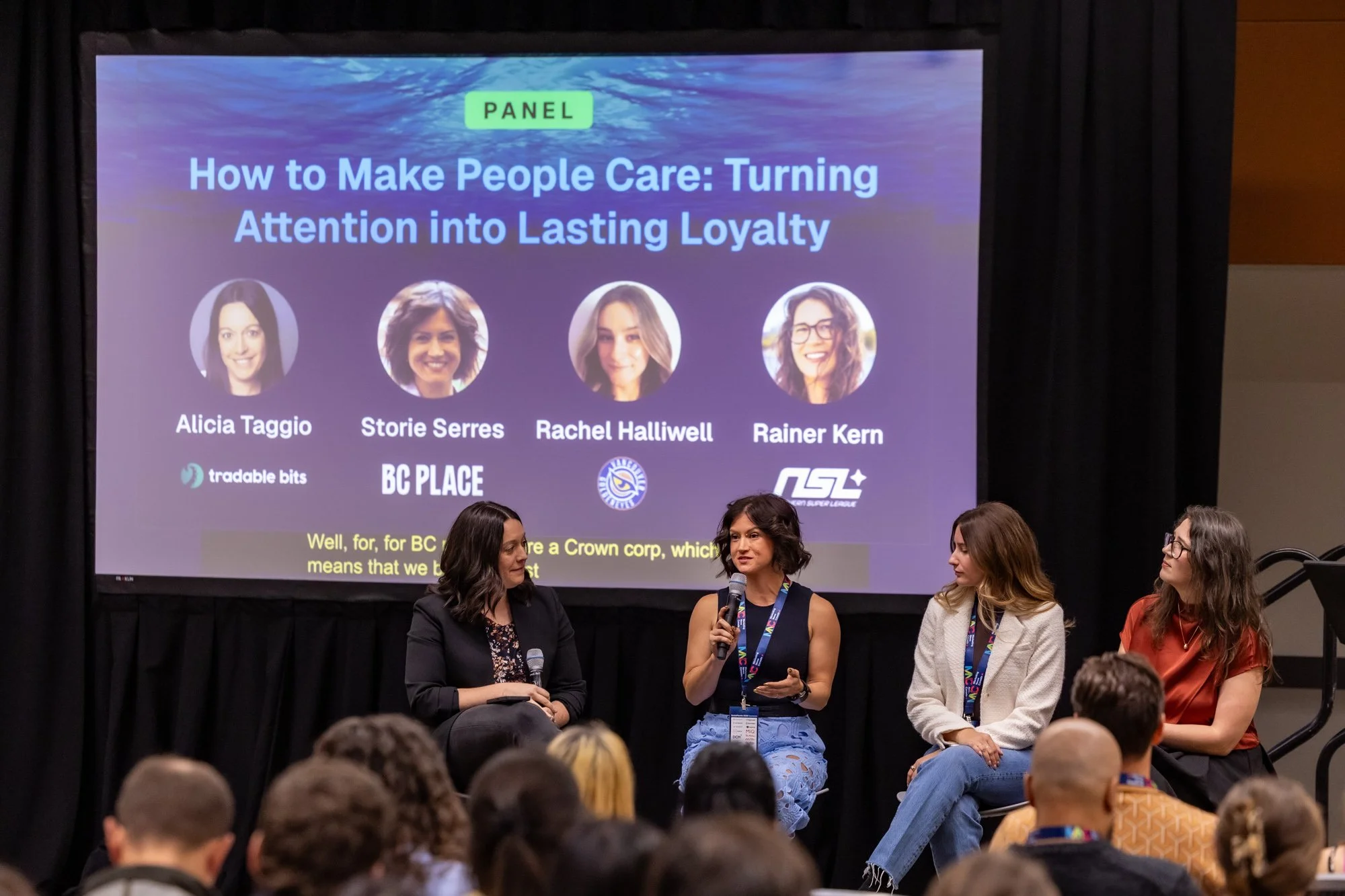
How to Make People Care Panel at SocialPacific 2026. From left to right: Moderator Alicia Taggio, Tradable Bits | Panelists: Storie Serres, BC Place | Rachel Halliwell, Vancouver Goldeneyes | Rainer Kern, Northern Super League
A View From the Panel
Marketing News Canada was at SocialPacific in Vancouver this September for a panel that tackled the same problem from the team side. Alicia Taggio, Director of Customer Success at Tradable Bits — a fan data platform that helps rights holders and their sponsors turn anonymous fans into known, reachable audiences — curated and moderated a panel shining a light on the women building fan communities in Canadian sport and live events: Rachel Halliwell, Social Media Manager for the PWHL’s Vancouver Goldeneyes, Rainer Kern, Director of Digital Marketing Operations at the Northern Super League (NSL) and Storie Serres, Marketing Manager at BC Place. Two of them work in leagues where Canadian Tire is a founding partner, and much of what they described connects to what CTC is trying to do.
The awareness gap in research is one the NSL feels directly. Kern said money is the league’s biggest limitation, because it can’t afford to reach everyone in Canada. “I guarantee a lot of people in this room had never heard of the Northern Super League, didn’t know we existed,” she told the audience. Much of her work is about turning what she calls unknown fans, people who watch on social or catch a broadcast without the league knowing who they are, into known fans it can contact directly.
Stories as the Way In
Athletes front the We’ll Make a Fan Out of You campaign, and the panel spoke to why stories work as a way in. According to Kern, plenty of people care about the clubs without knowing how hard it was to get here or what the players have been through, so the league builds entry points that give people a reason to care. One of its clubs, AFC Toronto, used postal code data to find fans in the communities its players came from, and used that connection to market to them directly.
Kern described broadcast channels as the NSL’s highest-level entry point, where a lot of its volume comes from, and pointed out that broadcast is where much of the money in sports comes from. Each of the league’s other channels has its own job, with SMS helping clubs sell tickets for the final, email carrying individual club stories, and Instagram working more like a broadcast channel. Serres suggested giving each channel its own character, which makes it easier to shape content and copy for wherever you’re publishing. “What is the character of your channel?” she asked.
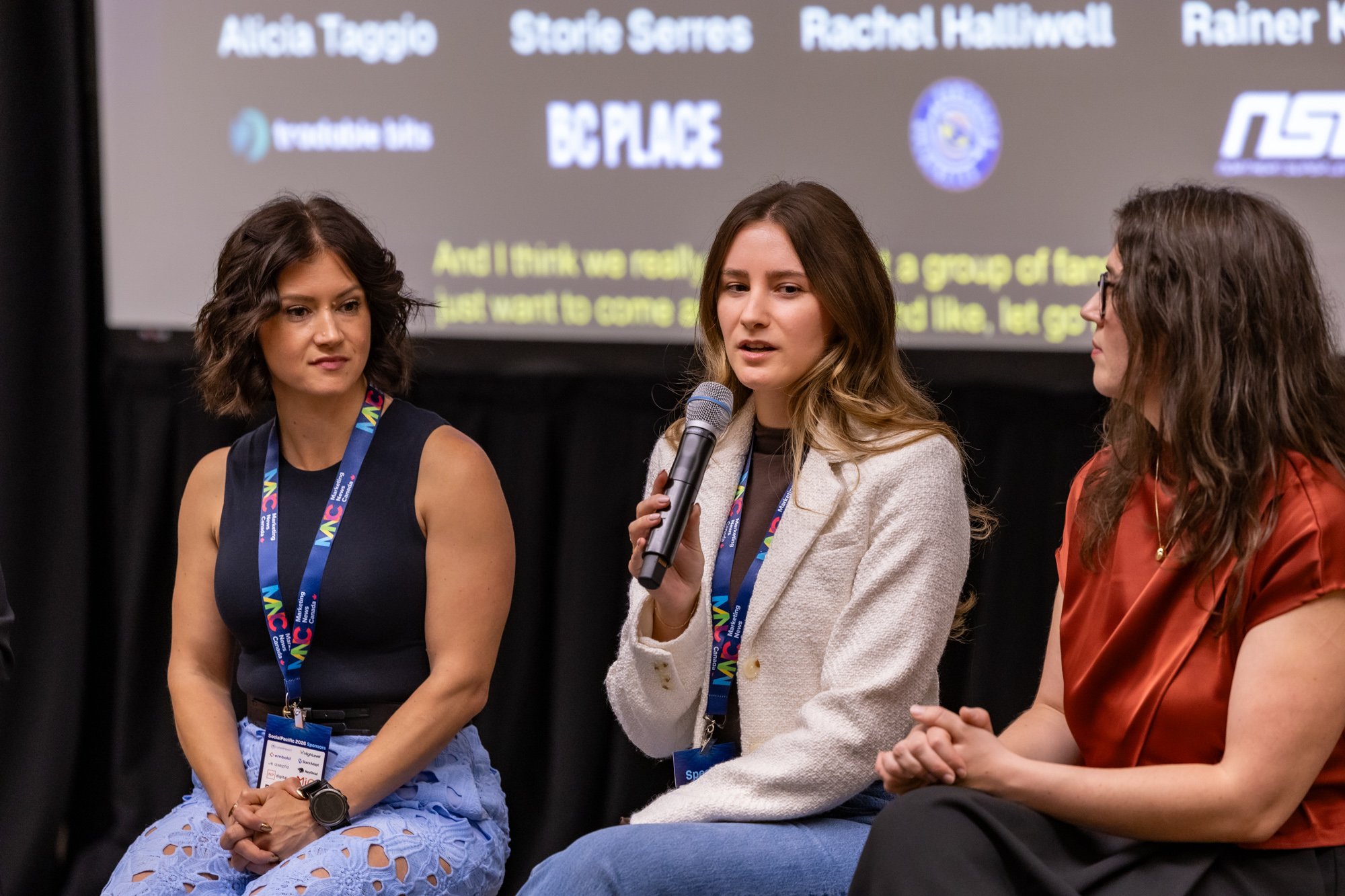
Panelists left to right: Storie Serres, BC Place | Rachel Halliwell, Vancouver Goldeneyes holding a microphone | Rainer Kern, Northern Super League
When Fans Help Build It
For the teams on the panel, some of the strongest engagement has come from fans shaping the team itself. A goldeneye is a duck, and the Goldeneyes didn’t lean into that much at first. Then fans started bringing rubber ducks to games and throwing them on the ice afterward. “We didn’t start that, our fans did, but now it’s a massive part of our culture here with the Goldeneyes,” Halliwell said. The NSL brings its most dedicated fans into the planning. Before this year’s final in Ottawa, league staff sat down with supporter groups to work out where they’d sit and what they’d bring into the stands. They also showed the groups what last year’s trophy looked like, so their banners and designs could reflect it.
Belonging also depends on whether fans can see themselves in what a team puts out. For the Goldeneyes, Halliwell said the goal is that when someone sees the team’s content or looks around the stands, “everybody sees somebody that looks like them.” From the venue side, Serres described how BC Place chooses which fans to photograph and feature, making a point of including women, Indigenous communities, and LGBTQ2S+ fans so people who don’t know the building can see who it’s for. That part of the conversation resonated because the panelists were speaking from experience. All four are women working in sport and live events, and they talked about times in their careers when they didn’t feel seen. Serres later added that they have all worked in and visited venues and events that were never built for them, which is why BC Place is so deliberate about creating space for everyone. Now the four of them are among the people deciding which stories get told. Canadian Tire is making the same argument at a national level, that when women’s sport isn’t visible, it limits what the next generation of girls can see and believe is possible.
Keeping Them Coming Back
So visibility can bring someone to their first game, but how do you keep them coming back? For the Goldeneyes, the answer was to keep showing up. Halliwell said the team stayed active across email, digital, and social through its whole first year, including the stretches between big brand moments. “We never really take our foot off the gas,” she said. Launches will always bring peaks, but in her view, the quieter periods matter just as much. At the NSL, the follow-up gets personal. After each event, the league segments its audience, and first-time buyers get a thank-you and an invitation to share their favourite memories of the day. Kern acknowledged it “doesn’t feel very flashy or interesting, but it does work.” Those small, steady touchpoints are often what turn a first-time attendee into someone who buys a ticket for next season.
Reading the Data
Knowing whether any of this is working comes down to what each organization can measure, and that depends on what it sells. Because BC Place sells its space rather than tickets, Serres treats engagement as her main KPI. The Goldeneyes can see where ticket buyers come from, which also shows where they don’t. Halliwell said that if most buyers are coming from Greater Vancouver, the team can look at areas further out, like the Fraser Valley, where fewer tickets are selling and there’s room to grow. The team is also working this year on turning social followers into contacts it can reach directly, the same unknown-to-known shift Kern described at the league level.
Where the 50/50 Comes In
Growing a fan base this way takes money, the same limit Kern described for the NSL, and that is where Canadian Tire’s 50/50 milestone comes in. CTC says no other major Canadian company has publicly committed to equal investment across women’s and men’s professional sport, and it has now met that commitment. A major sponsor directing at least half of its sports sponsorship investment to women’s professional sport puts meaningful backing behind leagues like the NSL as they grow. The company is treating the milestone as a starting point. Eva Salem, CTC’s senior vice president of marketing, describes the first chapter of the initiative as rooted in belief and investment, and the next as being a catalyst for fandom. Greg Hicks, CTC’s president and CEO, argues fans are already moving in that direction. “Increasingly, fans aren’t distinguishing between men’s sport and women’s sport,” he said in the release. “They simply want to watch great sport.”
Canadian Tire hasn’t said publicly how it will judge We’ll Make a Fan Out of You, but the timing works in its favour. The leagues it’s pointing Canadians toward are young, and the people running them are already learning what makes a new fan stay, whether that’s rubber ducks on the ice or supporter groups helping plan a final. A national campaign aimed at helping people find the game gives that work a much bigger audience to build on. On stage, Kern took the NSL’s awareness gap in stride. “And that’s okay,” she said. “That just means that we have more work to do.”
